

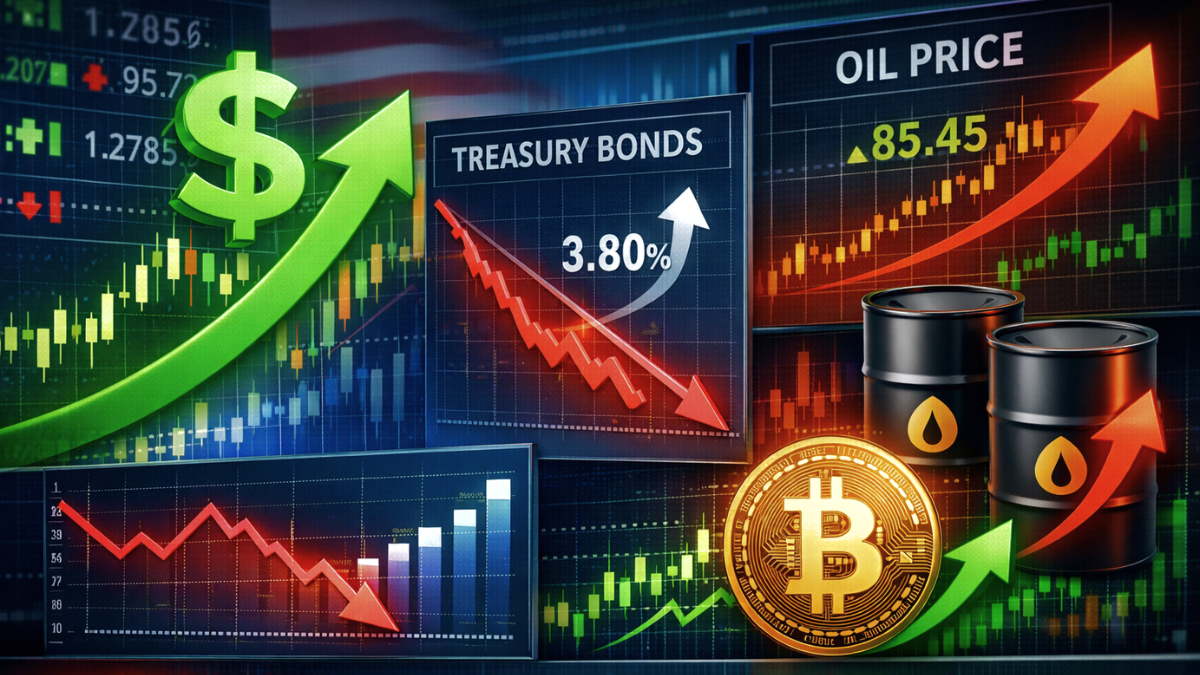


The US financial markets saw sharp moves on Monday. The US dollar rose strongly during the trading session. The dollar index increased by 0.9 percent. This was its best daily performance since last summer.
Investors turned toward the dollar because of safe-haven demand. There were concerns linked to war risks and global uncertainty. When tensions rise in the world, people often move their money into assets that are seen as stable. The US dollar is commonly viewed as one of those safe assets.
The rise in the dollar shows that traders were cautious. They preferred holding cash in dollars instead of taking bigger risks in uncertain conditions. This move reflected fear and protection in the market at the same time.
Treasury Bonds Fall as Inflation Worries Grow
US government bonds, also known as US Treasuries, moved in the opposite direction. While the dollar went up, bond prices went down. When bond prices fall, bond yields rise.
US moves to seize ‘ghost tanker’ Skipper carrying 1.8 million barrels linked to IRGC
It was described as the worst day for the two-year and ten-year notes since October. Yields increased by 0.1 percentage points. The yield on the two-year note rose to 3.48 percent. The yield on the ten-year note climbed to 4.04 percent.
The drop in bond prices was linked to inflation concerns. Oil prices jumped higher during the same period. When oil becomes more expensive, transport costs and production costs usually increase. This can push prices of goods and services higher across the economy.
In addition to rising oil prices, economic data from the ISM manufacturing report came in stronger than expected. Strong manufacturing activity can signal higher demand. Higher demand combined with rising costs can create pressure for inflation to move up.
Because of these factors, investors worried that inflation might increase. As a result, many traders sold bonds. Even though government bonds are normally considered safe investments, they faced selling pressure due to expectations of higher inflation.
This shows that safe assets can still decline when economic conditions change quickly. Inflation fear had a stronger impact on bonds than safe-haven demand in that session.
Shipping crisis fears rise as war risk premiums surge 50% in Strait of Hormuz
Bitcoin Moves Higher After Weekend Losses
Bitcoin also experienced movement during the same trading day. After seeing losses over the weekend, Bitcoin recovered during US trading hours.
The price of Bitcoin rose by 5.6 percent. It moved above $69,400 by the end of the trading day. This recovery came after earlier declines, showing a quick change in market sentiment.
Bitcoin moved in line with broader stock market trends. Risk assets often move together when investors feel more confident. After the weekend drop, buyers returned and pushed prices higher.
The rebound shows how digital assets can react quickly to shifts in investor mood. The improvement in Bitcoin happened at the same time that the dollar strengthened and bonds weakened.
Overall, markets reacted to war-related uncertainty and stronger economic data. The US dollar gained value due to safe-haven demand. US Treasuries fell because inflation fears increased after oil prices rose and manufacturing data showed strength. Bitcoin recovered and followed the movement of other risk assets.
These developments took place in one trading session and highlight how different financial markets respond differently to the same economic and global events.