



Canada’s Finance Minister François-Philippe Champagne has said it is becoming clear that the United States is unlikely to lift tariffs. His remarks came after major developments in Washington that have reshaped trade policy.
Speaking in Ottawa, François-Philippe Champagne said it is now widely understood that the current US administration believes there is a “price” to access the American market. He explained that every country trading with the United States is paying that price in some form. According to him, Canada is paying the lowest price compared to others.
His comments followed US President Donald Trump’s annual address to Congress. During the speech, Donald Trump said he wants tariffs to eventually replace income taxes as the main source of revenue for the United States. He stated that tariffs, paid by foreign countries, could reduce the financial burden on Americans.
This marks a shift in tone from Canada. Instead of expecting tariffs to be removed, officials are signaling that some level of tariff may remain in place.
Trade between the two countries is significant. About 75% of Canadian exports go to the United States. This makes the US by far Canada’s largest customer. Any change in US tariff policy directly affects Canadian businesses and workers.
FedEx sues US government after Supreme Court strikes down Trump emergency tariffs
Supreme Court Blocks Earlier Tariffs, New 10% Duty Imposed
The situation intensified after a 6-3 decision by the US Supreme Court. The court ruled that President Donald Trump’s sweeping tariff policy introduced last April was unlawful. The judges found that he had overstepped his authority.
Soon after the ruling, a new measure was announced.
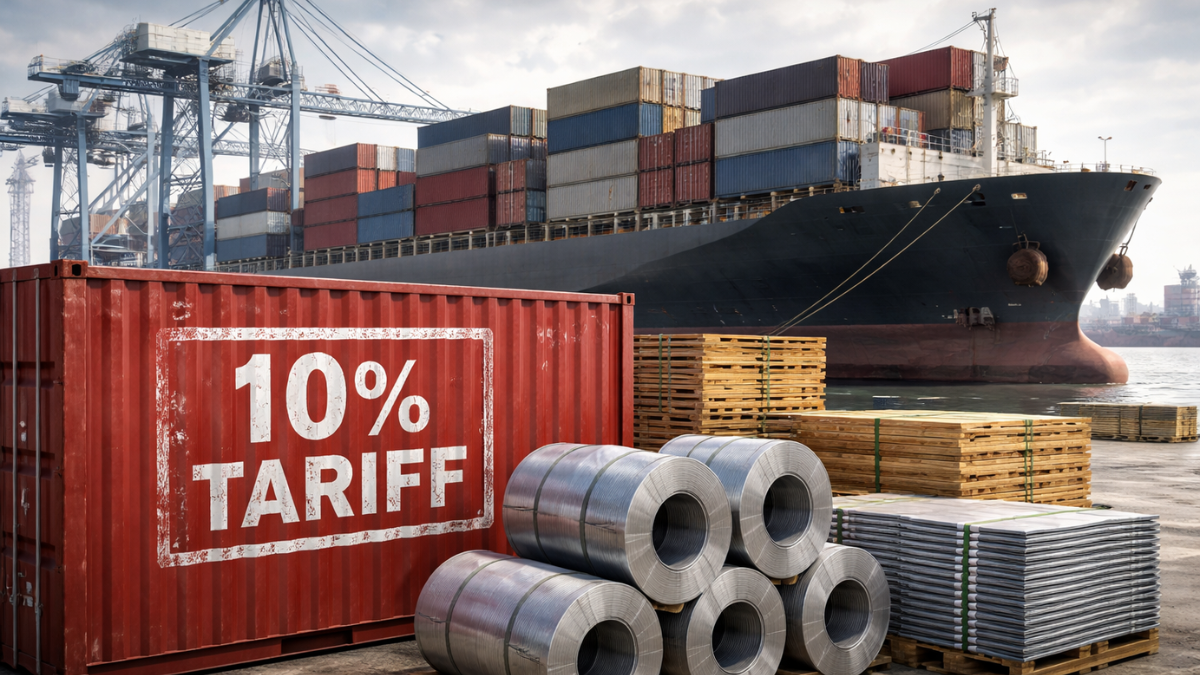
Last week, Donald Trump imposed a worldwide 10% tariff. This new tariff replaced the earlier measures struck down by the court. It went into effect on Tuesday.
The tariff was introduced under Section 122 of the 1974 Trade Act. This rarely used law allows the president to impose tariffs of up to 15% for 150 days. After that period, Congress must step in.
This is the first time Section 122 has been used in this way. It represents a significant development in US trade policy.
During his address to Congress, Donald Trump said that over time, tariffs paid by foreign countries could “substantially replace” the modern-day income tax system. He said this would take a financial burden off Americans.
The announcement suggests that tariffs are being presented as a central part of economic policy rather than a short-term measure.
Ongoing Tensions and Canada’s Trade Position
Following these developments, Canadian officials responded carefully.
Supreme Court setback pushes Trump to activate 1974 trade law for new global tariffs
François-Philippe Champagne said the US view appears clear: there will likely always be some level of tariff for countries that want access to the American market. He stated that this is now well understood globally.
Canada continues to benefit from exemptions under the United States–Mexico–Canada Agreement (USMCA), the continental free trade deal. Goods that meet the agreement’s requirements can avoid certain tariffs.
However, Canada still faces higher tariffs on steel, aluminium and softwood lumber. These sectors are important to the Canadian economy.
US trade chief Jamieson Greer said Canada may need to accept “some level of higher tariff” if it wants to continue doing business with the United States. He added that discussions could include opening Canadian markets further, including areas such as dairy.
Amid the trade tensions, Prime Minister Mark Carney has said Canada aims to double its exports to non-US markets over the next decade. He highlighted industries such as metals and automobiles as key sectors.
The developments come as the US reinforces its tariff policy through the new 10% global duty. With the United States accounting for three-quarters of Canadian exports, the impact of these measures remains significant for Canada’s economy.