

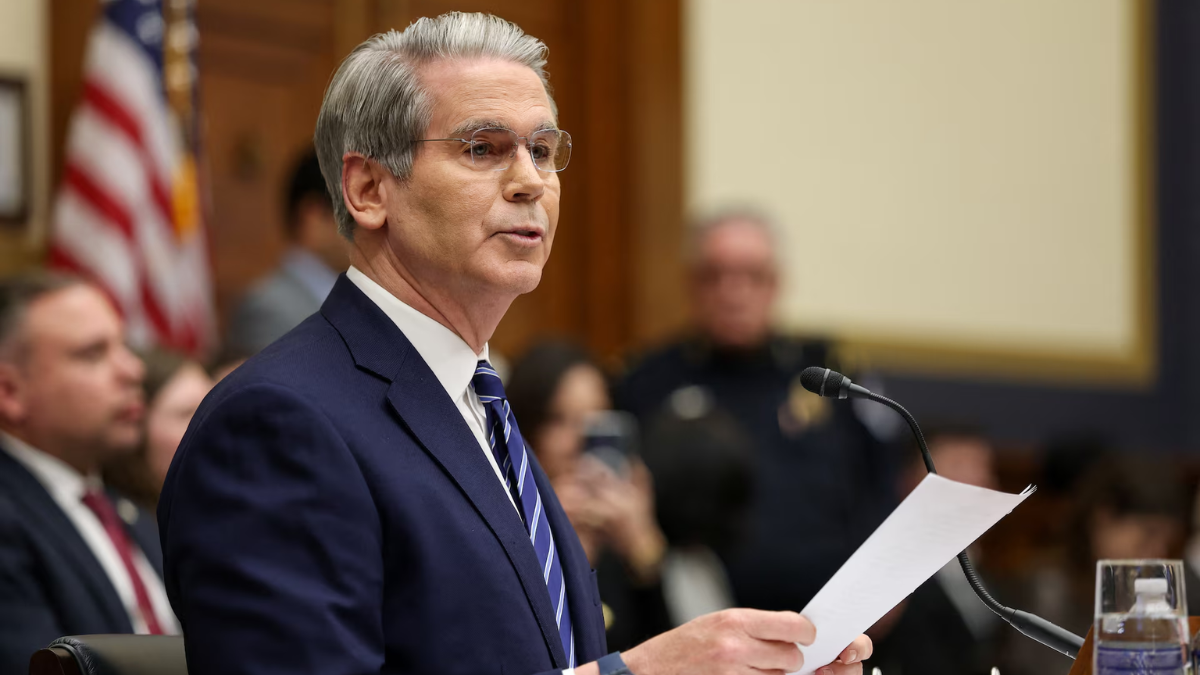


U.S. Treasury Secretary Scott Bessent recently admitted that he was wrong when he previously said tariffs could drive up prices. Earlier, he had told investors at his hedge fund, Key Square, that tariffs imposed by the government could make everyday goods more expensive. However, during a recent congressional hearing, Bessent said that the U.S. economy is growing and inflation is coming down, despite the tariffs imposed by President Donald Trump since returning to office in January 2025.
Bessent explained that the expected rise in prices due to tariffs simply didn’t happen. He used a phrase to describe this situation: “Tariff inflation was the dog that didn’t bark.” This means that although many thought tariffs would lead to higher costs for Americans, the data shows that this effect has not occurred.
The discussion about tariffs and inflation took place during a House Financial Services Committee hearing, which was nominally focused on the Treasury’s Financial Stability Oversight Council report. Lawmakers pressed Bessent about the letter he had sent to investors in January 2024. In that letter, he said tariffs could cause inflation and strengthen the U.S. dollar. During the hearing, Bessent clarified that those statements were mistaken.
Trump threatens higher tariffs on South Korea, says trade pact still not enforced
Heated Exchanges Over Prices
The hearing became tense when Representative Maxine Waters, the top Democrat on the committee, questioned Bessent about whether tariffs were affecting the prices of goods like coffee, bananas, steel, lumber, and appliances. These goods are widely used by consumers and businesses, and higher costs for them can impact housing and construction prices.
Bessent responded by citing data from the San Francisco Federal Reserve, which suggests that tariffs are not causing overall inflation. He also mentioned that other factors, such as a surge in immigration, are playing a larger role in driving housing costs higher.
Waters pressed him further, and Bessent’s exchanges with lawmakers grew testy, echoing past confrontations similar to those seen between Waters and former Treasury Secretary Steven Mnuchin during Trump’s first term. Committee members also asked Bessent whether he wanted to correct his previous statements to investors, and he confirmed that he wished to set the record straight.
After months of uncertainty, Trump and Modi move to end trade war with lower tariffs
Views on Federal Reserve Independence
During the hearing, Bessent was also questioned about the independence of the Federal Reserve. He confirmed that he views the central bank as independent. When asked whether President Trump has the authority to fire Fed officials over policy disagreements, Bessent said he has no opinion on that issue. He explained that there are differing views within the administration on a legal doctrine called the unitary executive theory, which could give the president broad powers.
Bessent also noted that this issue is not for him to decide and would need to be settled by the U.S. Supreme Court. The court recently heard a case related to Trump’s attempt to remove Fed Governor Lisa Cook. A decision on that case is expected by the end of June.
Throughout the hearing, Bessent’s comments sparked back-and-forth exchanges with lawmakers, including Representative Sean Casten and Republican chair French Hill. He was questioned repeatedly about the earlier statements to investors and whether he wanted to correct them. He confirmed that he was mistaken about tariffs causing inflation and emphasized that the overall U.S. economy continues to show growth without tariff-driven inflation.
The hearing highlighted the ongoing scrutiny of tariffs and economic policies, as well as debates over the Federal Reserve’s independence. Bessent’s admission marks a notable reversal on a major economic issue that had been widely discussed among investors and policymakers.