

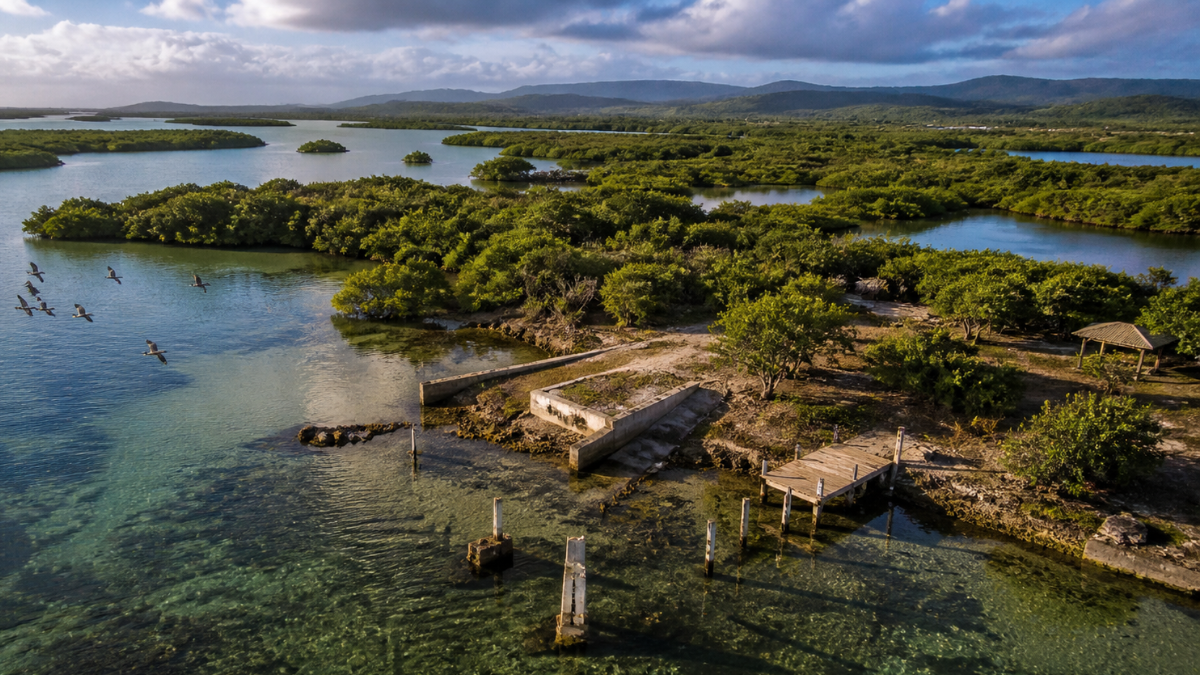


A major environmental case has emerged in Puerto Rico, where Orlando Rivera-Alejandro has pleaded guilty to violating the Clean Water Act. The illegal activities took place inside the Jobos Bay National Estuarine Research Reserve, a federally protected wetland area. The case was announced by Adam Gustafson of the Justice Department’s Environment and Natural Resources Division and W. Stephen Muldrow.
According to court records, Rivera-Alejandro carried out illegal construction work in an area known as Mar Negro, which is part of the waters of the United States. Between January 2020 and March 2022, he placed fill material into the wetland and built several structures, including a gazebo, a concrete boat ramp, and a dock. He also installed multiple concrete-filled PVC poles directly into the water and discharged concrete into the wetland during construction activities.
Authorities confirmed that these actions were done without any permits. The Clean Water Act requires strict approval before any filling or construction work can happen in protected waters. Officials also stated that Rivera-Alejandro knew the area was protected but still continued the work without permission.
Bithumb faces 37 billion won fine and partial business suspension after AML violations
Images from May 2019 and March 2022 show a clear difference in the land. The earlier image shows a natural and untouched area. The later image shows heavy construction and visible environmental damage caused by human activity.
Importance of the Protected Reserve
The Jobos Bay National Estuarine Research Reserve was established in 1981 to protect wetlands and support research. It is one of the important ecological areas in Puerto Rico. Wetlands help clean water, control flooding, and support wildlife.
This reserve is home to endangered species such as the brown pelican, peregrine falcon, hawksbill turtle, and the West Indian manatee. These animals depend on safe and clean habitats. Any disturbance to their environment can affect their survival.
Wetlands are delicate ecosystems. Even small changes can lead to long-term damage. Dumping materials or pouring concrete into water can destroy plant life and disrupt animal habitats. Because of this, laws like the Clean Water Act are enforced strictly across the United States.
The law, passed in 1972, aims to protect water bodies from pollution and damage. It clearly states that no one can discharge pollutants or fill material into protected waters without proper approval from authorities.
Gabriel Arturo Castillo admits role in multimillion-dollar drug money laundering scheme
Legal Action and Ongoing Investigation
As part of the plea agreement, Rivera-Alejandro has agreed to pay a fine of $50,000. He must also remove all structures built on the site. In addition, he is required to restore the damaged land and return it as close as possible to its original natural condition.
Sentencing in the case is scheduled for September 1. The decision will be made by the court based on the plea agreement and the extent of the environmental damage.
This case is part of a wider investigation into wetland destruction in Puerto Rico. Rivera-Alejandro is the sixth individual convicted for illegal construction within the reserve in recent years. Previously convicted individuals include Luis Enrique Rodríguez-Sánchez, sentenced in June 2024; Awildo Jiménez-Mercado, Rafael Carballo-Diaz, and Nathaniel Hernandez-Claudio, sentenced in September 2024; and Pedro Luis Bones-Torres, sentenced in March 2025.
The investigation was carried out by the Environmental Protection Agency’s Criminal Investigation Division and the Federal Bureau of Investigation. These agencies work together under the Puerto Rico and U.S. Virgin Islands Environmental Crimes Task Force to address environmental violations.
The case is being prosecuted by Patrick M. Duggan and Seth A. Erbe. The legal proceedings are taking place in the District of Puerto Rico, where authorities continue to monitor and act against illegal activities in protected environmental areas.