

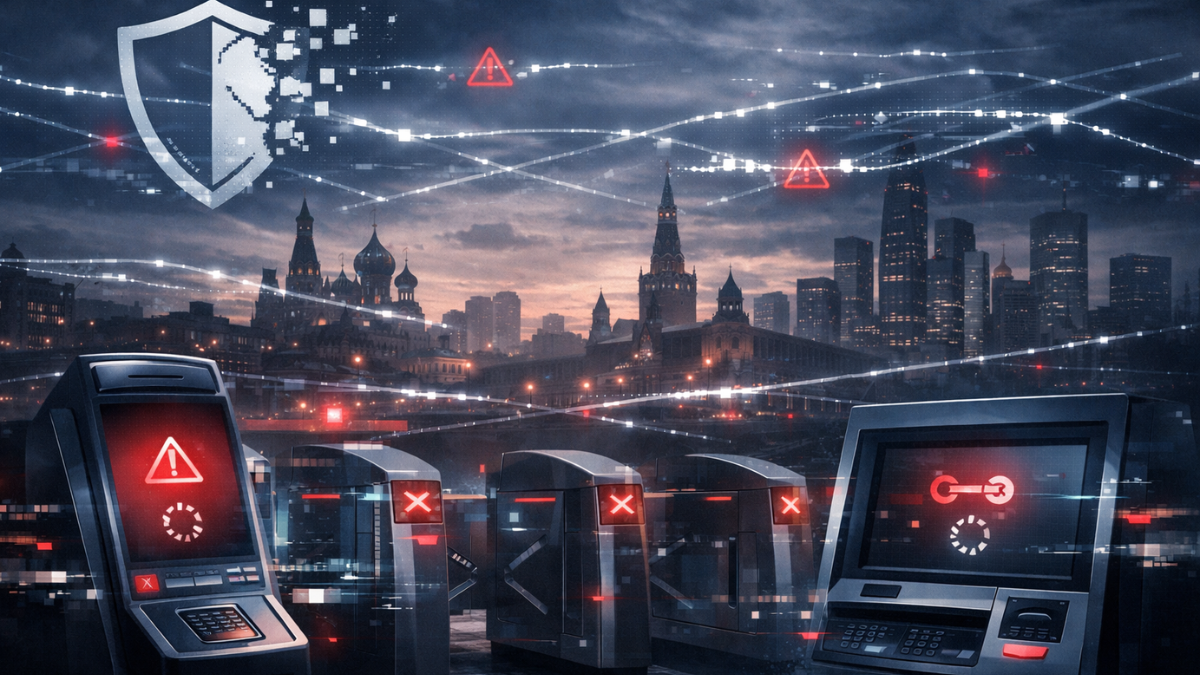


Russia has increased its actions to restrict access to parts of the internet. The main focus of these steps is on blocking or limiting Virtual Private Networks, commonly called VPNs. These tools allow people to access websites and apps that may be restricted in their region.
Authorities have been tightening these controls in recent times. The official reason given is national security. Officials say that restricting VPN use and controlling online platforms helps prevent attacks, sabotage attempts, and misuse of communication systems.
Messaging platforms such as Telegram and WhatsApp have also faced pressure. In some cases, access to these services has been slowed down instead of fully blocked. This makes it harder for users to send messages or use the apps smoothly.
At the same time, a government-backed messaging app has been promoted in schools and universities. Authorities have encouraged citizens to use this state-supported platform for communication.
Many users have continued to rely on VPN services to bypass restrictions and access global platforms. However, these tools are now under stronger scrutiny as internet control measures expand across the country.
Payment Systems and Public Services Face Sudden Technical Breakdowns
Around the same time as the VPN restrictions, a major technical disruption affected payment systems and public services across Russia. The exact cause of the issue has not been fully explained by officials.
Ukraine escalates attacks on Russian oil facilities as global pressure shifts
The disruption led to widespread problems in everyday transactions. Many people reported that digital payments were not working in shops and public places. In some areas, payment systems stopped functioning completely for a short period.
Public services were also affected. In the Moscow metro, entry gates were temporarily opened, allowing passengers to travel without paying. This step was taken to prevent delays and crowding caused by payment failures.
A regional zoo also faced issues and asked visitors to pay in cash because electronic payment systems were not working properly.
Russia’s major bank, Sberbank, confirmed that a technical issue had occurred. However, it did not share detailed reasons for the breakdown.
Some media reports that suggested a link between the outage and VPN restrictions were later removed or edited. This created further confusion about the real cause of the disruption.
The incident showed how dependent daily life has become on digital systems. Even a short breakdown caused visible disruption in transport, retail, and public services.
Pavel Durov Links VPN Crackdown to Wider Digital Disruption Claims
Pavel Durov, the founder of the messaging platform Telegram, stated that Russia’s efforts to block VPN services may have led to wider technical problems, including disruptions in payment systems.
Canada expands sanctions with 100 additional Russian oil tankers targeted
He said that the VPN restrictions created unintended side effects that may have impacted domestic digital infrastructure. His statement suggested that efforts to control internet access could affect more than just messaging or browsing services.
He also described the situation as part of growing “digital resistance,” stating that many users are actively trying to bypass restrictions and continue using open internet tools despite limitations.
Telegram is widely used across many countries and has over a billion users. It is used for messaging, news sharing, and group communication. The platform has also faced scrutiny from Russian authorities.
Officials have previously claimed that messaging apps could be used by foreign intelligence groups and pose security risks. These claims have been denied by Telegram, which states that it does not allow such misuse of its platform.
Authorities have also raised concerns about national security threats and have supported stronger regulation of messaging apps and VPN services. Alongside this, a state-backed messaging app known as MAX has been promoted as an alternative communication tool.
The situation has also included a criminal case involving Pavel Durov, connected to broader accusations related to security concerns raised by officials.