

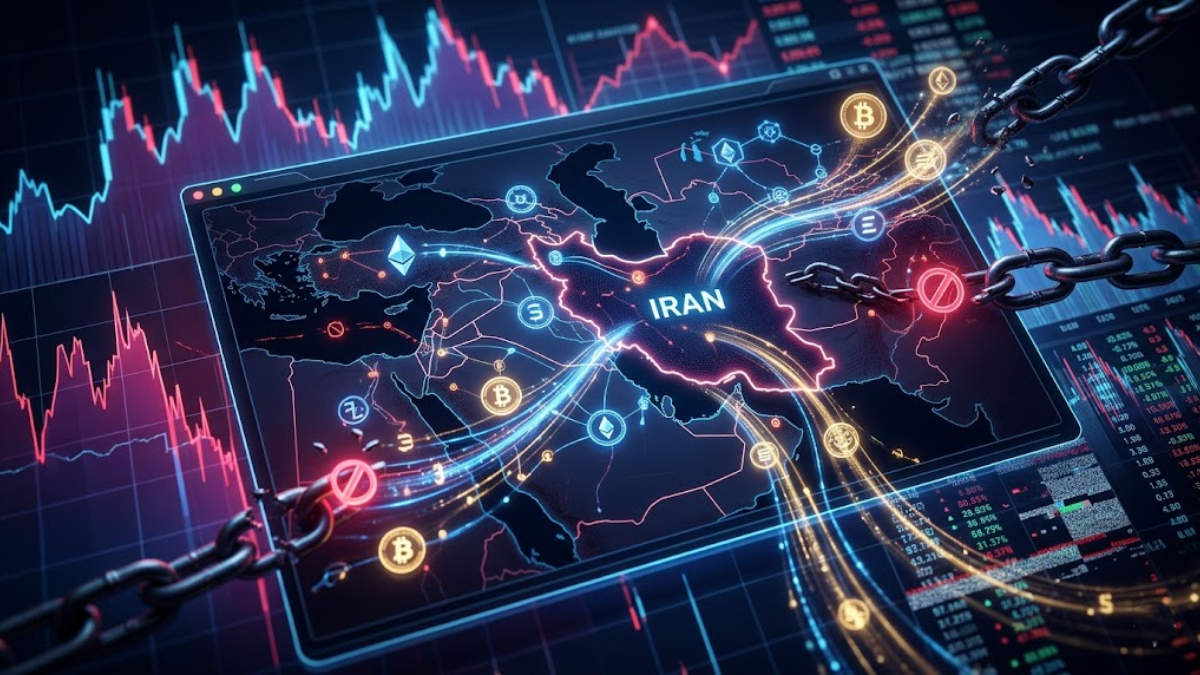


A sharp movement of digital money has been recorded in Iran during rising tensions involving Iran, the United States, and Israel. More than $10 million worth of cryptocurrencies left Iranian exchange platforms between February 28 and March 2, coinciding with the start of airstrikes and heightened conflict activity.
This movement was fast and large. By March 5, about one-third of the funds had already shifted to foreign cryptocurrency exchanges, showing rapid cross-border digital transfers.
Blockchain analytics firms tracking global crypto activity reported these unusual flows. According to Kaitlin Martin from Chainalysis, the size and timing of the transfers suggest that the movement is not only linked to ordinary users trying to protect savings, but may also involve organized or state-linked activity.
Even during internet disruptions, some transactions continued. Analysts from Elliptic noted that outflows were still visible despite limited access to exchange platforms, indicating that some users could still access crypto holdings.
Earlier, in June 2025, a major Iranian crypto exchange reportedly lost $90 million in a cyberattack, which blockchain security firm TRM Labs linked to attackers associated with Israel.
US claims China’s top chipmaker SMIC sent equipment to Iran’s military sector
Crypto as a Tool to Bypass Sanctions and Move Restricted Funds
Iran has long faced international sanctions that restrict access to global banking systems. Because of this, cryptocurrencies have become an alternative financial route for moving money outside traditional channels.
Crypto allows direct transfers between digital wallets without banks, making transactions harder to block or trace through normal financial systems. This is why it is often described as a form of “shadow banking.”
Blockchain tracking data shows that wallets linked to the Revolutionary Guards have received large inflows of crypto. Reports indicate more than $3 billion in cryptocurrency was transferred to these wallets in a single year, making up a major share of Iran’s digital financial activity.
These funds are believed to serve multiple purposes, including bypassing sanctions, enabling international transactions, and supporting external operations linked to allied groups. Some international authorities have also suggested crypto may be used in indirect trade involving oil and restricted goods.
There are also reports that digital currencies have been used in attempts to facilitate deals involving military equipment such as drones and missile systems through indirect payment channels.
Different types of cryptocurrencies are used depending on purpose. Stablecoins, which are tied to the US dollar, are preferred for large transfers due to lower volatility. Meanwhile, Bitcoin is commonly used for storage and movement of value outside centralized control.
Iran links end of conflict to sanctions removal and compensation from the United States
According to Craig Timm from ACAMS, crypto transactions are faster and cheaper than traditional bank transfers, but they are also difficult to fully trace due to gaps in global regulation systems.
Civilian Adoption Driven by Inflation and Financial Pressure
Alongside large-scale financial activity, civilians in Iran are increasingly using cryptocurrencies due to economic pressure. Inflation has been reported to be close to 50% even before the escalation of conflict conditions, reducing the value of local currency.
As the currency weakens, people look for ways to protect their savings. Bitcoin is widely used because it can be stored in private digital wallets and moved outside local banking systems.
Stablecoins are also used, mainly by larger financial actors, because they maintain a stable value linked to the US dollar and reduce risk during transfers.
Crypto activity has been observed to rise during periods of political tension and financial instability. Blockchain monitoring shows repeated spikes in usage when economic conditions worsen or uncertainty increases.
Even during internet restrictions, some crypto transactions still take place, showing that users can continue moving funds through available access points.