

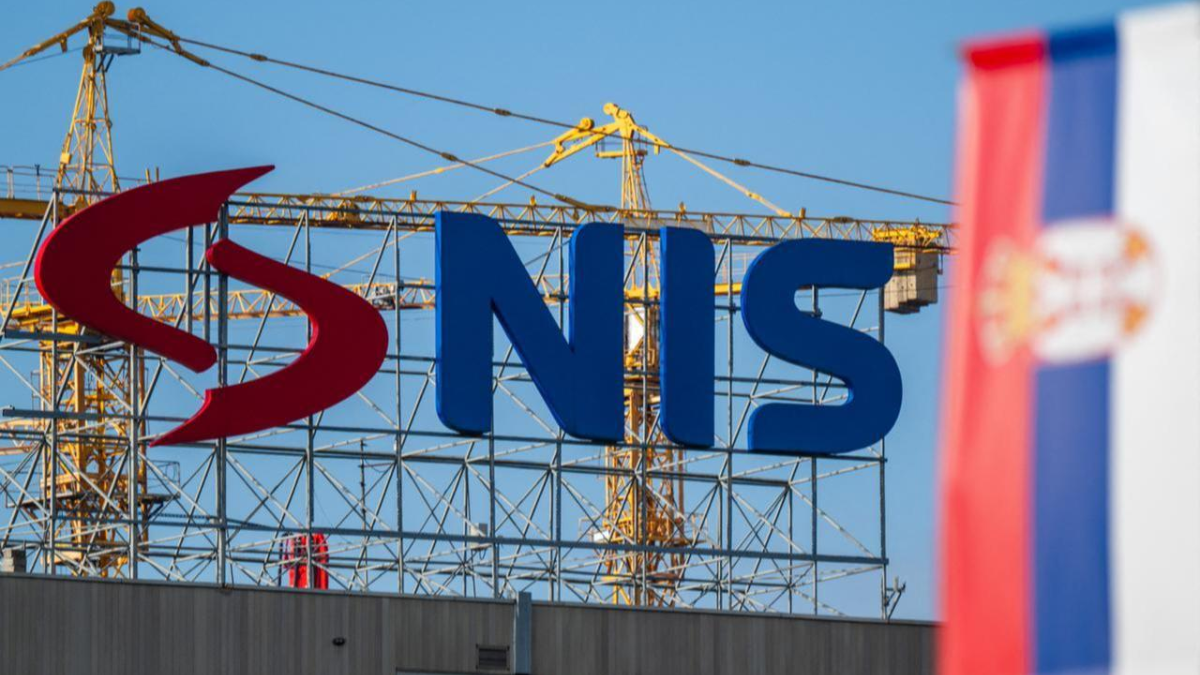


Serbia has received a temporary relief from U.S. sanctions, allowing its main oil company, NIS, to continue importing crude oil. The waiver has been extended until April 17. This decision provides the country with additional time to manage its fuel supply during a period of rising global oil prices.
The extension is especially important because oil prices have been increasing quickly. This rise is linked to ongoing tensions involving Iran, which have affected global energy markets. With prices changing almost daily, the extra time helps Serbia avoid sudden disruptions in its fuel supply. Dubravka Djedovic Handanovic highlighted that the extension is crucial at a time when oil prices are rising sharply.
NIS plays a key role in Serbia’s energy system. It operates the country’s only oil refinery, located in Pančevo, near the capital city. The company is also the largest supplier and retailer of fuel in Serbia. Because of this, any disruption to NIS operations could impact the entire country’s access to fuel. The refinery in Pančevo is central to processing crude oil into usable fuel products for the domestic market.
Russian Ownership and Sanctions Challenge
One of the main reasons for the sanctions issue is the ownership structure of NIS. A large portion of the company is owned by Russian firms. These include Gazprom, which holds about 44.9%, and Gazprom Neft, which owns around 11.3%.
Australia backs EU sanctions targeting cyber attacks linked to Chinese and Iranian entities
Due to international sanctions placed on Russian companies, businesses with strong Russian ties can face restrictions. This includes limits on buying oil or working with global partners. As a result, NIS risks losing access to crude oil imports if sanctions are fully enforced.
Earlier, the U.S. Treasury’s Office of Foreign Assets Control had set a deadline of March 24 for NIS to negotiate the removal or divestment of Russian ownership stakes. The latest extension gives more time for these discussions to continue without immediate disruption to supply.
To address this issue, discussions have been taking place about reducing Russian ownership in the company. A possible agreement involves Hungary’s MOL Group purchasing the stakes held by Russian firms. In addition, ADNOC from the United Arab Emirates may join as a minority stakeholder.
The Serbian government already owns nearly 30% of NIS, while the rest is held by smaller shareholders and employees. These ownership changes are being considered to help the company avoid sanctions in the future and maintain stable operations.
Jean-Noël Barrot says EU plans sanctions on 9 people over alleged Bucha war crimes
Fuel Supply Measures and Import Routes
To protect its domestic fuel supply, Serbia has taken several steps. The government has extended a ban on the export of crude oil and fuel products until April 2. This ban applies to diesel, gasoline, and crude oil, and covers all modes of transport, including road, rail, river, and pipeline shipments.
The aim of this measure is to ensure that enough fuel remains within the country. With global uncertainty and rising prices, keeping supplies stable has become a top priority for the government.
Serbia relies entirely on imported crude oil. Last year, most of its oil came from Kazakhstan, which accounted for nearly 60% of total imports. Other suppliers included Nigeria and Guyana, making them important contributors to the country’s energy needs.
The oil is transported by sea to the Croatian island of Krk. From there, it is delivered to Serbia through a pipeline operated by JANAF. This route is essential for maintaining a steady flow of crude oil into the country and supporting refinery operations.
The temporary waiver allows Serbia to continue using this supply chain without interruption. At the same time, Aleksandar Vucic is expected to announce further fuel and energy-saving measures after discussions with the country’s National Security Council. These steps are being prepared to manage fuel consumption and ensure stability in the domestic energy market during a period of uncertainty.