

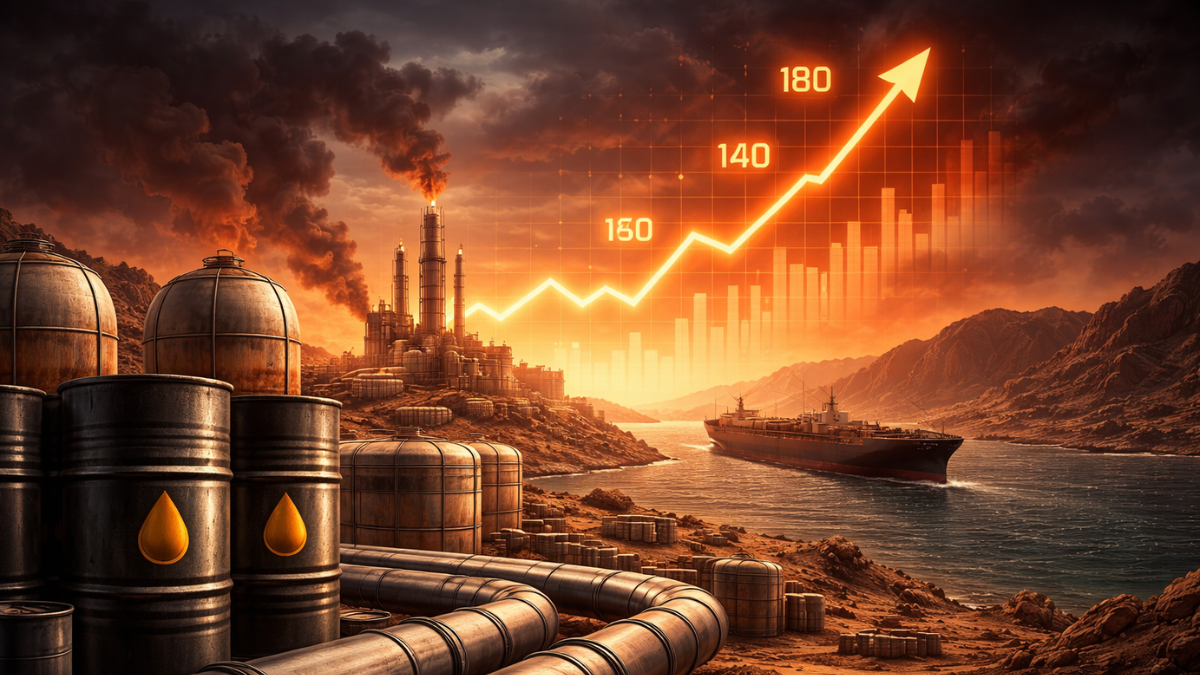


The ongoing conflict involving Iran has pushed global oil markets into sharp instability. Since the fighting began on February 28, oil prices have risen quickly. Brent crude has touched around $119 per barrel, while Gulf benchmarks linked to Oman crude have crossed $166 in recent trading.
The situation has worsened due to repeated attacks on major energy sites. These include strikes on Qatar’s Ras Laffan energy hub, Saudi facilities at Yanbu, and continued disruptions to ships in the Strait of Hormuz. This narrow route carries nearly 20 percent of the world’s oil supply, making it extremely important.
As supply tightens, stored oil reserves are expected to run low soon. Officials in Saudi Arabia are preparing for worst-case scenarios. Their estimates show prices rising to $138–$140 in the coming days, then moving toward $150 by mid-April. If disruptions continue, prices could climb further to $165 and even reach $180 per barrel.
Saudi crude is already being sold to Asian buyers at about $125 per barrel through Red Sea routes. Pricing linked to regional benchmarks has become highly volatile. Some buyers are concerned about these swings, but Saudi Aramco maintains that current prices reflect real supply conditions.
Gulf countries face economic strain as Iran war disrupts energy and travel
Why High Prices Are Causing Concern
Although higher oil prices usually bring higher profits, Saudi Arabia is not comfortable with the current surge. According to Umer Karim, rapid price increases can create long-term instability in the oil market.
When oil becomes too expensive, countries reduce consumption and look for alternatives like renewable energy. This can lower future demand for oil. At the same time, high fuel costs increase inflation globally. Transport, production, and daily expenses all become more expensive, reducing spending in other areas.
Market predictions are also becoming more extreme. Rebecca Babin has suggested that if the conflict continues, oil prices reaching $180 per barrel is highly possible based on current conditions.
Saudi Arabia prefers steady and moderate pricing to maintain stable demand and long-term contracts. Sudden spikes create uncertainty for both producers and buyers. There is also concern that high profits during a conflict may be viewed negatively, increasing global pressure on oil exporters.
Impact on Global Economies and India
Rising oil prices are already affecting economies worldwide. In the United States, gasoline prices have increased to about $3.88 per gallon from $2.93 just a month ago. Diesel prices have also surged to around $5.10 per gallon, raising costs for transportation and businesses.
Satellite internet crackdown grows in Iran as black-market Starlink sales rise
Philip Blancato has noted that higher fuel costs act like a financial burden on consumers and companies. People spend more on energy and less on other goods, slowing economic activity.
Concerns are also visible at the policy level. Jerome Powell has acknowledged that rising oil prices can affect inflation, employment, and overall economic growth at the same time.
For India, the impact is more serious. The country imports nearly 89 percent of its crude oil, and this is expected to reach around 90 percent by FY26. This means global price increases directly affect the economy.
Estimates show that every $10 rise in oil prices can widen India’s current account deficit by 30 to 40 basis points. If prices move toward $150–$180, the deficit could cross 3 percent of GDP, putting pressure on the rupee and increasing inflation.
Economic growth could also slow by up to one percentage point. This creates a challenge for the Reserve Bank of India, which must balance inflation control with growth.
In the past, India reduced fuel taxes and increased imports of discounted oil to manage such situations. However, in a high-price environment, such discounts may not remain as effective.