

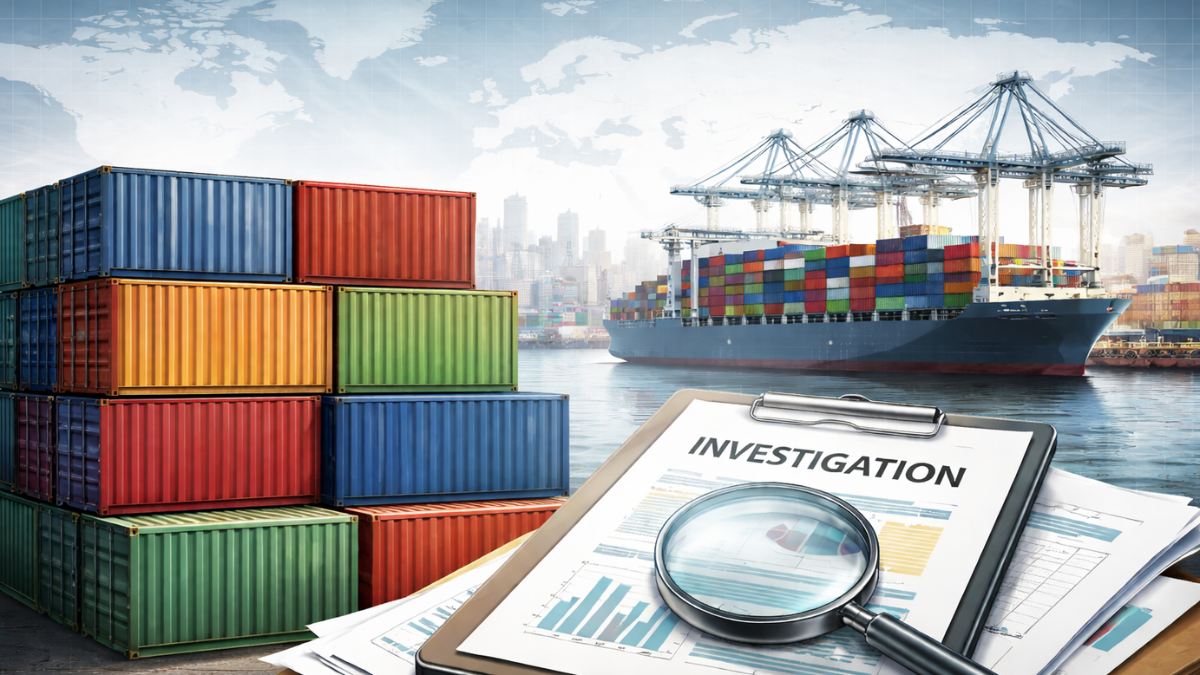


The United States has launched a major investigation into 60 countries, including Korea, China, and Japan, over concerns that goods produced using forced labor are entering the U.S. market. The inquiry was opened by the Office of the U.S. Trade Representative (USTR) on Thursday.
The investigations aim to determine whether the governments of these countries are taking enough action to stop imports made with forced labor. Officials said that failing to ban such goods could be unfair to U.S. businesses and workers.
Scope of the Investigation
The USTR announced that the probe covers a wide range of countries, including India, Indonesia, Britain, Australia, Canada, and Taiwan. Officials explained that they will examine whether the laws, policies, and practices in these economies are “unreasonable” or “discriminatory.” They will also check if these actions, or lack of them, place a burden on U.S. trade.
Authorities emphasized that the investigation is part of a broader effort to ensure that foreign producers do not gain an unfair cost advantage by using forced labor. They said governments around the world have generally agreed that forced labor is wrong. However, many countries have not effectively stopped products made with forced labor from being exported.
US launches Section 301 investigation into EU, China, India and other trading partners
The USTR’s investigation is conducted under Section 301 of the 1974 Trade Act. This law allows the United States to examine foreign trade practices that may be unfair or harmful to American businesses. The investigation will be public and transparent, meaning the process and findings will be available for scrutiny.
Legal Context and Recent Developments
This investigation follows a decision by the U.S. Supreme Court on February 20 that invalidated certain emergency tariffs previously imposed under the International Emergency Economic Powers Act (IEEPA). These earlier tariffs were aimed at specific countries but were struck down as legally improper.
In response, the U.S. government is using Section 301 to continue pursuing trade actions. The law provides a way to investigate country-by-country whether foreign practices are unfair to U.S. commerce.
Just a day before the forced labor probe, the U.S. had opened another trade inquiry targeting Korea, China, Japan, and 13 other countries. That inquiry looked at what officials described as “unfair” practices linked to overproduction and structural excess capacity. Both inquiries share the goal of examining foreign trade practices that might disadvantage U.S. workers and firms.
Statements and Rationale
U.S. trade officials highlighted that workers and companies in the United States have long faced competition from foreign producers who may benefit from forced labor. They said this gives those producers an artificial cost advantage and creates an uneven playing field.
Former US envoy Steven Pifer warns easing Russia sanctions now could strengthen Moscow’s war effort
Authorities stressed that the investigation is not limited to a few countries. Instead, it covers a wide group of economies that play a significant role in global trade. The aim is to see if governments are adequately enforcing measures to prevent goods produced under forced labor from entering their markets.
The USTR emphasized that the process will be open and transparent. Findings from the investigations could potentially lead to trade remedies, including tariffs or other actions to address unfair practices. The focus remains on examining the facts about forced labor in global supply chains and its impact on U.S. commerce.
Officials also noted that, despite international agreements and widespread condemnation of forced labor, many governments have not fully enforced bans on imports made under such conditions. This investigation is part of a larger effort to ensure that U.S. workers and businesses are not unfairly disadvantaged by products made with forced labor abroad.
The U.S. investigation represents a significant move to monitor global trade practices and ensure ethical standards in imported goods. Countries under scrutiny now face detailed reviews of their policies and enforcement related to forced labor.