

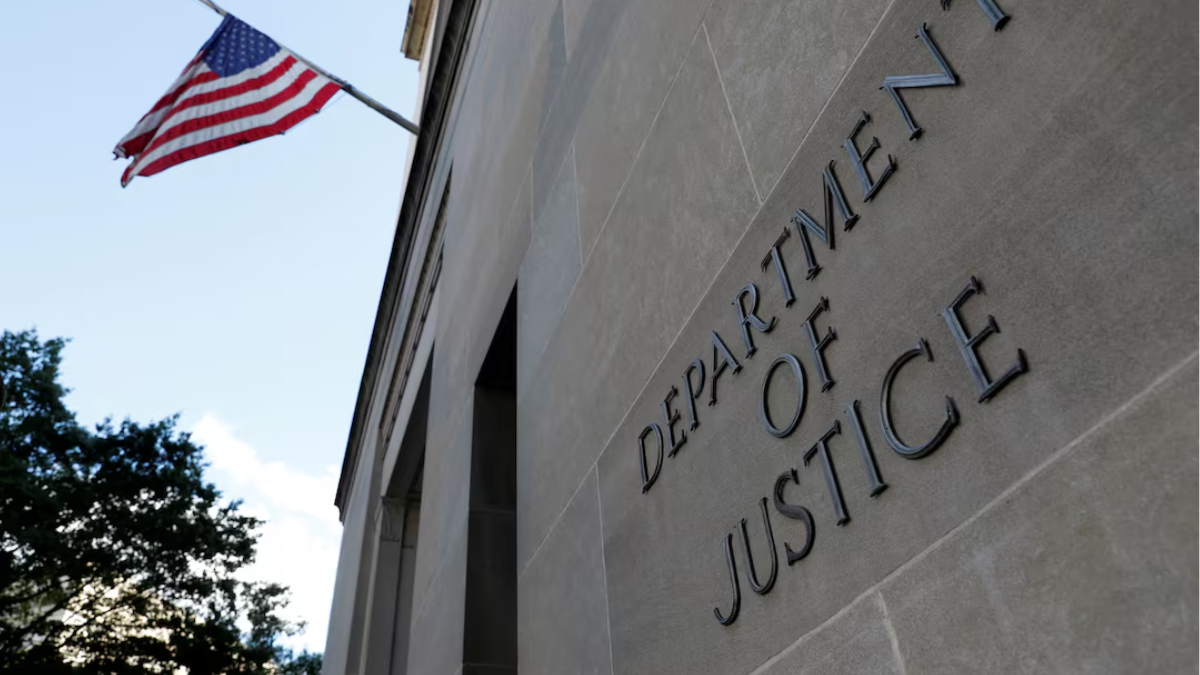


The U.S. Department of Justice (DOJ) announced that Roberto Garcia Villarreal, a San Benito, Texas resident, has been sentenced to 30 months in federal prison and ordered to pay a $50,000 criminal fine for his role in a violent antitrust conspiracy targeting the transmigrante forwarding agency industry near the Los Indios Bridge on the U.S.–Mexico border. The investigation was led by the DOJ Antitrust Division, with support from the Federal Bureau of Investigation (FBI) and Homeland Security Investigations (HSI). Authorities said the scheme used price fixing, market allocation, extortion payments, and intimidation to monopolize the vehicle-export forwarding business operating between Texas and Mexico.
The federal court ordered Villarreal to begin serving his sentence immediately.
DOJ: Violence Used to Control Border Trade
According to the Justice Department, Villarreal and several co-conspirators attempted to dominate the transmigrante forwarding services market in the Los Indios, Texas border region, located near Harlingen and Brownsville.
Transmigrantes are traders who transport used vehicles and goods from the United States through Mexico to Central America. Because only a few crossings allow this activity, the Los Indios Bridge became a critical gateway for the industry.
Authorities said Villarreal and his associates used violence, threats, and extortion payments to force other businesses to join their price-fixing cartel.
DOJ reportedly plans to drop appeal in legal fight over Trump executive orders targeting law firms
“Antitrust criminals deserve lengthy sentences for the economic and physical violence they sow,” said Daniel W. Glad, Acting Deputy Assistant Attorney General for the DOJ Antitrust Division.
Officials said the prosecution is part of a broader effort to restore competition and dismantle criminal networks operating along the U.S.–Mexico border economy.
“Pool” System Used to Fix Prices
Court documents reveal the conspirators created a centralized organization known as the “Pool.”
This entity was used to:
-
Fix prices for transmigrante forwarding services
-
Divide revenue among cartel members
-
Eliminate competition from independent agencies
-
Force businesses to join the cartel
Forwarding agencies that wanted to operate at the border were required to join the Pool and pay mandatory fees.
In addition to price fixing, businesses were forced to pay a “piso” extortion fee for every transaction processed in the industry.
DOJ forms “Tiger Team” as animal cruelty becomes national enforcement priority
Authorities said members of the conspiracy monitored agencies closely to ensure compliance with cartel rules.
Violence, Intimidation, and Money Laundering
Federal prosecutors described the operation as a criminal enterprise that relied on intimidation and financial manipulation.
“Roberto Garcia chose to join a criminal enterprise that seized control of an industry through threats and violence, rigged prices against legitimate businesses, and laundered its proceeds,” said U.S. Attorney Nicholas J. Ganjei for the Southern District of Texas.
Officials said the conspiracy harmed small businesses and distorted prices in a sector that plays a key role in cross-border trade between the United States, Mexico, and Central America.
Federal Agencies Target Border Crime Networks
Investigators from HSI San Antonio, the FBI Criminal Division, and the DOJ Antitrust Division worked together to dismantle the network.
CarMax agrees to $500,000 settlement after DOJ alleges violations of military protection law
“The use of violence and intimidation to eliminate competition will not be tolerated,” said Gregory Heeb, Acting Assistant Director of the FBI Criminal Division.
Authorities said the case highlights the dangers posed by transnational criminal organizations operating near the U.S.–Mexico border.