

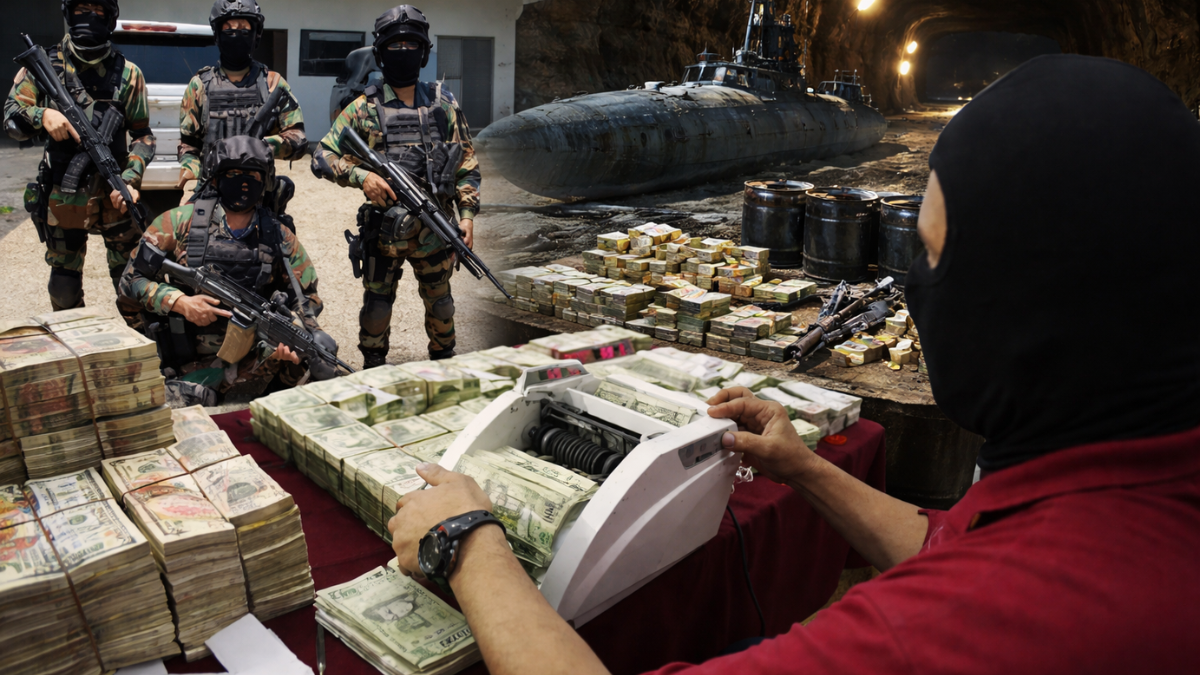


Estimates from security agencies and research groups suggest that major Mexican cartels generate more than $40 billion each year through a wide range of illegal activities. These earnings place organized crime networks among some of the most financially powerful non-state actors in the world. The scale of their operations has drawn attention from governments, financial watchdogs, and international security organizations.
Revenue does not come from a single source. Drug trafficking remains the primary income stream, but profits also flow from extortion, fuel theft, human smuggling, and other illicit markets. Because these networks operate in secrecy, exact figures are difficult to confirm, and totals vary depending on methodology and scope.
The Major Cartel Groups and Their Economic Reach
Several groups dominate the landscape of organized crime in Mexico. Among the most frequently cited are the Sinaloa Cartel, the Jalisco New Generation Cartel (CJNG), the Gulf Cartel, and remnants of the Los Zetas network. These organizations control trafficking routes, logistics systems, and distribution networks that extend beyond national borders.
U.S. prosecutors drop core ‘narco cartel’ narrative in stunning Venezuela indictment shift
Researchers estimate that combined revenues from these groups reach tens of billions of dollars annually. To show how much money cartels have, analysts often compare their income to the GDP of smaller countries. While GDP measures legal economic output and cartel earnings reflect illegal enterprise income, the comparison highlights the scale at which these groups operate.
Drug trafficking remains the core business. Substances are produced, transported, and distributed across complex international supply chains. At the same time, diversification into other criminal activities has strengthened financial stability for these organizations. Fuel theft, for example, involves tapping pipelines and selling stolen petroleum products through informal markets. Extortion of local businesses and transport networks adds consistent cash flow.
Human smuggling is another revenue stream tied to control over migration routes. Fees collected for movement across borders can generate significant profits and overlap with other criminal activities.
Advanced Resources and Operational Infrastructure
Reports indicate that major cartels operate with increasingly sophisticated tools. Authorities have documented the use of semi-submersible vessels, drones, encrypted communication platforms, and extensive tunnel systems designed to move goods while avoiding detection.
Underground tunnels have been found equipped with lighting, ventilation, and transport tracks, suggesting structured engineering efforts. These routes allow movement of drugs, cash, and equipment across difficult terrain or borders. Drones are used for surveillance, coordination, and monitoring rival activity.
Access to military-style weapons and tactical gear has also been reported. This reflects the financial capacity of these groups rather than formal military structure, but it demonstrates the level of organization and resources available.
Infrastructure extends beyond transport. Storage facilities, safe houses, and underground bunkers form part of logistical networks that support large-scale operations. These systems enable flexibility when enforcement pressure increases, allowing routes and methods to change quickly.
Financial Networks and Enforcement Efforts
Authorities increasingly focus on financial disruption rather than only intercepting shipments. Investigations target money laundering channels used to convert illegal profits into legitimate assets. Funds may move through cash-intensive businesses, property purchases, agriculture, transport companies, and digital transfers.
Financial intelligence units analyze transaction patterns to identify suspicious flows. Asset seizures frequently include cash, vehicles, properties, and equipment linked to organized crime. These actions aim to weaken operational capacity by limiting access to capital.
U.S. prosecutors drop core ‘narco cartel’ narrative in stunning Venezuela
indictment shift
Cartel activity is not confined to one country. Trafficking routes and payment systems cross multiple regions, making coordination between law enforcement agencies essential. Joint operations focus on dismantling logistics networks, identifying financial intermediaries, and blocking trafficking corridors.
The economic scale of the Sinaloa Cartel, CJNG, Gulf Cartel, and related networks continues to shape security discussions. Their diversified income streams, access to advanced tools, and global financial links underline the size and complexity of organized crime structures operating today.