

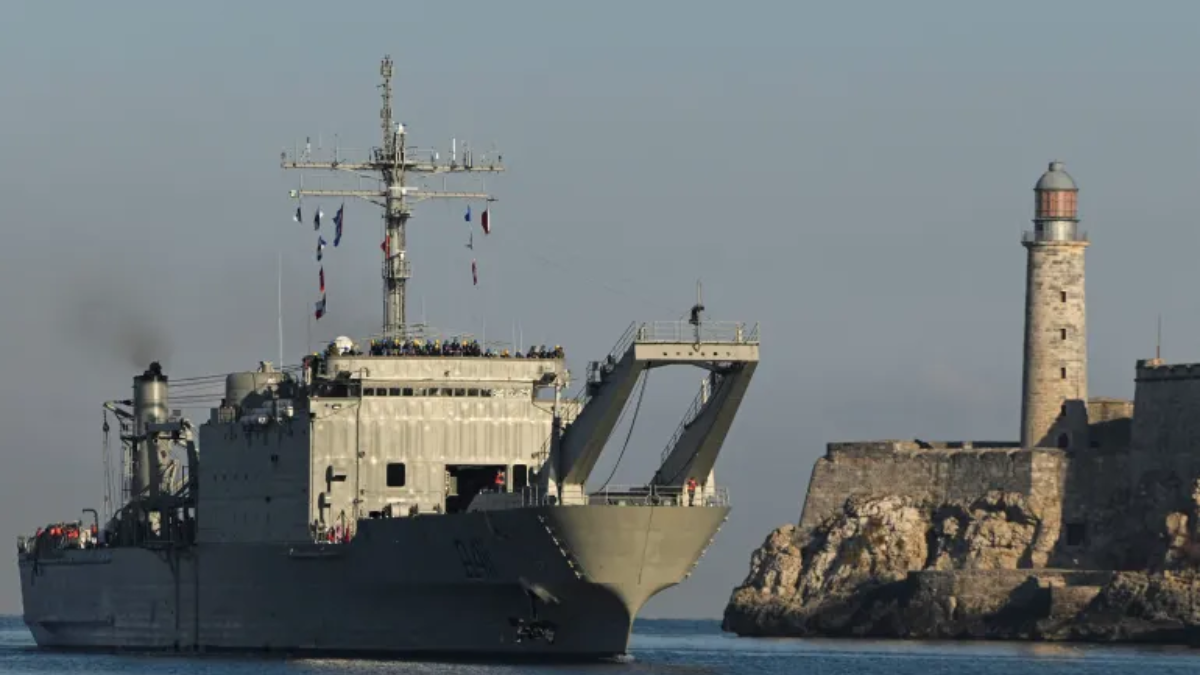


Two ships from Mexico have arrived at the port of Havana, bringing humanitarian aid to Cuba as the country struggles with growing fuel shortages. The arrival comes while the United States, under President Donald Trump, continues efforts to block Cuba’s access to oil and fuel supplies. This has put immense pressure on the country’s energy grid and critical infrastructure, affecting daily life.
One of the vessels, the Papaloapan, was seen unloading large white pallets on the dock. Pedestrians walking along Havana’s seawall stopped to watch as the humanitarian cargo was moved ashore. The shipment, described as essential aid, includes food, hygiene products, and other basic supplies. While it does not include fuel, it is intended to help civilians cope with shortages caused by the lack of energy.
Mexican President Claudia Sheinbaum addressed the delivery during her morning news conference. She confirmed that more aid would follow once the ships returned, promising “different forms of help, different forms of support.” She also emphasized that Mexico aims to help open dialogue between Cuba and the United States, while insisting that Cuba’s sovereignty and decision-making remain the highest priority.
India’s exporters face fresh setback as Mexico raises tariffs on non-FTA nations
Growing Pressure on Cuba’s Energy
Since January, the United States has intensified measures to restrict oil supplies that power Cuba’s electricity, hospitals, transport, and other essential services. Fuel is critical for keeping the country running, and shortages have led to blackouts, disruptions in water supply, transport challenges, and interruptions in daily services that affect people across the island.
The current effort is part of a long-standing series of sanctions imposed by the United States on Cuba, dating back to the Cold War. Over decades, these sanctions have affected trade, banking, and energy flows. The recent focus on oil has intensified the impact, making it difficult for Cuba to maintain reliable electricity and support vital services.
Experts from the United Nations have warned that the country is approaching a dangerous point. They highlighted that if fuel supplies continue to dwindle, Cuba could face a humanitarian collapse, with risks to food distribution, healthcare, and basic living conditions.
The current embargo began on January 3, when Donald Trump authorized a military operation targeting Venezuela. The operation involved the abduction of Venezuela’s then-leader Nicolas Maduro and his wife Cilia Flores. Following this event, the flow of oil to Cuba became more restricted. Venezuela has historically been a key energy partner for Cuba, and disruptions in this relationship have worsened the shortage.
Mexico walks tariff tightrope as US warns against fuel shipments to crisis-hit Cuba
Humanitarian Aid Arrives
Amid this crisis, the Mexican ships brought vital humanitarian cargo to Havana. The white pallets stacked on the dock were a visible sign of international support. While the cargo does not include fuel, it is intended to help people with food, hygiene, and other essentials, easing some of the pressures caused by energy shortages.
President Claudia Sheinbaum described the shipment as part of a broader effort to provide ongoing support. She said additional aid would follow in the future, highlighting a continuing commitment. Mexico also positioned itself as a bridge for dialogue between Cuba and the United States, while stressing that any talks must respect Cuba’s sovereignty.
The arrival of these ships does not change the overall fuel situation, but it provides immediate relief to people affected by shortages. Locals gathered at the harbour to witness the unloading, reflecting the significance of the aid in the midst of daily challenges. The ships in Havana stand as a visible symbol of support during a period of difficulty caused by fuel shortages, sanctions, and long-standing political tensions.