

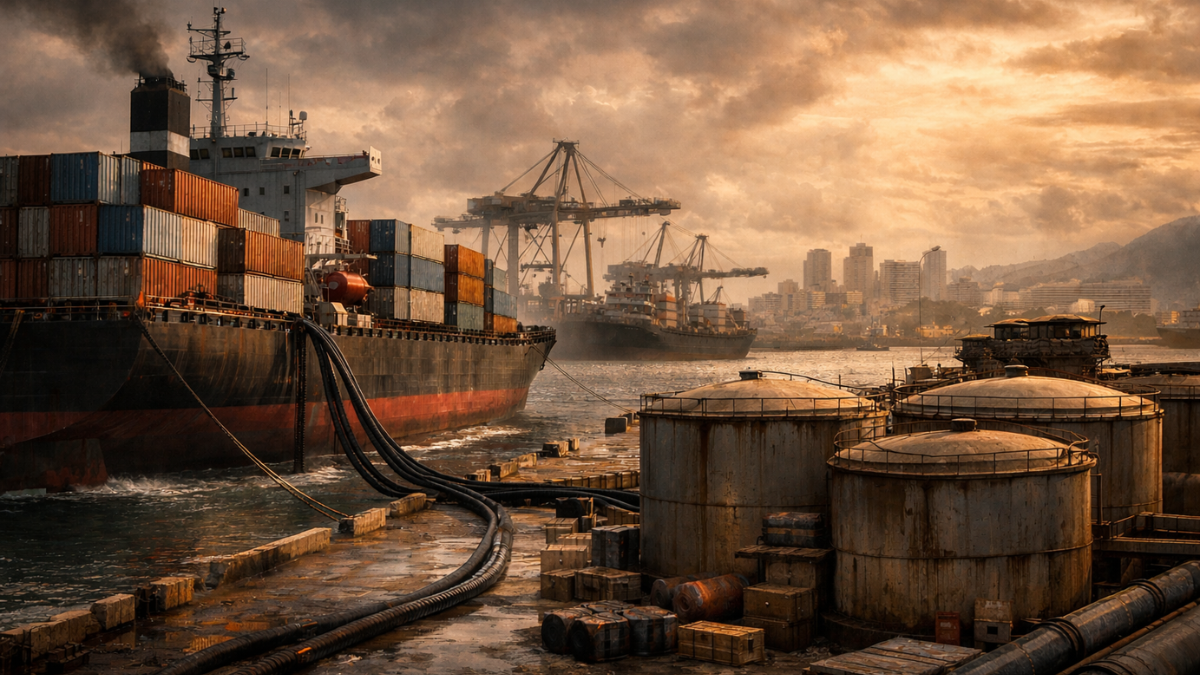


The United States has taken strong action against the Houthi group in Yemen by imposing new sanctions on Friday. These sanctions target 21 individuals and entities, as well as a ship and the captains of four previously sanctioned vessels. The reason: delivering oil products and other goods to ports controlled by the Houthis, providing the group with money and resources to continue its operations.
U.S. Targets Shipping Networks
The sanctions were announced by the U.S. Treasury Department’s Office of Foreign Assets Control (OFAC). They aim to stop the transfer of oil products, weapons, and other dual-use equipment that can help fund the Houthi group. In addition to companies, the Treasury singled out the captains of four ships that delivered petroleum products to Houthi-controlled ports between April and June 2025. These shipments included liquefied petroleum gas and gasoline.
The Treasury said the Houthis pose a threat to the United States by attacking commercial ships in the Red Sea and committing acts of terror. Officials explained that these sanctions are meant to cut off nearly two dozen individuals and entities involved in transferring oil, procuring weapons, and providing financial services to the group.
Among those targeted are alleged front companies based in Yemen, Oman, and the United Arab Emirates. One shipping company and its sole director delivered oil products to a Houthi-controlled port in July 2025, even after the expiration of a U.S. humanitarian license. A vessel under this arrangement discharged fuel at the port, violating restrictions on doing business with a group designated as a Foreign Terrorist Organization.
United States expands terrorism sanctions to Muslim Brotherhood chapters in 3 countries
Background on the Houthi Fuel Deliveries
The Houthis were officially designated a Foreign Terrorist Organization (FTO) by the United States in March 2025. After this designation, OFAC issued a temporary humanitarian license allowing in-progress petroleum deliveries to northern Yemen ports to be safely offloaded. This license was valid only until April 4, 2025.
Despite the license expiration, some vessels continued to deliver petroleum products to ports controlled by the Houthis. According to the Treasury, these shipments provided significant economic support to the group, helping fund weapons, operations, and other activities.
By sanctioning the captains of these vessels, the U.S. is sending a strong warning that individuals responsible for shipping decisions can also be held personally accountable. These sanctions include freezing assets, restricting access to U.S. financial systems, and signaling to the global shipping industry that violations will have serious consequences.
Taiwan doubles down on AI chip leadership in landmark US Tariffs deal as China looks on
Efforts to Disrupt Houthi Funding
The Treasury said these actions are part of a broader effort to disrupt the Houthis’ revenue and smuggling networks, which allow the group to maintain the capability to conduct destabilizing activities, including attacks on commercial ships in the Red Sea.
The U.S. emphasized that it will continue to use all tools at its disposal to identify and target individuals and networks that enable Houthi terrorism. These sanctions build on previous actions aimed at cutting off the group’s financial support and controlling the flow of petroleum products to Houthi-controlled areas.
Officials explained that by targeting companies, vessels, and captains, the U.S. is increasing pressure to prevent fuel deliveries to Houthi-controlled ports. The Treasury said these measures are an important step in exposing networks and individuals enabling Houthi terrorism and protecting the Red Sea shipping lanes from attacks.
The move reflects the U.S. government’s commitment to enforcing the law and stopping illegal support for groups that threaten international shipping and regional stability. It also highlights the serious consequences for those who continue business with sanctioned groups despite restrictions.