

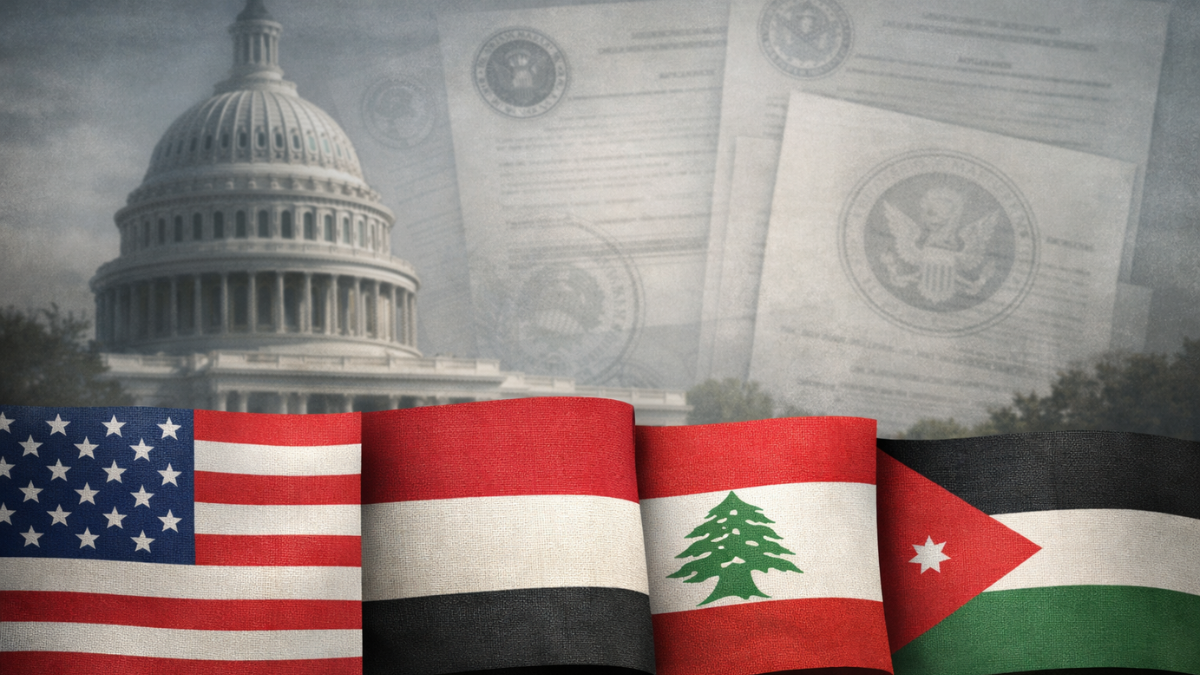


The United States has designated three Muslim Brotherhood chapters operating in Egypt, Lebanon, and Jordan as terrorist organizations. The decision represents a major escalation in Washington’s approach toward groups it accuses of threatening regional security and opposing Israeli interests. The move follows an executive order issued by US President Donald Trump, which directed federal agencies to begin the process of blacklisting selected Muslim Brotherhood organizations.
The announcement was made on Tuesday and involved multiple US government agencies applying different levels of terrorist classification. The designations carry serious legal, financial, and political consequences both inside and outside the Middle East.
US Designations and Legal Consequences
The US Department of the Treasury designated the Muslim Brotherhood chapters in Egypt and Jordan as “Specially Designated Global Terrorists.” At the same time, the US State Department applied the more severe “Foreign Terrorist Organization” designation to the Lebanese branch, known as al-Jamaa al-Islamiya.
US authorities said the decision was based on alleged support for the Palestinian group Hamas and activities described as harmful to Israeli interests in the Middle East. According to the Treasury, these organizations present themselves as legitimate civic or political groups while secretly supporting terrorist activity.
Under US law, the designations make it illegal for individuals or organizations to provide money, services, or any form of material support to the listed groups. The measures also allow the US government to freeze assets, block financial transactions, and impose economic sanctions aimed at cutting off funding. The Foreign Terrorist Organization label also includes a ban on group members entering the United States.
Russia becomes flag of choice as sanctioned oil tankers scramble to avoid seizures
US officials said the move is part of a broader effort to confront organizations accused of destabilizing the region and challenging US allies.
Middle East Reactions and Political Background
The Muslim Brotherhood rejected the US decision. Salah Abdel Haq, acting general guide of the Egyptian Muslim Brotherhood, said the group “categorically rejects” the designation and will pursue legal avenues to challenge it. He denied allegations of terrorism and said the decision was influenced by pressure from Israel and the United Arab Emirates rather than credible evidence.
Egypt’s government welcomed the US move. The Egyptian Foreign Ministry described the designation as a “pivotal step” and said it reflects the danger of the group’s ideology and the threat it poses to regional and international security. Egypt has banned the Muslim Brotherhood since 2013 and has carried out a sweeping crackdown that forced many members into exile or underground operations.
In Lebanon, al-Jamaa al-Islamiya stated that it is a licensed political and social organization that has operated openly for decades and is represented in parliament. The group said the US designation has no legal effect inside Lebanon and described the decision as political rather than judicial.
Russian-flagged tanker carrying Venezuelan oil seized by U.S. after refusal to allow boarding
In Jordan, the Muslim Brotherhood operates through its political arm, the Islamic Action Front, which won 31 seats in the 2024 parliamentary elections. However, Jordan banned the organization last year, accusing it of links to a sabotage plot.
The Muslim Brotherhood was founded in Egypt in 1928 by Islamic scholar Hassan al-Banna and later expanded across the Middle East through political parties and social organizations.
Gaza, Israel, and Effects Inside the US
The US designation is closely tied to the war in Gaza. Muslim Brotherhood-inspired groups across the region have been vocal critics of Israel’s military campaign. In Lebanon, al-Jamaa al-Islamiya backed Hezbollah in actions described as support for Gaza, which escalated into full-scale war in September 2024.
Inside the United States, the decision has had domestic consequences. Following the federal designations, the Republican governors of Texas and Florida moved to label the Muslim Brotherhood and the Council on American-Islamic Relations as terrorist groups.
The Council on American-Islamic Relations denied any links to the Muslim Brotherhood and filed lawsuits against the two states, saying the actions harm civil rights and unfairly target Muslim communities.
The US designations impose strict legal and financial penalties and have intensified debate over security policies, political activism, and the treatment of Muslim organizations amid ongoing Middle East tensions.