
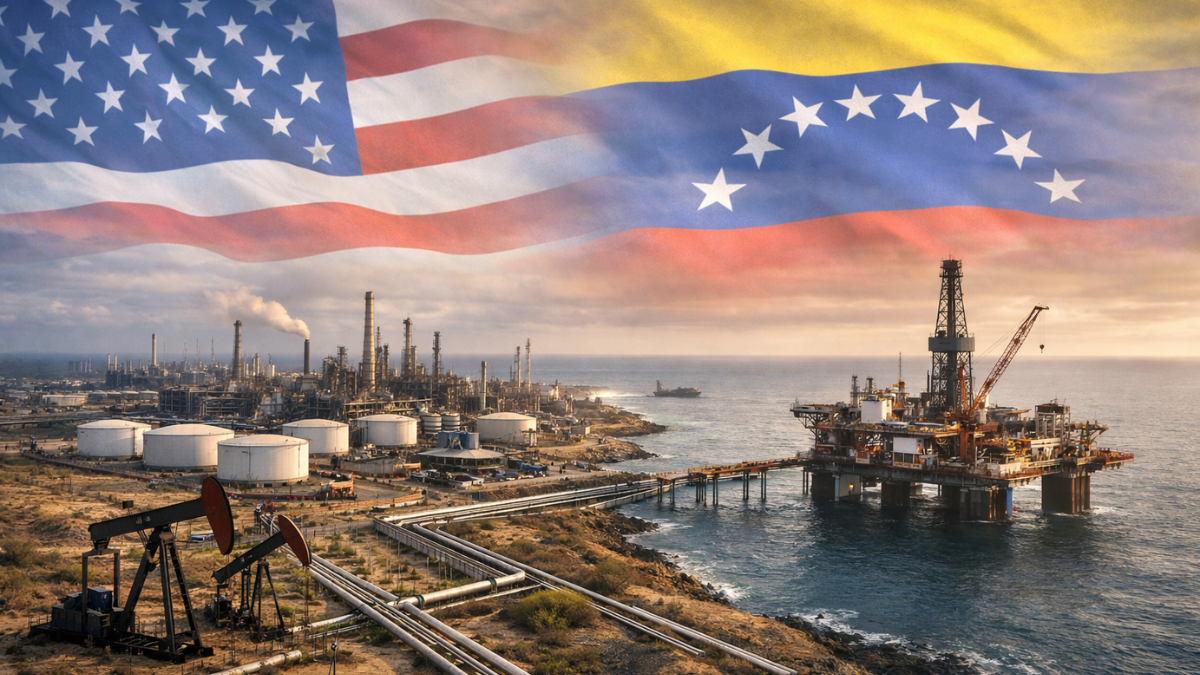


The United States has taken a significant step in Colombia following recent public comments by President Donald Trump. He said the U.S. will help rebuild Venezuela and remain involved in the country for a long time. He also suggested that the United States will not carry out military action in Colombia, softening his tone after several days of tension.
These statements came shortly after U.S. forces captured Venezuela’s president, Nicolás Maduro, and took him to New York. The operation has led to strong reactions across Latin America and raised serious questions in the United States about military authority, foreign control, and regional stability.
Long-Term U.S. Oversight and Oil Control in Venezuela
President Trump said the United States plans to oversee Venezuela for much longer than a few months or a year. When asked how long U.S. involvement might last, he said, “Only time will tell,” but stressed that it would be a long-term effort.
Oil plays a central role in the plan. Venezuela has some of the world’s largest oil reserves, yet its oil industry has been deeply damaged. Trump said the United States would use Venezuelan oil and take oil as part of the rebuilding process. He added that this approach would help lower oil prices while also providing money to Venezuela, which he said is in urgent financial need.
The plan includes the United States controlling how Venezuelan oil is sold. Secretary of State Marco Rubio said the U.S. plans to effectively take over oil sales indefinitely. Under this plan, Venezuelan leaders would not control the money earned from oil. Instead, the United States would manage how the funds are distributed.
Russian-flagged tanker carrying Venezuelan oil seized by U.S. after refusal to allow boarding
Rubio described the plan as having three phases. These include U.S. control over oil sales, opening Venezuela’s market to Western companies, and managing a political transition. According to U.S. officials, this structure is meant to stabilize the country and support rebuilding.
Trump also said Venezuela’s interim government, made up of allies of Nicolás Maduro, is cooperating with the United States. This cooperation, he said, is happening despite strong public criticism from Venezuelan officials after Maduro was captured by American forces.
Colombia Tensions and Shift in U.S. Tone
The U.S. operation in Venezuela has been condemned by several countries in Latin America. Some of the strongest criticism came from Colombia and its president, Gustavo Petro.
In the days after the raid in Caracas, Trump used harsh language toward Petro. He called him “sick” and described Colombia as a cocaine hub. Trump also said that U.S. military action against Colombia “sounds good,” comments that caused concern across the region.
However, Trump’s tone changed after a lengthy phone call with President Petro. After the call, Trump said it had been a “great honor” to speak with him. He explained that Petro called to discuss drug issues and other disagreements between the two countries.
Multiple Venezuelan tankers depart without authorization during U.S. blockade
Following the call, Trump suggested that the United States would not intervene militarily in Colombia. His remarks appeared to calm tensions that had been rising quickly.
Trump also said he believed the removal of Nicolás Maduro had sent a strong message to other leaders in Latin America. He suggested the event had pressured regional leaders to align more closely with U.S. demands.
U.S. Political Debate and Conditions Inside Venezuela
Inside the United States, the situation has triggered political debate. Lawmakers, particularly Democrats, have raised concerns that the Trump administration carried out the mission to capture Nicolás Maduro without clear approval from Congress.
The U.S. Senate is expected to vote on a war powers resolution that would limit the president’s ability to take further military action without direct authorization from Congress. The vote follows days of criticism that lawmakers were not fully briefed on the Venezuela operation.
Meanwhile, conditions inside Venezuela remain severe. A recent Gallup poll found that most people struggled to afford food last year, and only a small number had stable jobs. The findings highlight the deep economic hardship faced by Venezuelans in the months before Maduro was removed from power.