
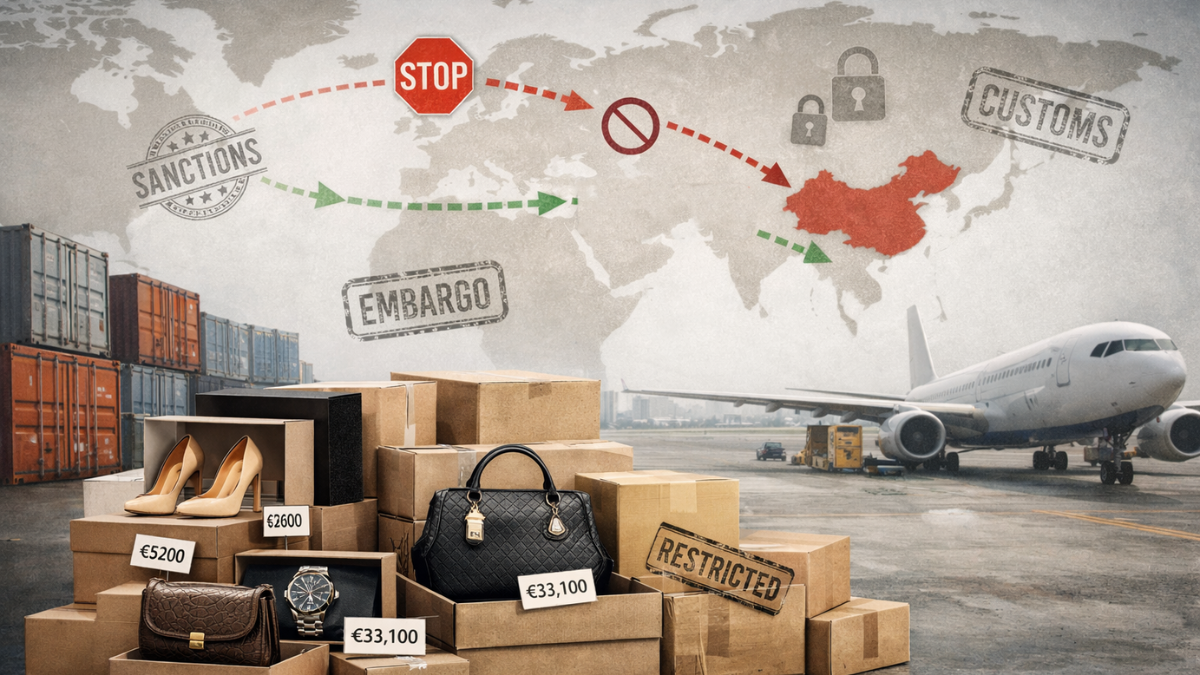
Russian shoppers can still buy high-end European luxury goods despite strict Western sanctions introduced in 2022. The main change is not availability, but price. Luxury fashion, handbags, and watches sold in Moscow now often cost twice as much as similar items in European Union countries. This situation shows how sanctions have altered supply routes and pricing, without fully removing luxury products from the Russian market.
A well-known Moscow department store, Tsum, continues to list thousands of luxury items online. These include products from famous European brands such as Dolce & Gabbana, Burberry, Gucci, Bottega Veneta, Yves Saint Laurent (YSL), Valentino, and Chloe. Some of these brands are owned by major luxury groups like Kering and Richemont. The listings remain visible to anyone online, even though EU rules ban the export of expensive luxury goods to Russia.
Luxury Goods Still Sold Despite EU Export Ban
The European Union banned the export of luxury goods costing more than €300 at wholesale value to Russia or for use in Russia. This rule covers a wide range of items, including clothing, handbags, watches, luggage, champagne, caviar, and other luxury products. In retail terms, a €300 wholesale price often translates to a shop price of around €1,000 to €1,200, meaning many luxury items fall under the ban.
Despite this, Tsum’s online catalogue shows large selections of high-end goods. The store lists more than 4,000 items from Dolce & Gabbana alone, along with products from Brunello Cucinelli and other European brands. According to customs records, the company running Tsum, Mercury Fashion, only imports cheaper items directly from the EU, keeping shipments below the €300 limit.
Mercury Fashion was founded in 1993 by Leonid Fridlyand and Leonid Strunin and later became Russia’s largest luxury goods distributor. The company bought Tsum in 2016 and also owns the auction house Phillips. While direct imports follow the rules, more expensive goods still reach Russia through other channels.
Third Countries Enable Continued Supply of Luxury Items
Sanctions do not prevent European brands from selling luxury goods to buyers in third countries. As a result, many high-end items are first sold to intermediaries in countries such as Turkey, the United Arab Emirates, and China. These goods are then re-exported into Russia.
This practice has led to the growth of a Russian logistics industry focused on bringing luxury goods into the country. Companies such as Global Style Import advertise their ability to source the latest European fashion. Customs data shows that in the first quarter of 2025, Global Style Import imported around $1.7 million worth of Dolce & Gabbana goods from Italy via Turkey and the UAE. Some items, including a silk dress, were declared at prices well above the €300 threshold.
Brunello Cucinelli has also been linked to these trade routes. In September, the company’s chief executive, Luca Lisandroni, said it continued supplying Moscow department stores with items priced within EU limits. Russian customs data supports this, showing that direct shipments from the EU were mostly below €300 per item. Higher-priced Brunello Cucinelli products, however, continued to enter Russia through third countries, mainly Turkey. Research by Morpheus Research previously highlighted these activities and contributed to a sharp fall in the company’s share price.
Tariffs of 21.9% to 42.7% target EU dairy products as China cites damage to domestic producers
Moscow Prices Show Luxury Costs Have Doubled
While luxury goods remain available, Russian consumers pay a heavy premium. An analysis of around 600 luxury items sold by Tsum compared prices in Moscow with matching products in France and Italy. The matches were made using images and product descriptions, checked both by artificial intelligence and manual review.
On average, the items cost €1,229 in the EU but €2,626 in Moscow. Luxury watches showed similar mark-ups, selling for about €33,100 in Moscow compared with €17,700 in Western Europe. Handbags showed the largest differences, with average prices rising from €1,900 in Europe to €5,200 in Moscow.
Customs data also shows that Mercury Fashion bought $6.7 million worth of Dolce & Gabbana goods in the first quarter of 2025, with none of the direct shipments exceeding the €300 limit. Despite this, Dolce & Gabbana’s website still lists Tsum as an official retailer, and the brand continues to operate a store in Moscow. This reflects how sanctions have increased prices and complicated trade routes, while luxury goods remain openly available in Russia.