

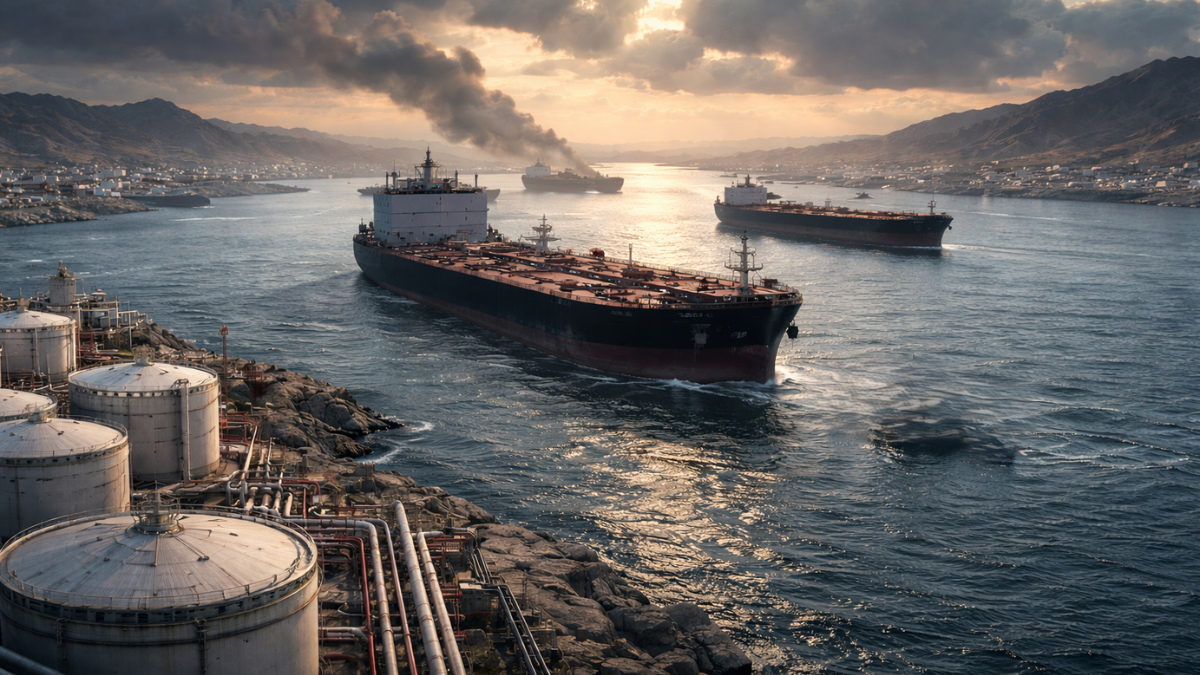


Iraq’s oil industry is facing a severe crisis as the ongoing conflict between the United States, Israel, and Iran has disrupted oil shipping through the crucial Strait of Hormuz. The southern oilfields of Iraq, including major sites near Basra, have seen production fall sharply. Industry sources report that output has dropped from approximately 4.3 million barrels per day to just 1.3 million barrels per day. This represents a staggering 70% decline in the country’s oil production.
The reduction is largely due to the blockade and the inability of tankers to safely pass through the Strait of Hormuz. Although the strait has not been officially closed, the threat of military attacks and missile strikes has forced shipping companies to halt their operations. Tankers cannot reach the southern ports, leaving storage tanks full and forcing Iraq to reduce oil extraction.
The sudden collapse in production is affecting exports as well. Previously, Iraq exported millions of barrels daily, but current operations have fallen to about 800,000 barrels per day. This massive slowdown is unprecedented in recent decades and highlights how vulnerable oil supply is to regional conflicts. Iraq’s southern ports, which handle most of the country’s oil exports, are particularly impacted by the halt in tanker movement.
The current situation has also put significant pressure on the oil infrastructure itself. Storage facilities are nearing capacity, and pipelines are being operated at reduced levels to prevent overflow. Workers at the oilfields are monitoring production closely to avoid any accidents or equipment failures due to the sudden drop in tanker departures. Technical teams are also adjusting pumping rates and monitoring tank levels to maintain safe operations.
US deploys Navy escorts to protect oil tankers as Strait of Hormuz crisis deepens
Why the Strait of Hormuz is Critical
The Strait of Hormuz is a narrow waterway between Iran and the Arabian Peninsula. It is one of the world’s most important oil routes. Around 20% of the world’s oil passes through this strait every day. Countries such as Iraq, Saudi Arabia, Kuwait, and the United Arab Emirates rely on it to export their oil to international markets.
Because of the ongoing war, Iran has warned ships to avoid the area. Insurance companies have also stopped covering tankers passing through, making it extremely risky for shipping companies to continue operations. As a result, even though the strait is technically open, very few ships are willing to navigate it.
This has created a severe bottleneck for Iraq’s southern oilfields. Oil that would normally be exported is now stuck in storage, which forces a reduction in production. The situation demonstrates how a conflict in one region can have immediate and dramatic effects on global oil movement. Shipping companies have been delaying departures, rerouting vessels, or waiting for assurances of safety before entering the strait, further compounding the problem. Even support services for loading and docking have slowed due to the increased security risks.
Israel–Iran conflict sparks oil shock fears for India as Hormuz risks mount
Impact on Iraq’s Oil Industry
The Iraqi oil sector is heavily dependent on exports through the southern ports. With the Strait of Hormuz effectively blocked, the country cannot move its oil efficiently. As storage tanks fill up, oil production must be cut to prevent overflow and waste.
The decrease from 4.3 million barrels per day to 1.3 million barrels per day is a clear sign of the disruption. Industry insiders emphasize that this is one of the largest collapses in Iraq’s oil output in decades. Southern fields, which are usually the most productive, are the hardest hit because they rely on tankers to transport oil to international buyers. Staff at these fields are adjusting operations continuously to cope with the limited export capacity and to maintain safety standards.
Exports have also been sharply reduced, with figures dropping to around 800,000 barrels per day. This shows that the disruption is not limited to production but extends directly to Iraq’s ability to sell its oil abroad. The scale of the operational slowdown, combined with halted tanker movement and full storage tanks, highlights the critical nature of the crisis. The full scale of the impact on port operations, tanker logistics, and storage capacities underscores the seriousness of the situation.