

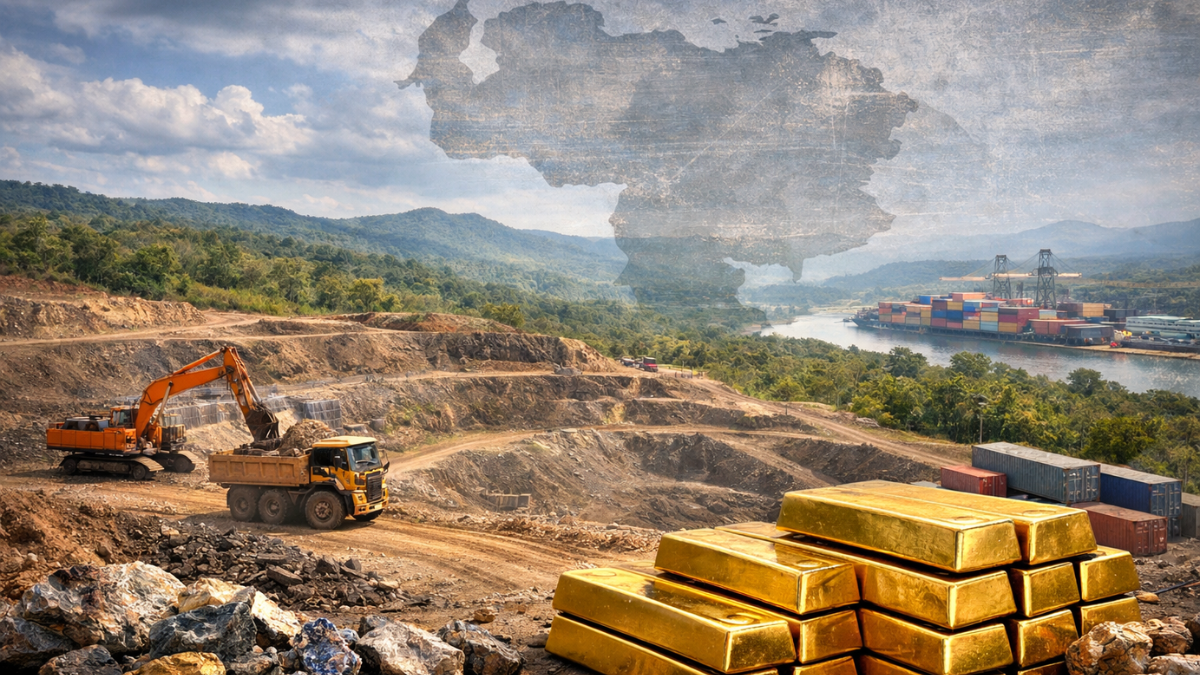


The United States has lifted more sanctions on Venezuela’s gold and mineral industries. This decision was announced by the US Treasury Department through its Office of Foreign Assets Control. The move allows companies to begin working again in Venezuela’s mining sector.
Under the new rules, businesses can now sign contracts and invest in mineral projects. This includes working with Venezuela’s state-owned gold mining company, Minerven. Companies are also allowed to provide services, technology, and supplies needed for mining operations.
For years, strict sanctions had blocked most economic activity in Venezuela’s mineral sector. These restrictions made it difficult for foreign companies to enter the country or do business there. Mining operations slowed down, and international partnerships were limited. With the latest decision, those limits have now been eased.
The United States is encouraging companies to explore opportunities in Venezuela. This is especially important because the country has large reserves of valuable natural resources. These include gold, diamonds, bauxite, and rare minerals that are used in many industries.
This policy change is focused on increasing access to Venezuela’s natural wealth. It also allows more legal and regulated business activity in the mining sector, which had faced heavy restrictions in the past.
Gold and silver drop $2 trillion amid rising bond yields and strong dollar
Policy Shift Follows Political Changes in Venezuela
The decision to lift sanctions comes after major political developments in Venezuela earlier this year. In January, the country saw a sudden change in leadership after its president, Nicolás Maduro, was captured. Following this, a new interim leadership under Delcy Rodríguez took control.
After these events, the United States began changing its approach toward Venezuela. Instead of maintaining strict economic pressure, it started easing restrictions step by step. The lifting of sanctions on the mineral sector is part of this gradual shift.
The new leadership has taken steps to open up Venezuela’s economy. It has encouraged foreign companies to invest in key industries such as oil and mining. These actions are aimed at increasing economic activity and rebuilding connections with other countries.
The easing of sanctions on minerals is also linked to efforts to restore diplomatic and trade relations. This marks a change from earlier policies that focused mainly on isolation. The current approach allows more cooperation, especially in sectors that are important for economic growth.
This shift has created new opportunities for companies that were previously unable to operate in Venezuela due to restrictions.
US exposes sanctions evasion scheme involving Nodus bank CEO and PDVSA Venezuela links
Focus on Valuable Resources and Strategic Minerals
Venezuela is known for its rich natural resources. Apart from having the world’s largest oil reserves, it also produces gold and several other important minerals. These include diamonds, bauxite, and rare earth materials such as coltan.
Coltan is especially valuable because it is used in making electronic devices like smartphones, computers, and other high-tech products. This makes Venezuela’s mineral sector important not only for traditional industries but also for modern technology.
Much of the mining activity in Venezuela takes place in a large region called the Orinoco Mining Arc. This area covers about 112,000 square kilometers and is one of the most resource-rich parts of the country. It contains large deposits of gold and other minerals.
However, the region also faces serious challenges. Armed groups and criminal gangs are active in some parts of the mining zone. These groups are often involved in illegal mining and other activities, which creates risks for companies and workers.
Despite these conditions, the United States is moving forward with its plan. By lifting sanctions, it is opening the door for companies to access Venezuela’s mineral wealth in a more formal and regulated way. Businesses can now participate in extraction, supply chains, and related services.
This step highlights the importance of minerals in global industries. It also shows the growing demand for resources used in manufacturing, technology, and energy sectors.