

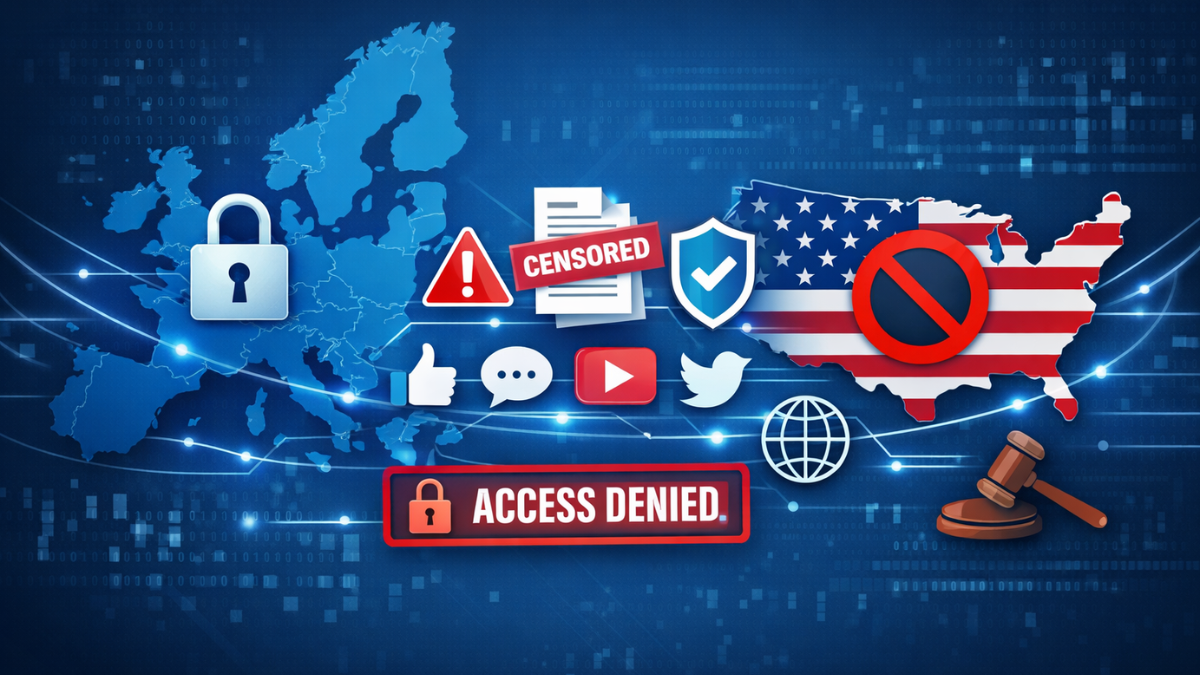


The United States has taken a strong step, denying visas to several prominent European figures involved in social media regulation. The move has sparked a heated debate over freedom of speech, censorship, and the influence of foreign laws on American platforms.
Visa Ban Targets European Regulators and Activists
The US State Department announced that it will deny visas to five European individuals, accusing them of trying to influence American social media companies to remove or restrict content that did not match their views.
Those affected include Thierry Breton, former European Commissioner responsible for tech regulation; Clare Melford, leader of the UK-based Global Disinformation Index (GDI); Imran Ahmed, from the Center for Countering Digital Hate (CCDH); and Anna-Lena von Hodenberg and Josephine Ballon, CEOs of the German organization HateAid.
US officials described these individuals and organizations as part of a “global censorship-industrial complex” that tried to impose foreign rules on American companies. Secretary of State Marco Rubio said the visa restrictions were necessary to protect American speech and stop foreign governments from overstepping their bounds.
US Undersecretary of State Sarah B Rogers accused GDI of using American taxpayer money to encourage censorship and blacklist certain voices. She said that similar tactics by other organizations targeted Americans and American companies.
Thousands of H-1B workers stranded in India after U.S. cancels visa renewals without warning
European Rules and Social Media Disputes
At the center of the controversy is the European Digital Services Act (DSA), a law that requires social media platforms to moderate harmful content and operate transparently.
The US described Thierry Breton as a key figure behind the DSA, calling it an attempt to influence US social media companies from abroad. The law has already led to clashes with major platforms such as X (formerly Twitter), owned by Elon Musk.
Recently, the European Commission fined X €120 million over its blue tick verification system, calling it deceptive because the platform was not verifying users properly. In response, Musk’s platform blocked the European Commission from advertising on the site, escalating the conflict between the US and European regulators.
The European figures affected by the US visa bans responded strongly. Thierry Breton called it a “witch hunt”, while the CEOs of HateAid described the move as repression and an attempt to silence those defending freedom of expression and human rights. Leaders of GDI and CCDH also criticized the ban, calling it authoritarian and unfair.
Strong Reactions Across the Atlantic
The visa ban has sparked sharp reactions on both sides. US officials said foreign rules should not interfere with American companies or citizens. They emphasized that attempts to impose foreign censorship on the US violate American sovereignty.
President Trump pauses diversity visa program following deadly university shootings
European figures, however, argued that their work focuses on protecting users from online harm and disinformation, not suppressing free speech. Thierry Breton insisted the US move was unjust, while HateAid’s leaders warned that intimidation should not silence organizations promoting transparency and safety online.
Some US political figures hailed the visa ban as a necessary step to defend free speech. Meanwhile, European activists maintain that their efforts are meant to hold social media platforms accountable and prevent deceptive practices.
The situation highlights the growing tension between the US and Europe over who controls online speech. American authorities want to protect their citizens from foreign influence, while European regulators aim to enforce rules to limit harmful content on social media platforms.
The visa ban puts a spotlight on the clash between two different approaches to online content: one prioritizing freedom of expression without government interference, and the other prioritizing transparency, safety, and moderation to prevent harm and misinformation.