

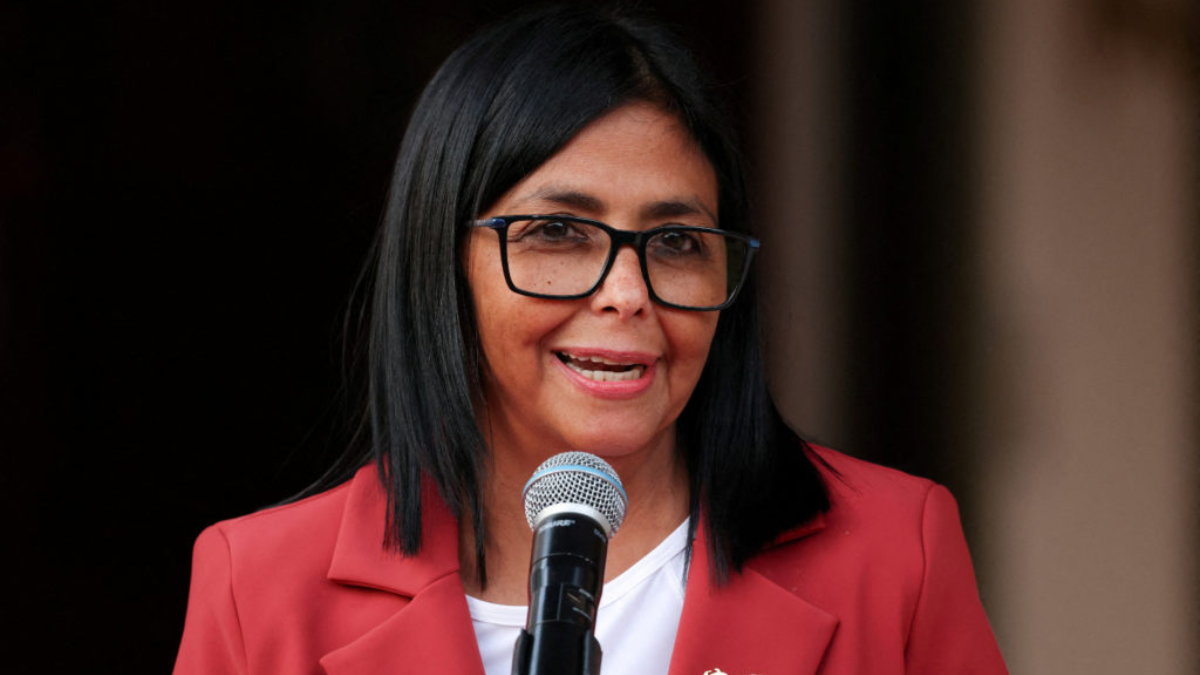


The United States has officially lifted sanctions on Venezuela’s acting president, Delcy Rodríguez, marking a major shift in its approach toward the South American country. The decision was announced by the U.S. Treasury Department through its sanctions enforcement office.
This move comes after a dramatic political development earlier this year. In January, U.S. forces captured Venezuela’s former president, Nicolás Maduro, and his spouse during an operation in the capital city, Caracas. Both were later taken to New York, where they are facing drug trafficking charges and have pleaded not guilty.
Following that event, Venezuela entered a complex political phase. Delcy Rodríguez stepped into leadership under orders from the country’s top court. The court declared the absence of Nicolás Maduro as temporary and allowed the acting leader to hold office for up to 90 days, with the possibility of extension.
The U.S. government has since taken steps to recognize this leadership as legitimate. Lifting sanctions is seen as one of the strongest signals of that recognition.
The decision also aligns with earlier actions taken by the U.S., including formally recognizing Delcy Rodríguez as the head of state in legal matters and diplomatic settings.
Venezuela’s gold and mineral sector reopens as US lifts economic restrictions
What Sanctions Relief Means for Venezuela
Sanctions are restrictions that limit financial transactions, business dealings, and access to assets. These were originally placed on key leaders in Venezuela several years ago due to concerns about governance and democracy.
By removing these restrictions, the United States has now allowed Delcy Rodríguez to engage more freely with American companies and global investors. This means Venezuela can now reopen economic channels that were previously blocked.
The change also allows access to certain frozen assets and enables cooperation in sectors like oil and trade. Venezuela is known for its large oil reserves, and this decision opens doors for business activities involving energy exports.
In recent weeks, the U.S. has already taken steps to ease broader restrictions on Venezuela’s oil sector. A new authorization in March allowed the state-owned oil company to sell oil directly to U.S. companies and global markets. This marked a major shift after years of strict limitations on the country’s energy industry.
At the same time, the U.S. has been actively engaging with Venezuela’s interim government. Officials have visited Caracas, and discussions have taken place around investment, oil production, and economic reforms aimed at attracting foreign capital.
Delcy Rodríguez has also taken steps to open the country’s economy to private investment and international cooperation, including allowing more transparency and arbitration processes.
Uruguayan national pleads guilty in U.S. court to bypassing Venezuelan sanctions
Background of Sanctions and Current Political Situation
Delcy Rodríguez and her brother, Jorge Rodríguez, were originally sanctioned by the United States in 2018. At that time, they were accused of helping maintain power in a system widely criticized for limiting democratic participation.
These sanctions were part of a broader effort by the U.S., under Donald Trump during his earlier term, to isolate Venezuela’s leadership and push for political change. For years, the country faced heavy economic restrictions that affected its financial system and global trade.
However, the situation changed significantly in 2026 after the removal of Nicolás Maduro from power. Since then, the U.S. administration, again led by Donald Trump, has shifted its approach. Instead of supporting opposition groups, it has chosen to work directly with the current acting leadership.
Despite this change, the political situation inside Venezuela remains complicated. Nicolás Maduro is still considered the legal head of state under the country’s internal system. The high court’s ruling allowed Delcy Rodríguez to take charge temporarily, while maintaining the legal structure of leadership.
The National Assembly, which is controlled by the ruling party and led by Jorge Rodríguez, also plays a role in extending this temporary leadership if needed. The current 90-day period is nearing its end, adding another layer of uncertainty to the situation.
While sanctions on Delcy Rodríguez have been lifted, many other officials linked to the previous administration still face restrictions or legal challenges. This shows that the policy shift is selective and focused on specific individuals.
The recent move by the United States highlights a significant change in diplomatic relations. It reflects a transition from isolation to engagement, with economic cooperation and political recognition now playing a central role in U.S.-Venezuela ties.