

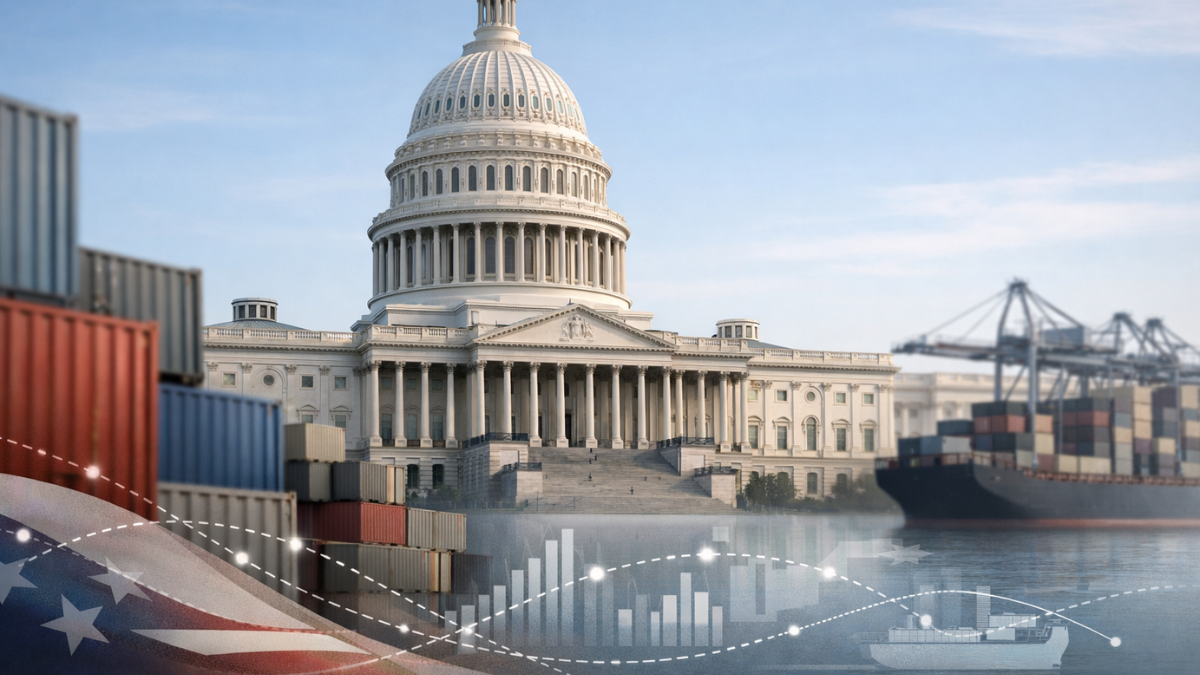


The US House of Representatives has voted down a rule that would have stopped lawmakers from challenging tariffs imposed by President Donald Trump. The move marked a significant rebuke of the president and signaled rising resistance within Congress over his trade policies.
The rule was proposed by House Speaker Mike Johnson and was intended to prevent votes on resolutions aimed at blocking or ending the tariffs. On Tuesday, the House rejected the rule by a narrow margin. A total of 217 lawmakers voted against it, while 214 voted in favor.
All Democratic lawmakers opposed the rule. They were joined by three Republicans: Thomas Massie of Kentucky, Kevin Kiley of California, and Don Bacon of Nebraska. Their votes were decisive in defeating the proposal.
Republicans currently hold a razor-thin majority in the House. Because of this narrow control, party leaders can only afford to lose support from a small number of members on close votes. The failure of the rule highlighted the growing difficulty of maintaining party unity on economic issues.
By rejecting the rule, the House kept open the possibility of debating and voting on measures that directly challenge the president’s tariffs.
Trump hints at sanctions as U.S.–Colombia talks move from diplomacy to economic pressure
The vote suggested that lawmakers are becoming more willing to challenge President Trump’s aggressive trade agenda, which has disrupted global trade and raised concerns about higher prices for US consumers.
Legal Dispute Over Presidential Trade Powers
The rejected rule was procedural and did not remove tariffs on its own. Instead, it would have blocked the House from voting on resolutions designed to overturn them.
Earlier on Tuesday, Speaker Mike Johnson defended the proposal. He said the goal was to give the Supreme Court time to rule on a pending legal case involving the tariffs. According to Johnson, lawmakers should allow the issue to be resolved between the executive branch and the judicial branch.
Johnson also said that the president’s trade policies had benefited the country and argued that additional time was needed for the legal process to unfold.
The Supreme Court is expected to rule in the coming months on whether President Trump had the authority to impose sweeping tariffs using the International Emergency Economic Powers Act, known as IEEPA.
The court heard arguments in November on whether the president could legally use the law to impose tariffs around the world. IEEPA is traditionally used during national emergencies, and no previous president has used it to impose broad tariffs.
Congress has long claimed authority over foreign commerce and taxation. Many lawmakers argue that tariffs fall under congressional power, not emergency executive authority.
Because the rule failed, Democratic lawmakers, led by New York Congressman Gregory Meeks, may now force a vote as soon as Wednesday on a resolution aimed at blocking tariffs on Canada.
Political Fallout and Public Opposition to Tariffs
Although President Trump could veto any resolution passed by Congress, the vote still carries strong political weight. Opposition from members of his own party highlights growing dissatisfaction within Republican ranks.
EU revives stalled U.S. trade deal after Trump backs down on Greenland threat
Democratic lawmakers welcomed the defeat of the rule. Congressman Don Beyer of Virginia said it was encouraging to see Republicans push back against the tariffs and called for further action to end tariffs on Canada and other key trading partners.
House Minority Leader Hakeem Jeffries criticized Republican lawmakers on the House floor, accusing them of acting as a rubber stamp for the president’s agenda.
Public opinion also appears to be shifting. Recent polling by Pew showed that 60 percent of US adults disapprove of the tariff increases. The opposition includes more than a quarter of Republican voters.
Tariffs can raise the cost of imported goods, often leading to higher prices for consumers. Businesses have also raised concerns about supply chain disruptions and uncertainty.
In an interview, President Trump said he hoped the Supreme Court would rule in favor of the tariffs, adding that he believed such a decision would be right for the country.
The House vote does not end the tariffs but allows Congress to move forward with debate and recorded votes, reflecting deep divisions over trade policy.