

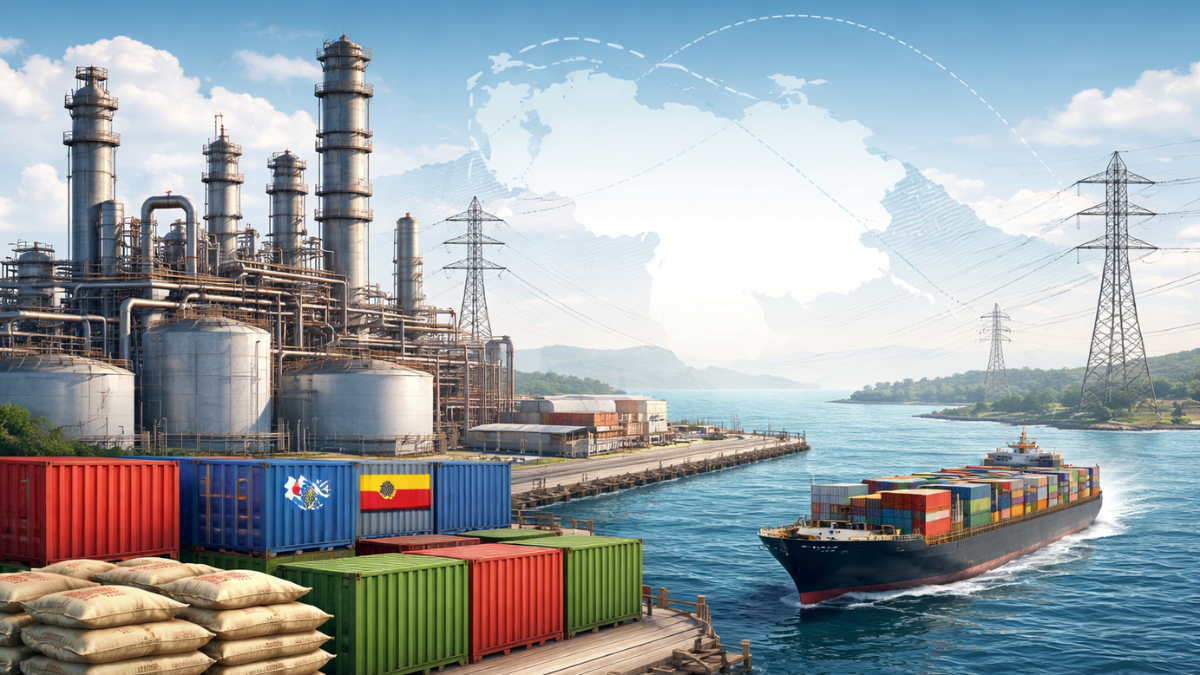


The United States has expanded sanctions waivers on Venezuela in a move aimed at boosting fertilizer exports and encouraging investment in the country’s electricity and petrochemical sectors. The decision was announced by the United States Department of the Treasury, which issued three updated general licenses that allow broader economic activity linked to Venezuela’s energy industry.
These updated authorizations allow companies to conduct activities that were earlier restricted under sanctions. The licenses make it possible for U.S. entities to purchase Venezuelan petrochemical products, including fertilizer, and import them into the United States. Companies are also allowed to buy Venezuelan oil under the expanded permissions.
The new measures also permit companies to provide goods, services, and technology to support Venezuela’s electricity infrastructure and petrochemical industry. Electricity generation, transmission, and distribution are considered essential for improving the country’s energy production after years of underinvestment.
Officials explained that the changes are meant to support efforts to revive Venezuela’s energy sector while helping keep global commodity markets well supplied. The new permissions aim to make it easier for companies to participate in rebuilding parts of the country’s energy system that have weakened over time.
Companies are now also allowed to negotiate contingent contracts for new investments in Venezuela’s electricity and petrochemical industries. However, these agreements are not automatically approved. Any final contracts must still receive separate authorization from the Office of Foreign Assets Control, which oversees sanctions regulations.
US temporarily eases sanctions on Russian oil shipments loaded before March 12
Rising Oil and Fertilizer Prices Prompt Policy Adjustment
The expanded sanctions waivers come at a time when global commodity prices have been increasing. The conflict involving Iran has pushed up the cost of oil and petrochemical products, creating pressure on global markets and raising concerns about inflation.
Fertilizer prices have been particularly affected because many fertilizers are produced using petrochemical materials. When energy prices rise, the cost of fertilizer production also increases.
Higher fertilizer prices can create serious challenges for farmers. Rising input costs can make farming more expensive and may also lead to higher food prices for consumers. Because of this, the United States has moved to allow fertilizer imports from Venezuela in order to increase supply.
Officials said the new authorizations allow fertilizer produced in Venezuela to be exported directly to the United States. This measure is intended to support American farmers who are facing rising costs linked to global commodity price increases.
The policy also aims to help stabilize supply chains that have been affected by disruptions in global energy markets. Ensuring stable supplies of oil and petrochemical products is considered important for keeping prices under control.
Macron says Strait of Hormuz crisis does not justify lifting Russia sanctions
Investment Allowed in Electricity and Petrochemical Sectors
The expanded waivers also focus on strengthening Venezuela’s energy infrastructure. Companies are now allowed to invest in projects connected to electricity generation and the petrochemical industry.
Electricity systems play a critical role in oil production. Reliable power is needed to operate equipment, maintain pipelines, and run refinery facilities. Without stable electricity, energy production can slow down.
The permissions allow companies to provide equipment, services, and technology that can help modernize Venezuela’s electricity network. Improved power systems are seen as an important step toward increasing the country’s oil production.
Despite the expanded waivers, several restrictions remain in place. Transactions involving entities connected to Russia, Iran, North Korea, China, and Cuba are still restricted under existing sanctions rules.
The measures build on earlier policy adjustments introduced by the United States earlier this year. Oil sanctions were relaxed in January and February, allowing more energy-related activities involving Venezuela. Additional licenses were also issued earlier this month authorizing certain transactions involving Venezuelan-origin gold.
These developments followed the January capture and removal of Nicolás Maduro. Venezuela’s economy has been severely affected by sanctions, economic mismanagement, and corruption scandals. Economists estimated that inflation in the country reached about 400 percent last year.