

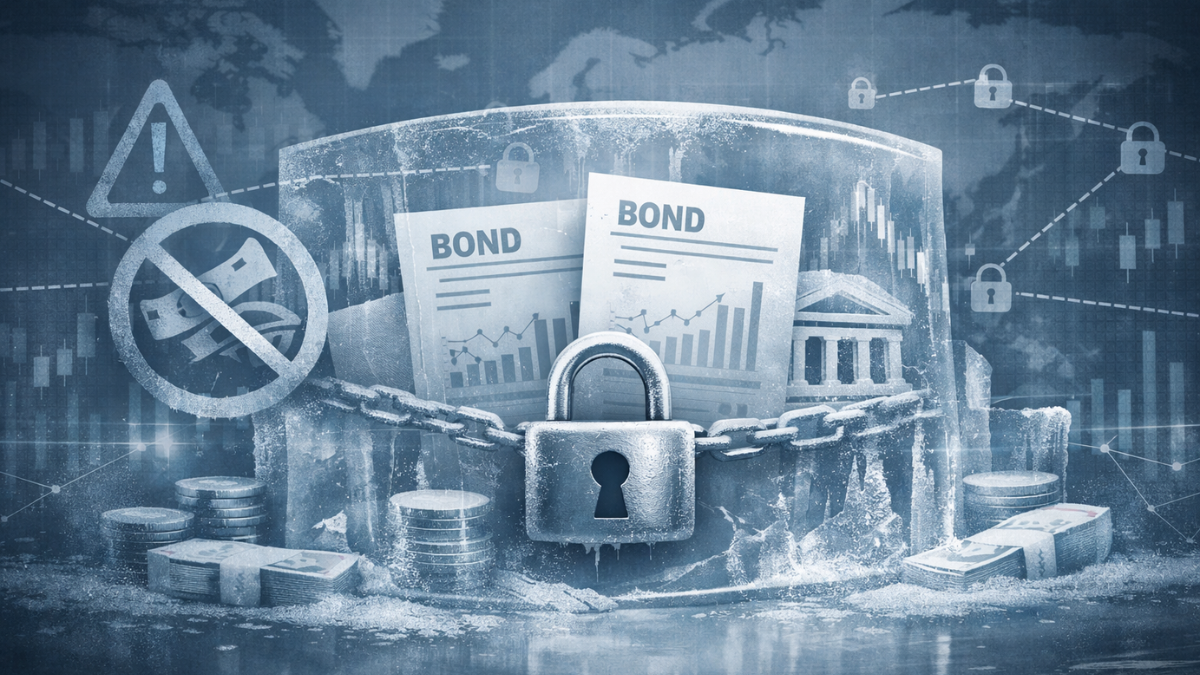


Around $500 million worth of bonds issued by Telegram have been frozen in Russia because of Western sanctions, according to a report by the Financial Times. The situation shows how international sanctions can affect companies years after financial deals are made, especially when older funds are tied to sanctioned institutions.
Telegram is a global messaging platform used by millions of people. Over the past few years, the company has raised money by issuing bonds, which allow companies to borrow funds from investors and repay them later. While Telegram has repurchased most of its upcoming bond debt, a significant amount remains blocked inside Russia due to sanctions linked to the war in Ukraine.
Why the Telegram Bonds Are Frozen
The frozen amount relates to bonds issued by Telegram in 2021. These bonds were held through Russia’s National Settlement Depository (NSD), which is responsible for handling securities in the country. At the time of issuance, this was a normal process.
However, after Russia’s full-scale invasion of Ukraine, the European Union, the United States, and the United Kingdom imposed sanctions on the NSD. Once sanctioned, the institution was restricted from processing or transferring assets connected to Western markets.
Palau moves to protect shipping revenues as sanctions cripple private ship registry operator
Because of these sanctions, around $500 million in Telegram bond debt is now blocked at the NSD. Sources familiar with discussions between Telegram’s management and investors said that while most bonds maturing in 2026 have been bought back, this portion remains frozen and cannot be freely moved or settled.
The Financial Times noted that the freeze highlights Telegram’s continued exposure to Russian capital through older financial arrangements, despite efforts to distance the company from Russia.
Telegram has disputed this interpretation. In a statement shared with The Moscow Times, Telegram spokesperson Remi Vaughn said the frozen amount only refers to bonds issued in 2021. He also said that Telegram’s $1.7 billion bond issuance in May 2025 involved no Russian investors and was mainly purchased by large U.S.-based investment funds.
Vaughn added that sanctions do not create risks for Telegram itself. He explained that under standard bond repayment practice, Telegram transfers repayment funds to an international intermediary. After that, any issue with bondholders receiving payments is outside the company’s responsibility.
Financial Results and Broader Challenges
Alongside the bond freeze, Telegram’s financial performance for the first half of 2025 was also reported. According to the Financial Times, the company’s revenue increased by more than 65% year-on-year, reaching $870 million. This growth reflects increased use of the platform and expansion of its services.
Cargo ship carrying banned Russian steel seized amid probe into Baltic telecom cable damage
Despite higher revenue, Telegram reported a net loss of $222 million during the same period. This compares with a net profit of $334 million in the first half of the previous year. A source cited by the Financial Times said the loss was mainly caused by a write-down in the value of Toncoin, a cryptocurrency linked to Telegram. Toncoin’s price fell during a wider downturn in the crypto market in 2025.
Telegram was founded by Pavel Durov, who left Russia in 2014 after saying he faced pressure to share user data from VKontakte, a social media platform he co-founded, with Russian law enforcement. He later launched Telegram and relocated the company, which is now based in Dubai.
The platform has faced criticism over content moderation and alleged cooperation with Russian authorities, claims that Durov has repeatedly denied. In August 2025, Russian authorities began blocking voice and video calls on Telegram and WhatsApp, calling it an anti-fraud measure. Both companies criticized the move. Around the same time, Russian officials promoted Max, a domestic messaging app that has faced scrutiny over data-sharing practices.
Telegram has also been under investigation in France since 2024 over allegations that it failed to curb criminal activity on the platform. Durov, who holds French and UAE citizenship, has denied any wrongdoing.