

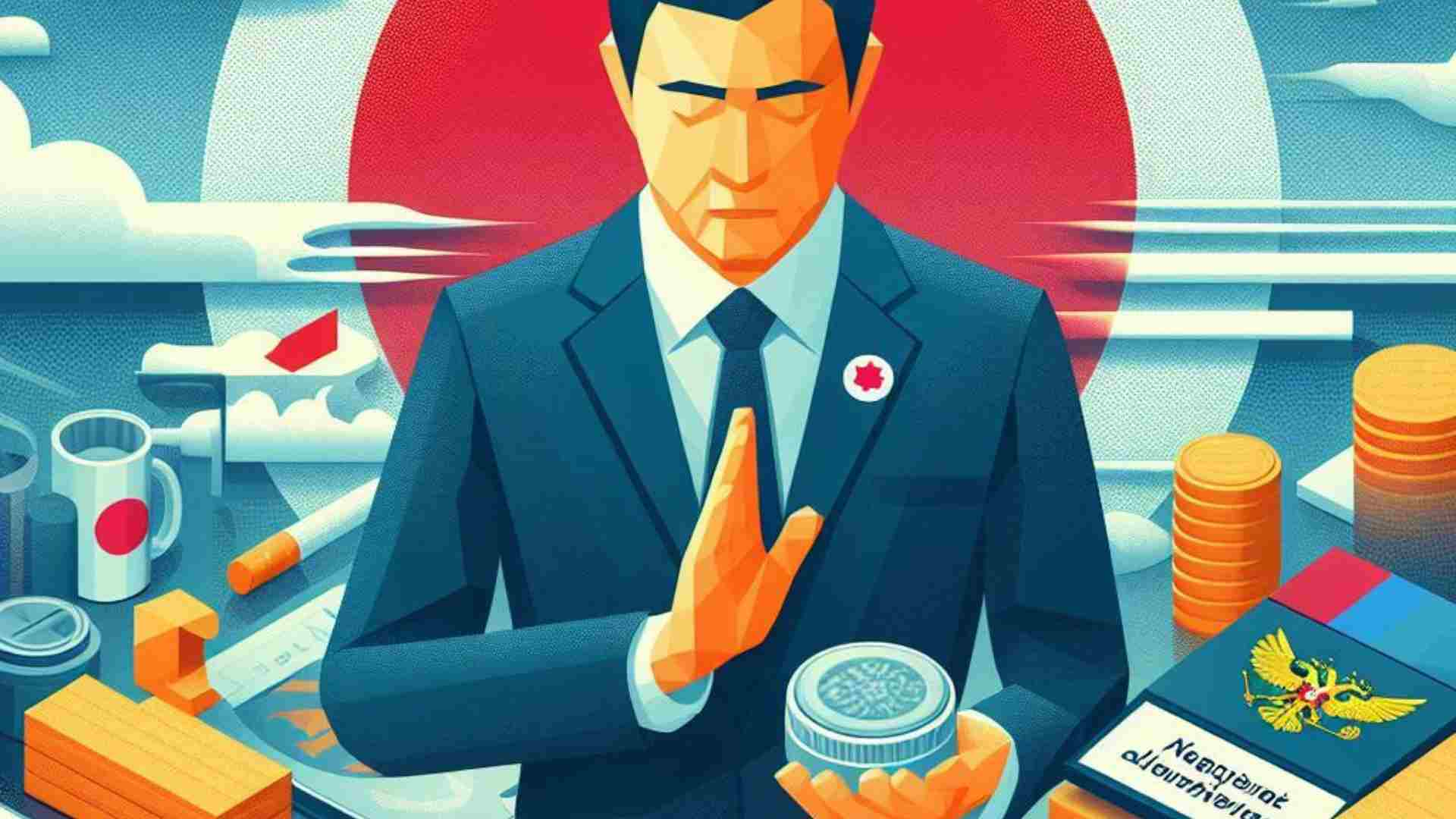


Japan Tobacco’s chief executive, Masamichi Terabatake, has announced that the company will continue its operations in Russia to appease investors, despite the challenges posed by sanctions. The tobacco giant has reorganized its supply chains and business strategies to comply with international sanctions following Russia’s invasion of Ukraine.
Initially considering the sale of its Russian business, Japan Tobacco has instead opted to suspend all investment and marketing activities in the region while maintaining its presence. Russia has historically been a significant market for the company, accounting for about 20% of its overall profits. Terabatake emphasized that shutting down a profitable business would be a breach of his fiduciary duty to investors, potentially leading to legal repercussions.
Japan Tobacco in Russia
Despite the operational adjustments, Japan Tobacco remains one of the largest foreign companies in Russia, employing over 4,000 people across four factories. The company reported overall profits of ¥482 billion ($3 billion) in 2023. Terabatake highlighted the meticulous approach taken to comply with sanctions, including staff relocations to Hong Kong for supply chain monitoring.
The cigarette maker is routing some business through Turkey and has moved key personnel to Hong Kong as ties with Russia have come under pressure in the wake of its invasion of Ukraine.
You May Like
- Western Sanctions Failed To Stop Russia’s Economic Growth
- BRICS: New Russian Ally in Sanctions Evasion ?
- US Issues Warning: China’s Geospatial Intelligence Support to Russia
When a country faces sanctions, it can be challenging for businesses operating within its borders to exit the territory. This difficulty arises from several factors.
Firstly, sanctions often disrupt the normal flow of business operations by restricting financial transactions, trade, and other commercial activities. These restrictions can make it logistically complex and financially costly for businesses to wind down operations and leave the sanctioned country.
Secondly, exiting a country involves various legal and regulatory hurdles, especially in sanctioned regions where laws and regulations may be more stringent or subject to change. Navigating these complexities requires time, resources, and expertise.
Business Withdrawals from Russia
While many companies have withdrawn from Russia since the imposition of sanctions, Japan Tobacco’s decision to maintain its operations reflects a broader trend.
But Japan Tobacco is not alone in maintaining operations in the country. Rival Philip Morris has also kept its business in Russia, alongside other companies and large European banks such as Austria’s Raiffeisen and Italy’s UniCredit.
However, questions remain about how Japan Tobacco intends to repatriate profits from its Russian operations, with no dividends paid from its 2022 and 2023 financial results as of yet.
Terabatake acknowledged initial concerns about the company’s reputation but noted that such worries have diminished over time. He also expressed readiness to sell or separate the Russian unit if necessary, although he believes this step is unlikely under the current sanctions regime. Japan Tobacco’s stance underscores the complex decisions faced by multinational corporations amid geopolitical tensions and economic sanctions.