

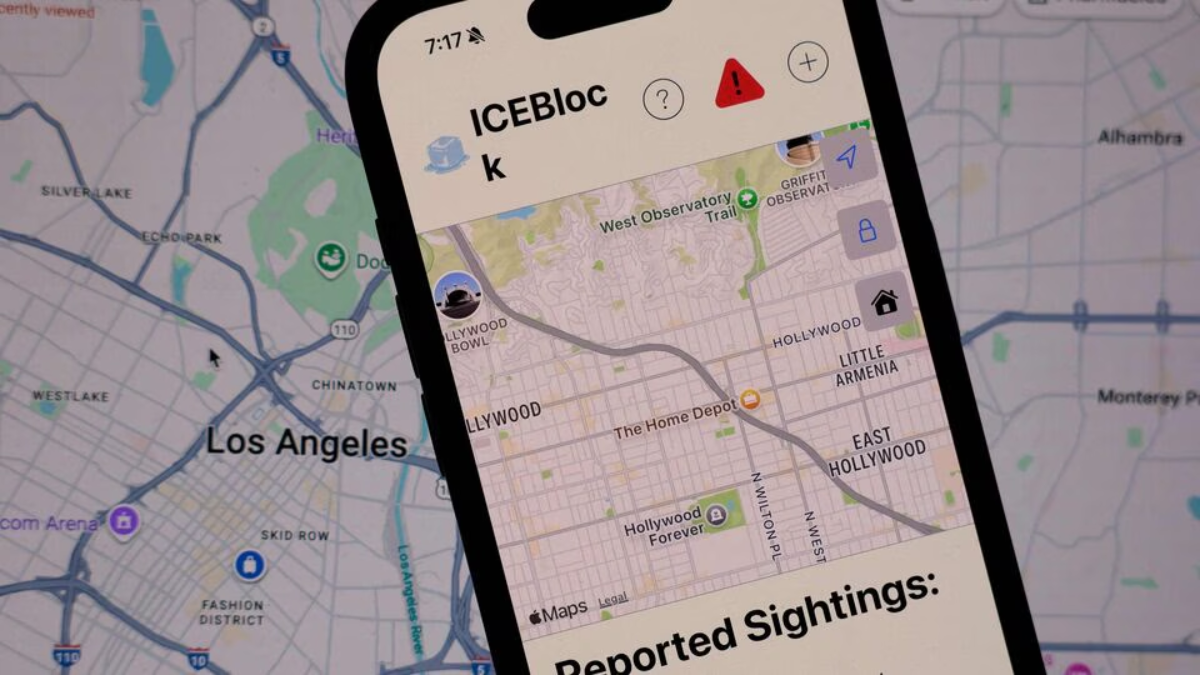


A major clash began after Joshua Aaron, the creator of the iPhone app ICEBlock, filed a lawsuit against the Trump administration. ICEBlock had more than one million users and allowed people to report and view sightings of Immigration and Customs Enforcement (ICE) agents in their neighborhoods. Aaron said he built the app to help immigrant communities stay alert to possible surprise raids and potential harassment.
In October, the situation changed when federal officials contacted Apple. According to the lawsuit, Attorney General Pam Bondi told Apple that ICEBlock put immigration officers at risk. She said the app helped people track ICE activity and demanded that the company remove it. Soon after, Apple took down ICEBlock and other similar apps.
Apple then sent an email to Aaron explaining the decision. Apple said new information from law enforcement showed that the app violated App Store rules because it shared location information about law enforcement officers that “could be used to harm such officers individually or as a group.” Aaron disagreed and said the app functioned like other apps that show police checkpoints or speed traps.
Google also removed some ICE-tracking apps during that time after hearing from officials, though ICEBlock had never been available on the Android platform.
Lawsuit Says Government Violated Free Speech and Issued Threats
On Monday, Aaron filed a lawsuit claiming the government violated his First Amendment rights. He argues that building and sharing the app is a form of protected speech. The lawsuit says Pam Bondi, Secretary of Homeland Security Kristi Noem, ICE Acting Director Todd M. Lyons, and White House Border Czar Tom Homan used their government authority to pressure Apple to remove ICEBlock.
Aaron says these officials also made threatening statements about possible criminal investigation and prosecution. In the lawsuit, he asks the court to protect him from prosecution and to rule that the threats and pressure were unlawful. He said the warnings were directed toward him and even his family, and that he wants the court to make clear that his work was not illegal.
In past interviews, Aaron has said he wants the court to confirm that ICEBlock qualifies as protected speech. He said federal pressure left him worried about his safety. He also said that removing the app took away an important tool that communities were using to stay informed.
Federal officials, including Bondi, defended their stance. Bondi said earlier that Aaron was “giving a message to criminals” by showing where federal officers were located and warned that such information should not be protected speech. She said they were “looking at him” because the app endangered officers. The Department of Justice said it had no additional comment beyond Bondi’s earlier statements.
Supreme Court lifts limits on Trump’s immigration raids, sparking outrage in California
Reactions From Communities, Advocates, and Tech Companies
Aaron launched ICEBlock in April with the goal of protecting immigrant communities from sudden enforcement actions. Some immigrant advocates were unsure how effective the app was, but civil liberties experts were concerned about how the government pushed for its removal. They compared the situation to a 2019 case in which Chinese pressure caused Apple to remove an app used by Hong Kong protesters to track police.
Aaron said immigration enforcement has grown more aggressive since ICEBlock was taken down, and he believes communities now have less information. He described officers wearing masks, not identifying themselves, zip-tying children, and detaining women, though these claims do not appear inside the lawsuit itself.
Apple is not part of the lawsuit and did not respond to recent requests for comment. The company previously told Aaron that ICEBlock violated App Store policies related to sharing the locations of law enforcement officers.
The lawsuit now highlights a conflict involving federal officials, tech companies, civil liberties advocates, and immigrant communities, centered on whether the government unlawfully pressured a private company to silence an app.