

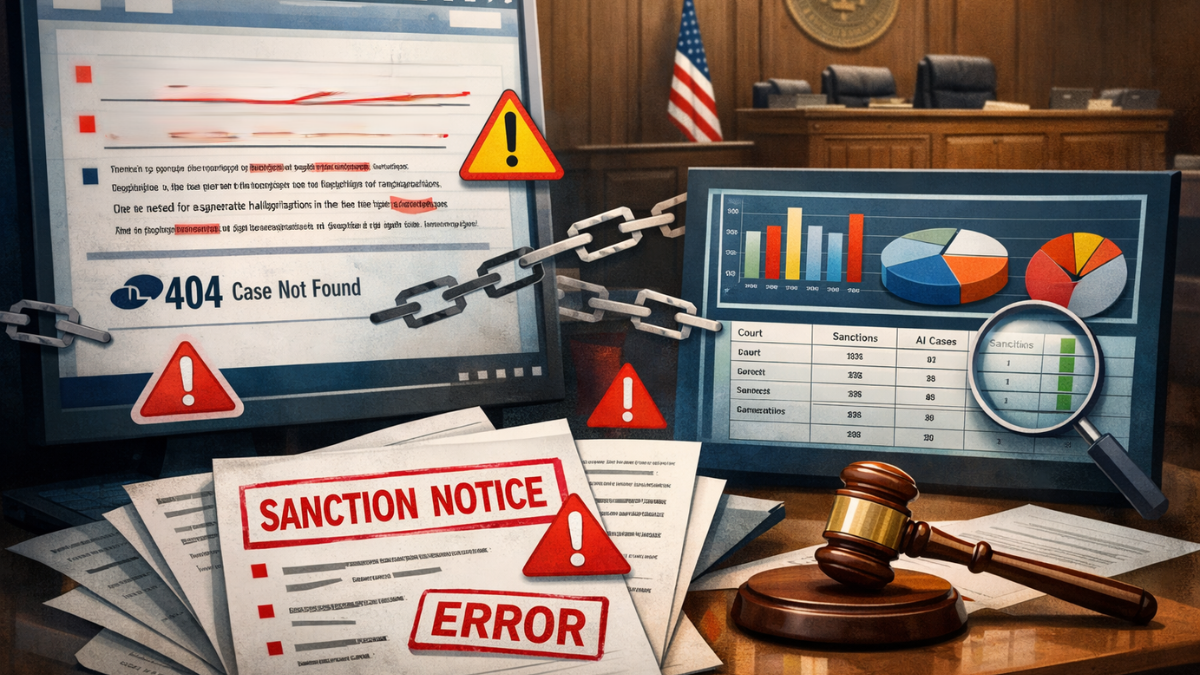


Artificial intelligence tools are now widely used in legal practice. Lawyers rely on them to draft briefs, research issues, and improve efficiency. While AI can save time, it also creates risks.
One major risk is AI hallucination. This happens when an Artificial intelligence system generates false information, fake case citations, or incorrect legal authorities as if they were real. If lawyers do not carefully verify the output, these errors can appear in court filings.
Across the country, publicly reported cases show more than 550 incidents involving AI-generated hallucinations in legal documents. This number comes from informal public tracking. The real number may be higher because not all incidents are publicly recorded or tracked.
These cases have appeared in district courts and courts of appeals. They affect multiple practice areas and are not limited to one type of case.
When courts discover fabricated citations or false authorities, judges must spend additional time reviewing the filings. They may issue show-cause orders requiring lawyers to explain the mistake. Courts also have the authority to impose sanctions, which are penalties for misconduct or failure to follow legal rules.
Sanctions may include fines, corrective actions, or written orders explaining the violation. If lawyers challenge the sanctions, appeals can follow. This increases workload and delays resolution of cases.
European Union places Iran’s IRGC on terrorist list under counter-terrorism sanctions regime
The growing number of incidents shows that AI misuse in legal filings is becoming a significant concern for the judiciary.
No Central System to Track AI-Related Sanctions
Despite the rising number of cases, there is currently no centralized nationwide system that tracks sanctions specifically tied to AI misuse.
Each federal court manages its own records. Some judges issue standing orders requiring lawyers to disclose whether AI tools were used in preparing filings. Some courts require verification that citations have been checked for accuracy. Others introduce local enforcement measures.
However, these actions are not coordinated under one national reporting system.
There is no single database that shows:
- How often AI errors result in sanctions
- What type of AI misuse led to penalties
- Which courts or jurisdictions experience more incidents
- Whether judicial policies or standing orders reduce the number of mistakes
The information exists only in scattered court opinions, local orders, and informal tracking efforts. Data is not collected in a uniform way.
Because of this gap, it is difficult to measure the real impact of AI-related misconduct on court resources. It also limits transparency for policymakers and the public.
Courts are already spending time identifying fabricated authorities, conducting hearings, issuing orders, and drafting thorough sanction decisions. Clerks handle follow-up motions. In some cases, lawyers appeal sanctions, which adds further burden to the system.
The absence of centralized reporting makes it harder to analyze trends or develop consistent responses.
Proposal for Mandatory Reporting Under Federal Law
To address the data gap, a proposal suggests amending federal law that governs judicial information collection.
The relevant section of U.S. law already requires the Director of the Administrative Office of the U.S. Courts to collect and publish standardized reports on judicial activity. The system uses uniform categorization standards established under related public access laws.
Russia openly defies Cuba sanctions as Putin reaffirms sovereignty stance
The proposed change would add AI-related sanctions and fee awards to the reporting requirements.
Under this approach, the Administrative Office would collect information about sanctions imposed for AI misuse and publish it in aggregate form. The data would summarize statistics without exposing sensitive information.
Supporters argue that this method is structurally similar to reporting requirements already used in bankruptcy law.
In bankruptcy cases, sanctions imposed under specific procedural rules must already be collected and published. That requirement has existed for years. It has not expanded judicial power or interfered with court independence. It has provided transparency into how sanctions are applied.
The proposal for AI-related reporting follows the same logic.
It does not ban AI use in legal practice. It does not force judges to impose penalties. It does not change substantive law governing misconduct.
Instead, it requires reporting of sanctions that courts have already decided to impose.
The goal is to improve visibility into how Artificial intelligence misuse affects federal courts and how judicial systems respond to it.