Over the past several years, Iran has faced strict sanctions aimed at cutting off its main source of income—oil exports. These sanctions were designed to stop Iran from selling oil to other countries and reduce its ability to earn money. At one point, Iran’s oil sales dropped sharply, falling from millions of barrels a day to just a small fraction of that amount.
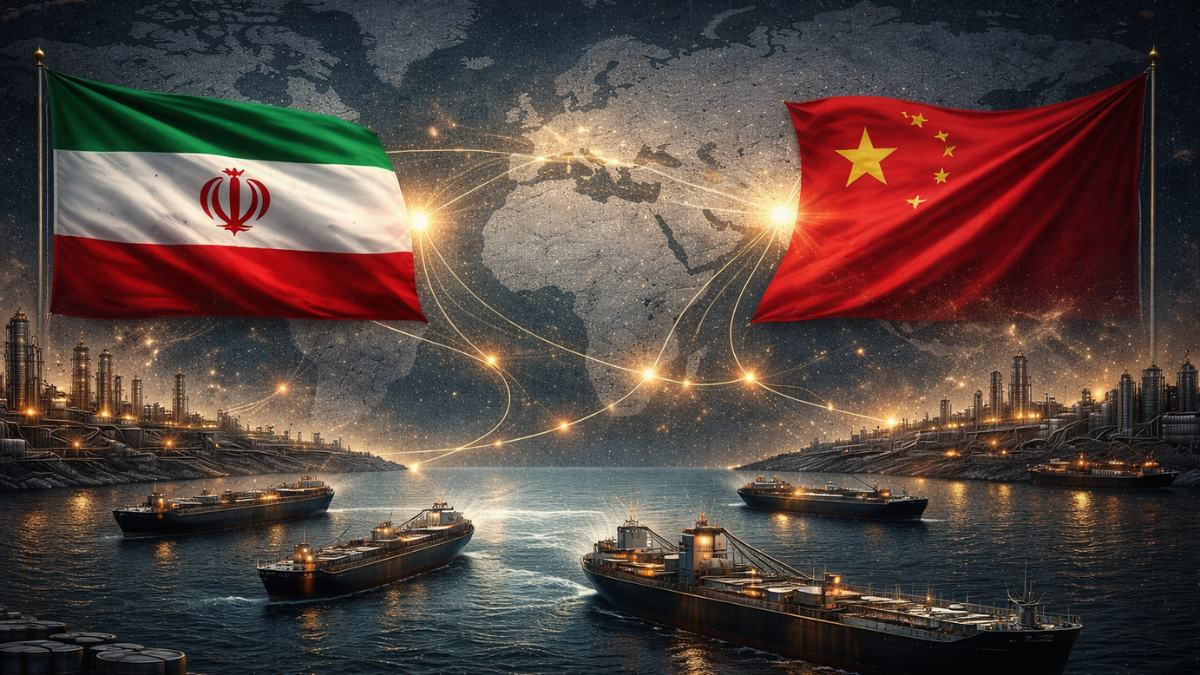
However, despite these restrictions, Iran did not lose its oil income completely. Instead, it found a way to continue selling oil, mainly to one country—China. Today, China buys the majority of Iran’s oil. In fact, it takes nearly all the oil Iran produces, compared to only a small portion about a decade ago.
This steady demand has helped Iran earn billions of dollars every month. Much of this oil is sold at discounted prices, making it attractive for buyers while still providing Iran with large revenues. Even though official records may not show these imports clearly, tracking data from Kpler suggests that China has been buying around 1.4 million barrels of Iranian oil per day in recent times.
This trade has become a major financial lifeline for Iran, helping it continue its economic activities even under heavy international pressure.
The Complex Network Behind the Trade
To make these oil sales possible, Iran and Chinese buyers have developed a complex system designed to avoid detection. This system includes hidden shipping methods, fake documents, and indirect payment channels.
One key method involves a “shadow fleet” of oil tankers. These ships often turn off their tracking systems so their movements cannot be monitored. Some vessels even change their names or transfer oil to other ships in the middle of the sea. This makes it very difficult to trace where the oil originally came from.
Another tactic involves disguising the oil’s origin. Iranian oil is sometimes labeled as coming from other countries. Fake invoices are created to support these claims, allowing shipments to pass through without raising suspicion. Some oil-sales firms, such as Sahara Thunder and Sepehr Energy, have been used to manage these operations.
Buyers and Financial Channels Keeping the Trade Alive
Inside China, much of this oil is bought by smaller, independent refineries known as “teapots.” These refineries are not part of large state-owned companies like Sinopec or China National Petroleum Corp. Because of this, they face less risk if sanctions are enforced against them. Over time, China has increased the amount of oil these refineries are allowed to import, giving them a bigger role in this trade.
Handling payments is another challenge due to banking restrictions. To solve this, transactions are often routed through smaller banks that do not have strong connections to the global financial system. One such bank is Bank of Kunlun, which has been identified by officials as playing a role in facilitating trade. In addition, front companies based in regions like Hong Kong are used to move and convert money into different currencies. Some of these financial flows have also been linked to institutions such as Bank Tejarat.
In some cases, money is not exchanged at all. Instead, a barter system is used. Chinese companies carry out construction or infrastructure projects in Iran, and in return, they receive oil. This allows both sides to avoid traditional financial systems that are closely monitored.
Billions in Revenue and Continued Operations
This network of hidden trade has allowed Iran to rebuild its oil exports after the sharp drop caused by sanctions. From very low levels, exports gradually increased to more than a million barrels per day. Most of this increase has been driven by demand from China.
Sanctioned tanker “Ping Shun” diverts Iranian oil from India to China amid payment dispute
The revenue generated through these sales is significant. Estimates suggest that Iran earns tens of billions of dollars each year through this system. Even though selling oil under sanctions is more expensive and complicated, the income remains substantial. According to Max Meizlish from the Foundation for Defense of Democracies, such support has played a major role in sustaining Iran’s financial capacity.
Investigations and research by organizations such as C4ADS have also pointed to the use of front companies and complex deals to manage this trade. These companies help organize shipments, handle payments, and maintain secrecy. In some cases, oil transactions involve multiple steps and parties, making them harder to track.
The system has continued to operate even during times of heightened tension in the region. Shipping routes have faced risks, and key waterways have seen disruptions. Despite this, tankers carrying Iranian oil have continued to reach Chinese ports.
Interestingly, official customs data from China has not reported imports of Iranian oil in recent years. This is believed to be a way to avoid political pressure and reduce tensions. However, independent tracking data shows that the trade has continued at high levels.
How Beijing’s Teapot Refineries Became the Backbone of Global Sanctions-Busting
Overall, the cooperation between Iran and China has created one of the most effective sanction-evasion systems in the world. It combines hidden logistics, flexible financial methods, and steady demand. This has allowed Iran to maintain a strong flow of income from oil, even under strict international restrictions.