

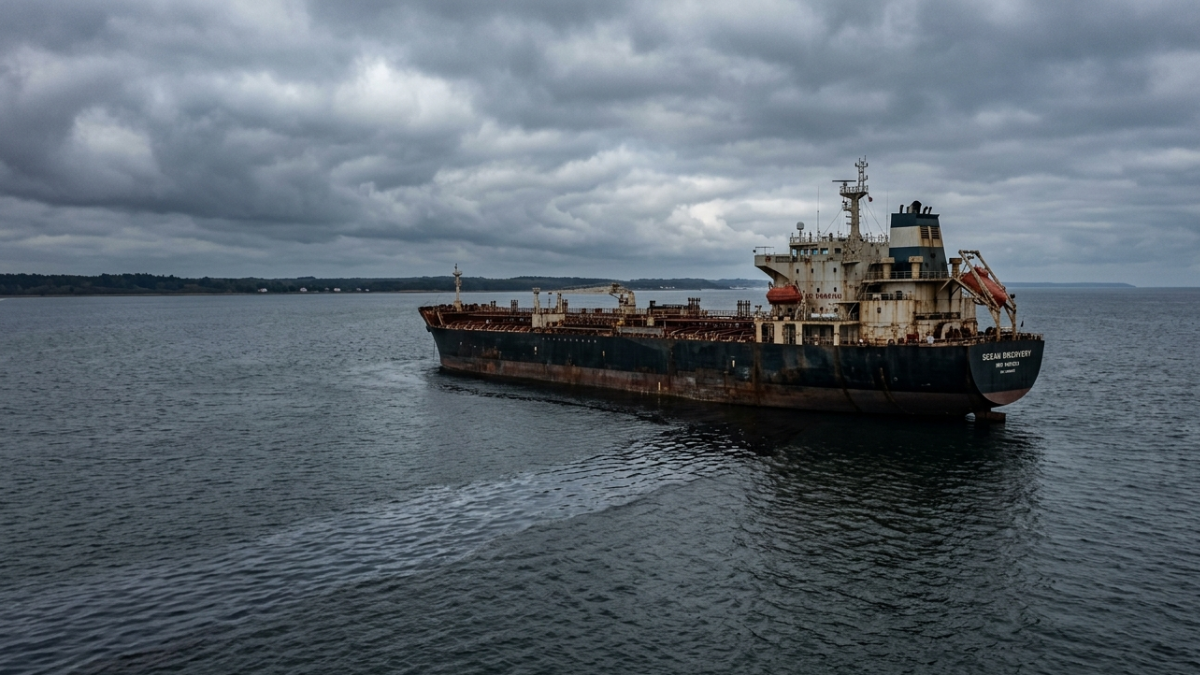


Sweden has taken swift action after a suspected oil spill was discovered in the Baltic Sea, with a sanctioned tanker named Flora 1 identified as the main suspect. The spill, measuring about 12 kilometers (8 miles), was detected early Thursday east of Gotland. The vessel had departed from Primorsk earlier in the week, and tracking data from MarineTraffic helped link it to the incident. The Swedish Coast Guard boarded the tanker on Friday and moved it, along with its 24-member crew, to anchorage near Ystad.
Authorities confirmed the tanker was intercepted after being identified as the suspected source of the spill. The action followed increased monitoring in the Baltic region due to rising security concerns.
The exact cause of the spill remains unclear. Daniel Stenling said authorities act immediately when emissions are detected and that this response is part of enhanced maritime surveillance in the region.
Sanctions and shadow fleet under scrutiny
The tanker is under European Union sanctions, meaning it is banned from financial and commercial dealings. It has been identified as part of the “shadow fleet,” a group of vessels used to transport Russian oil while avoiding international restrictions.
This fleet expanded after major economies imposed limits on Russian oil revenues following the conflict involving Russia. These measures included restrictions on shipping and insurance services for oil sold above a set price.
Sanctioned tanker “Ping Shun” diverts Iranian oil from India to China amid payment dispute
In response, shadow fleet vessels began operating in less transparent ways. These tankers often use methods that make tracking difficult and reduce accountability.
Such tankers are known for risky practices. These include turning off automatic tracking systems to hide their location. They may also carry out ship-to-ship oil transfers at sea to conceal the origin of cargo. Reports indicate that the Flora 1 tanker had previously been involved in such transfers near Greece.
There are also concerns about the tanker’s registration. Its official flag remains unclear. Reports suggest it may have used false or misleading registration details, including switching between countries.
The tanker has been linked to a Hong Kong-based company. It has also been associated with an Indian company described as one of the leading operators of vessels involved in transporting Russian crude oil through such networks.
Many ships in this fleet are older and may not meet modern safety standards. These tankers often lack proper insurance from recognized providers, increasing the risk of accidents and making it harder to manage damages.
New OFAC advisory highlights risks of hidden asset control in sanctions evasion
Environmental and security concerns in the Baltic region
Authorities reported that around 18 cubic meters, or 113 barrels, of oil were released into the sea. While not considered a large-scale spill, the incident involving the tanker still poses risks to marine life in the Baltic Sea.
Officials said there is no immediate danger of the oil reaching land. However, authorities remain ready to take cleanup measures if necessary.
The incident has raised broader concerns about safety in the region. The presence of shadow fleet tankers in busy waterways increases the risk of accidents and environmental damage.
Carl-Oskar Bohlin stated that such vessels, often older and inadequately insured, pose both environmental and security threats. Concerns remain about how these tankers operate and the risks they create.
Authorities have strengthened maritime surveillance in response to the deteriorating security situation in the Baltic region. The case highlights the challenges in tracking tankers with unclear ownership and practices.
The incident also raises questions about responsibility in case of damage. Without proper insurance, it can be difficult to determine who would bear the cost of cleanup after such spills.