

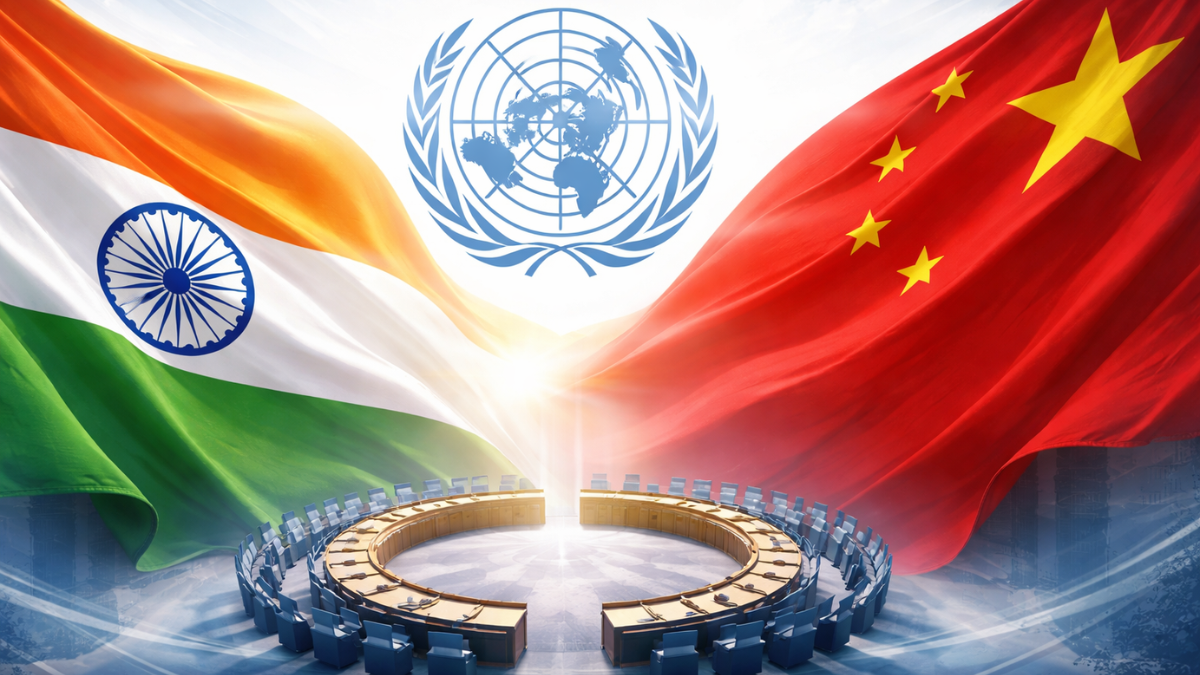


In a significant diplomatic development, China has openly expressed understanding and respect for India’s long-standing ambition to secure a permanent seat on the United Nations Security Council (UNSC). This statement was made during a recent high-level strategic dialogue between the two countries and marks the first time Beijing has publicly addressed the issue in such clear terms.
India has been seeking permanent membership of the UNSC for many years. The Security Council is the most powerful body of the United Nations and plays a central role in global peace and security decisions. It currently has five permanent members, each with veto power. India has argued that the current structure does not reflect modern global realities or the voices of major developing nations.
China’s remarks are especially noteworthy because it has long been seen as the main obstacle to India’s UNSC bid. In the past, Beijing raised procedural and technical objections whenever the issue of expanding permanent membership was discussed. While the recent statement does not amount to formal support, it signals a visible softening of China’s public stance.
Officials involved in the talks indicated that translating this change in tone into concrete action will depend on China’s next steps. Still, the acknowledgement itself is being viewed as a diplomatic success for India.
Despite sanctions, Western cars continue flowing into Russia through China
India’s global standing and changing dynamics in bilateral ties
India already enjoys support for its UNSC bid from several major global powers, including the United States, the United Kingdom, France, and Russia. Despite this backing, reform of the UNSC has remained slow due to the complex nature of international consensus and resistance from some permanent members.
Observers believe China’s evolving position reflects recognition of India’s growing influence on the global stage. India has played an increasingly active role in multilateral forums, particularly within BRICS, where it is seen as a key voice among emerging economies. This growing leadership appears to have influenced how Beijing views New Delhi’s role in global governance.
The strategic dialogue also suggested a broader effort by both sides to reassess their relationship. Instead of viewing each other solely as rivals, India and China appear to be exploring ways to manage differences while engaging on shared global and regional issues. This shift is being reflected not only in discussions on the UNSC but also in other areas of cooperation.
Trump administration blacklists Pacific Island officials in China-linked corruption move
Border stability, people-to-people ties, and multilateral cooperation
Beyond global issues, the dialogue focused strongly on rebuilding bilateral relations. Both sides agreed that peace and stability in border areas are essential for improving ties. The situation along the Line of Actual Control (LAC) was reviewed in detail, including progress on disengagement and troop withdrawals. The discussions highlighted the need to address disputes through political and strategic dialogue, in addition to military-level talks.
Practical steps to improve people-to-people connections were also discussed. Visa procedures are expected to be simplified, making travel easier for citizens of both countries. An updated air services agreement is planned, which would allow the resumption of direct flights between India and China after a long pause.
The successful restart of the **Kailash Mansarovar pilgrimage was highlighted as a positive development. Officials noted that the resumption reflects improving coordination and trust, with scope for further expansion under agreed arrangements.
On the multilateral front, China expressed support for India’s BRICS presidency this year. Beijing committed to assisting in the successful organisation of the summit and taking part in discussions aimed at strengthening cooperation within the group. Trade and economic relations were also reviewed, with both sides exploring ways to re-engage through dialogue.
These discussions together point to a visible change in tone between India and China, covering global governance, border stability, people-to-people exchanges, and multilateral cooperation, while maintaining the existing context and facts of their relationship.