

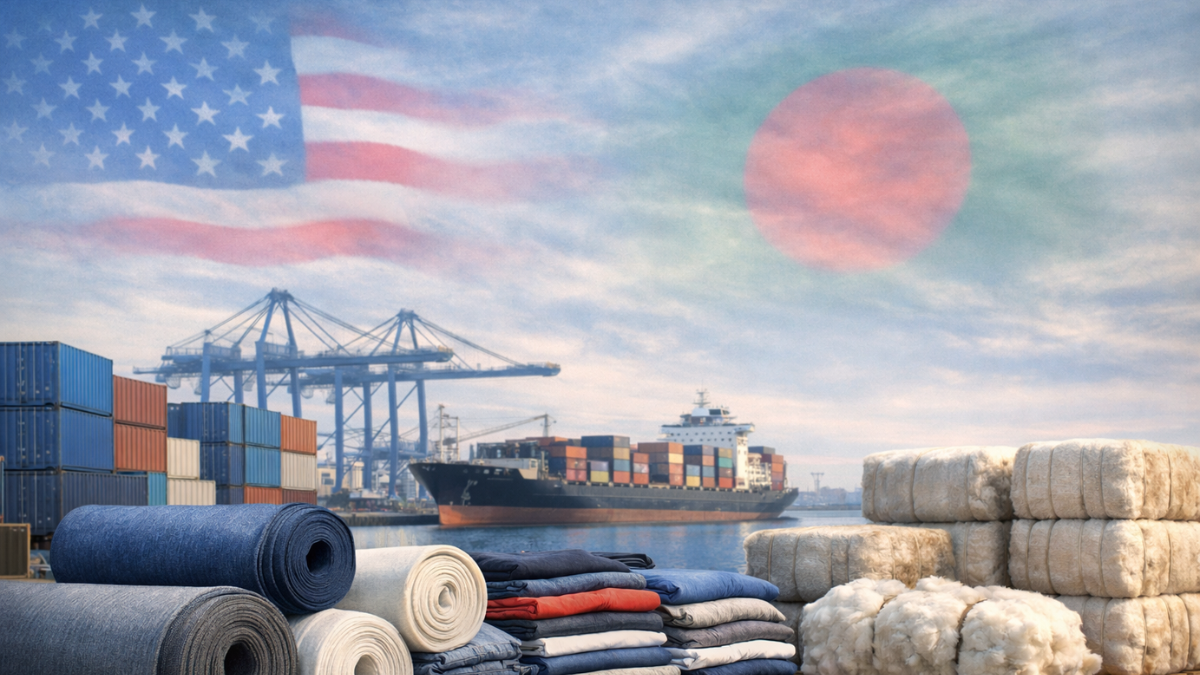


The United States has announced a new trade agreement with Bangladesh that brings partial relief to the country’s key clothing and textile sector. Under the agreement, some Bangladeshi-made clothes and textiles will be allowed to enter the US market without tariffs, provided they are made using materials produced in the United States. The announcement was made on Monday through a joint statement, which described the deal as a move to strengthen economic ties and provide broader access to both markets.
Alongside these exemptions, the US will also reduce its general tariff rate on Bangladeshi goods from 20% to 19%. In return, Bangladesh has agreed to open its markets to a wider range of American products. The agreement follows long negotiations that began after sweeping tariffs were imposed on many global trading partners during the presidency of Donald Trump.
Tariff exemptions and their impact on Bangladesh
The clothing and textile industry is the backbone of Bangladesh’s economy. The country is the world’s second-largest exporter of clothes after China. This sector alone accounts for more than 80% of the country’s total export revenue and employs around four million workers.
Under the new agreement, the US will identify certain clothing and textile goods from Bangladesh that can enter the American market free of tariffs. These exemptions apply only to products made using American cotton or American-produced man-made textiles. The volume of such goods will depend on how much textile material the United States exports to the country.
The reduction of the general tariff rate from 20% to 19% may appear small, but it has significance for exporters. Tariffs directly affect pricing, and even slight changes can influence competitiveness in the US market. The tariff-free access for selected products is expected to ease some of the pressure faced by Bangladeshi manufacturers following earlier tariff increases.
Bangladesh had faced especially high tariffs when the first round of reciprocal measures was announced. At that time, the country was given a 37% tariff rate, which made its clothing exports more expensive. The current agreement lowers that burden while keeping the overall trade structure unchanged.
Market access for US goods and trade commitments
In exchange for tariff relief, Bangladesh has agreed to provide significant preferential market access to a range of American goods. These include agricultural and industrial products such as chemicals, medical devices, car parts, soy products, and meat.
Bangladesh has also agreed to recognize American food and drug regulations, as well as US vehicle safety and emission standards. This step is intended to make it easier for American goods to enter their market by reducing regulatory barriers and delays.
As part of the agreement, Bangladesh committed to observing internationally recognized labor rights and increasing its environmental protection efforts. These commitments are especially relevant to the garment industry, which has long been under international scrutiny.
Mexico walks tariff tightrope as US warns against fuel shipments to crisis-hit Cuba
The joint statement also confirmed that Bangladesh will continue to uphold its agreement to purchase billions of dollars’ worth of American agricultural products, aircraft, and energy supplies. These commitments were already in place and have now been reaffirmed.
Regional competition and political background
The newly announced tariff cut places Bangladesh almost level with India, a regional competitor that currently faces an 18% US tariff. Both countries compete to export clothing, footwear, and agricultural goods to the American market.
India was initially hit with a 25% tariff when reciprocal tariffs were announced in April 2025. Bangladesh, by comparison, faced a higher rate. Subsequent negotiations led to the current arrangement.
The agreement comes as Bangladesh prepares to hold general elections this week. The country has been governed by an interim administration since 2024, after former Prime Minister Sheikh Hasina fled to India following her removal from power during unrest linked to student-led protests.
The deal focuses on trade, tariffs, and market access, while keeping all timelines, facts, and commitments consistent with the original announcement.