

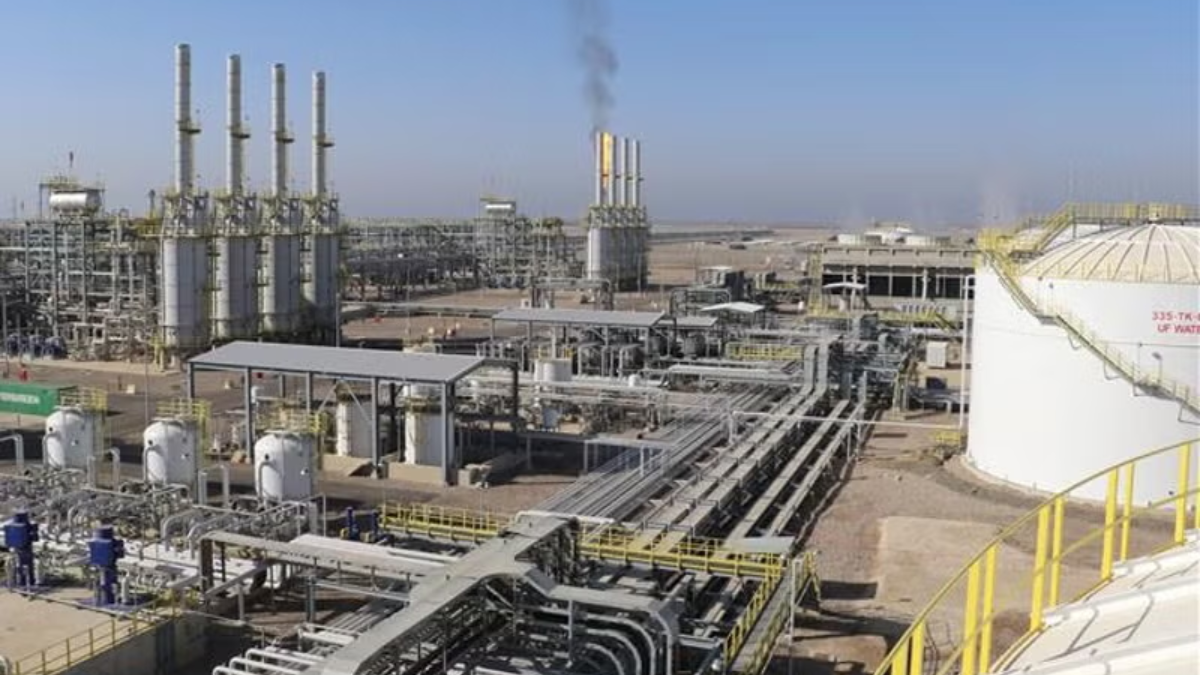


Iraq has moved to strengthen its control over the West Qurna-2 oilfield after sanctions disrupted the role of its main foreign operator, Lukoil. The move reflects how global sanctions on Russian energy companies are reshaping oil operations in major producing countries, including Iraq.
West Qurna-2 is one of the world’s largest oilfields and a key pillar of Iraq’s economy. Any disruption at the field has serious implications for national revenue and oil supply. To avoid production risks, Iraqi authorities have taken steps to ensure continued operations while discussions over ownership and management continue.
Iraq assumes control of a vital oil-producing asset
West Qurna-2 is located in southern Iraq and is managed by the state-owned Basrah Oil Company. The oilfield produces between 460,000 and 480,000 barrels of oil per day and is estimated to hold around 14 billion barrels in reserves. It contributes nearly 9 per cent of Iraq’s total oil output and plays a major role in funding the federal budget.
Lukoil, Russia’s second-largest oil producer, has been the majority stakeholder and operator of the field. However, the company faced growing challenges after being affected by United States sanctions targeting Russian energy firms. These sanctions created compliance and financial difficulties that limited Lukoil’s ability to continue operating as before.
EU expands sanctions on Russian oil, banks, and trade under 20th package
In November, Lukoil declared force majeure at West Qurna-2, stating that unforeseen circumstances had prevented it from fulfilling contractual obligations. This declaration raised concerns about operational continuity and production stability at the field.
Following this, the Iraqi cabinet instructed Basrah Oil Company on January 7 to take over management of operations at West Qurna-2. The decision allowed Iraq to maintain oversight of one of its most valuable oil assets during a period of uncertainty.
Temporary operators brought in under force majeure measures
To support ongoing petroleum operations, Basrah Oil Company signed a temporary agreement with Italian engineering firm Bonatti and Iraqi company Hilal Al Basra. The contract, outlined in a February 2 letter sent to Lukoil, covers six months and can be renewed once if needed.
Basrah Oil Company described the arrangement as a “force majeure mitigation measure” aimed at addressing disruptions caused by Lukoil’s withdrawal. The agreement requires Lukoil’s approval, though the company had not responded at the time of reporting.
Operations at West Qurna-2 are being financed through oil sales from Iraq’s Majnoon oilfield. These sales are handled by the State Organisation for Marketing of Oil, allowing Iraq to fund activities without relying on the sanctioned operator.
The move signals Baghdad’s readiness to run a major producing field without direct foreign operator control while negotiations over Lukoil’s stake continue. It also helps ensure that production remains stable during the transition.
U.S. targets Iran’s ‘shadow fleet’ with new sanctions as tensions rise during Oman talks
Sanctions reshape foreign participation in Iraq’s oil sector
The developments at West Qurna-2 highlight the wider impact of sanctions on Russian energy companies operating abroad. Lukoil, along with Rosneft, has faced increasing operational and financing constraints due to compliance risks linked to the war in Ukraine.
In January, Lukoil agreed to a conditional sale of certain overseas assets to US private equity firm Carlyle. The deal depends on regulatory approvals, including clearance from the US Office of Foreign Assets Control, and excludes Lukoil’s assets in Kazakhstan.
With Lukoil’s reduced role in Iraq, US oil company Exxon is said to be interested in a stake in West Qurna-2. Discussions over the field’s future structure are ongoing as Iraq works to protect production levels.
Lukoil also holds a 60 per cent interest in Iraq’s Block 10, known as the Eridu field, and a 50 per cent stake in Egypt’s West Esh El Mallaha fields. These assets are also affected by the broader sanctions environment.
Iraq is Opec’s second-largest oil producer and has faced years of conflict, sanctions, and underinvestment. The steps taken at West Qurna-2 show how the country is managing key oil assets amid shifting global energy and political pressures.