

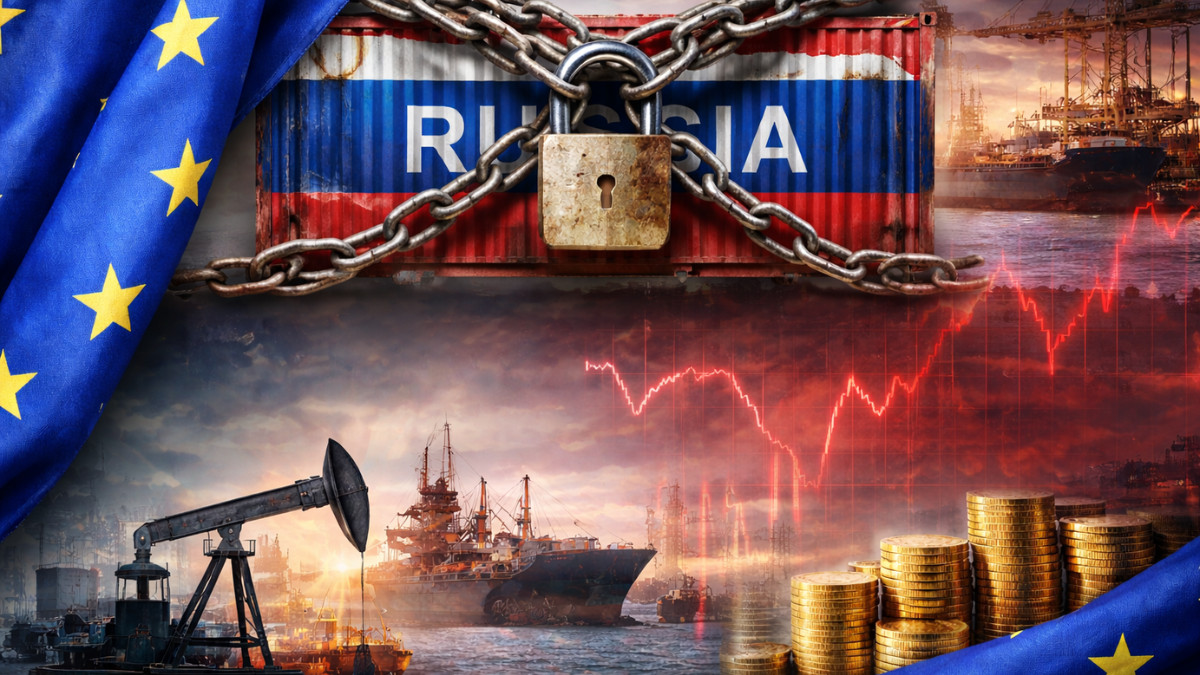


European Commission President Ursula von der Leyen has released a statement announcing the 20th package of sanctions against Russia, as the war in Ukraine continues after nearly 1,500 days. The measures aim to intensify economic pressure on Russia while Ukraine continues to face attacks on civilians and vital infrastructure.
According to the statement, Russian military advances over the past year have been very limited, averaging between 15 and 70 metres per day. Despite sustained fighting, Russian forces captured only about 0.8 percent of Ukraine’s territory. These gains came at a heavy cost, with casualty levels described as the highest seen in any military offensive since the Second World War.
The statement highlights continued attacks on civilian areas. Homes, power stations, and heating systems have been deliberately struck. Entire communities have been left without electricity and heat during freezing conditions. President von der Leyen stated that these actions show a strategy of wearing down civilians rather than pursuing peace.
Expanded Sanctions on Energy, Finance, and Trade
The new sanctions package focuses on three main areas: energy, financial services, and trade. Together, these measures are designed to reduce the resources available to sustain Russia’s war effort.
U.S. targets Iran’s ‘shadow fleet’ with new sanctions as tensions rise during Oman talks
Energy Restrictions and Shipping Controls
In the energy sector, the European Commission is introducing a full ban on maritime services for Russian crude oil. This includes shipping-related services that help oil reach global markets. The aim is to further reduce Russia’s energy revenues and make it harder to find buyers. Because shipping operates globally, this ban will be implemented in coordination with partners after a decision by the G7.
The sanctions also expand measures against the shadow fleet used to bypass existing restrictions. An additional 43 vessels have been added to the sanctions list, bringing the total to 640 ships. New steps make it harder to acquire tankers for this fleet. Broad bans have also been introduced on maintenance and support services for liquefied natural gas tankers and icebreakers, affecting gas export projects. These actions complement the LNG import ban agreed under the previous sanctions package and existing energy rules.
Financial and Trade Measures
The financial system is another major focus. The sanctions list now includes 20 more Russian regional banks. Measures are also being taken against cryptocurrencies, including companies and platforms involved in crypto trading, to close channels used to bypass restrictions. Several banks in third countries are also being targeted for facilitating illegal trade in sanctioned goods.
Trade restrictions have been expanded further. New export bans apply to goods and services such as rubber, tractors, and cybersecurity services, valued at more than €360 million. On the import side, new bans cover metals, chemicals, and critical minerals not previously sanctioned, worth over €570 million. Additional restrictions apply to materials used in producing explosives. A quota has also been proposed to cap existing ammonia imports.
U.S. warns Algeria of possible sanctions after confirmed purchase of Russia’s Su-57 fighter jets
For the first time, the European Union is activating its anti-circumvention tool, banning exports of sensitive items such as computer numerical control machines and radios to regions where there is a high risk of re-export to Russia.
Economic Impact and Support Measures
According to President Ursula von der Leyen, the sanctions are already showing results. Russia’s oil and gas revenues fell by 24 percent in 2025 compared to the previous year, the lowest level since 2020. This decline has widened the fiscal deficit. Oil and gas revenues recorded in January were the lowest since the war began. At the same time, interest rates stand at 16 percent, and inflation remains high.
Alongside sanctions, the European Union continues to support Ukraine. Hundreds of generators are being delivered to keep homes, hospitals, and shelters supplied with heat and electricity. The Council of the European Union has also adopted a €90 billion loan to help Ukraine defend itself and maintain stability during ongoing attacks.
The statement also confirms continued cooperation with the United States and international partners on peace efforts that include security guarantees, as well as joint planning for Ukraine’s recovery and long-term growth through a unified Prosperity Framework.