

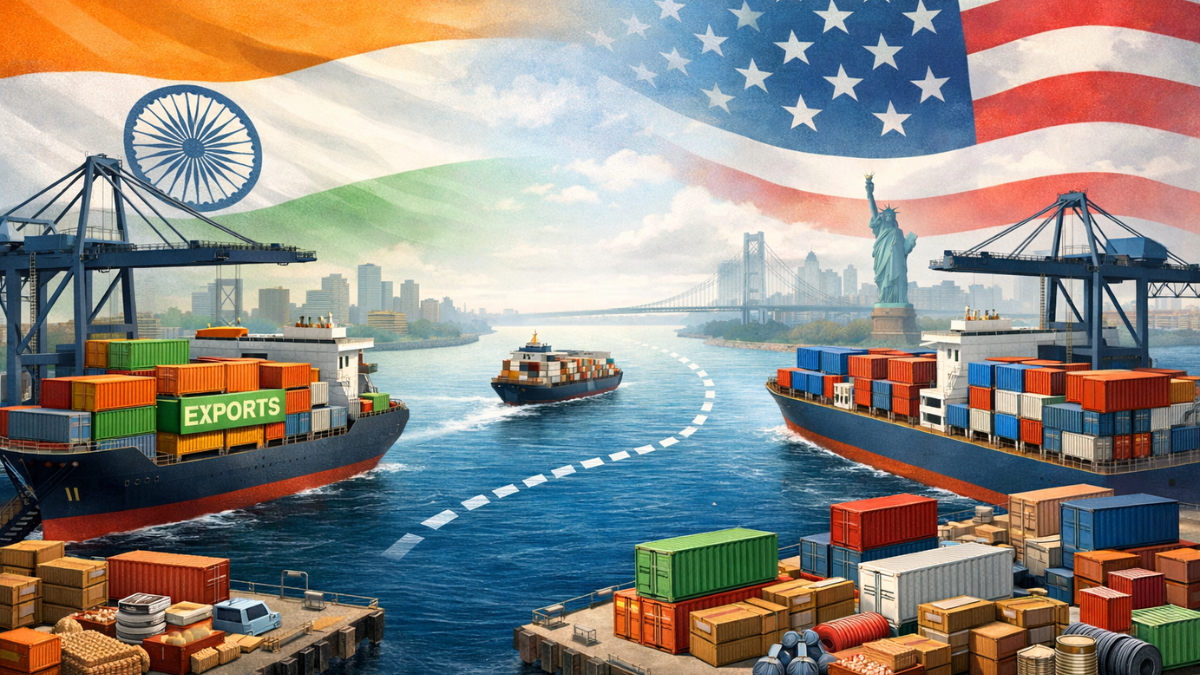


India and the United States have entered into a significant trade agreement that changes how selected goods are traded between the two countries. The agreement was announced following discussions between Prime Minister Narendra Modi and US President Donald Trump. Its main focus is the reduction of import duties on several Indian products entering the US market.
Import duties, also called tariffs, are taxes charged when goods enter another country. Higher tariffs make products more expensive. Under this agreement, many Indian goods will face lower duties, making them cheaper and more competitive in the US.
This development is important for India because the United States is one of its largest export destinations. Many Indian industries depend heavily on access to the US market. The agreement directly addresses tariff-related challenges that had affected exports in recent years.
The trade understanding applies to goods worth billions of dollars and mainly benefits sectors that rely on large numbers of workers. At the same time, it ensures that sensitive domestic sectors in India remain protected.
What the India–US Trade Agreement Covers
The core of the agreement is the reduction and removal of tariffs on selected Indian exports to the United States. As per official details, Indian goods worth nearly $10 billion may receive zero-duty access to the US market. This means these products can enter the US without paying import taxes.
After months of uncertainty, Trump and Modi move to end trade war with lower tariffs
In addition to zero-duty items, several other Indian goods will see significant reductions in tariffs. Earlier, high duties had made Indian products costlier compared to similar goods from other countries. The revised tariff structure lowers these barriers without changing the overall trade framework.
The agreement mainly covers labour-intensive sectors. These are industries that depend more on human labour than machinery and provide employment to millions of people across India.
Products included under the agreement come from textiles and garments, leather goods, footwear, gems and jewellery, marine products, chemicals, plastics, rubber goods, engineering items, auto components, and home décor products. These sectors form a major part of India’s manufacturing and export economy.
Union Commerce and Industry Minister Piyush Goyal stated that agriculture and dairy products remain outside the scope of tariff concessions. These sectors are considered sensitive due to livelihood concerns and domestic production needs. Keeping them protected ensures that local farmers and producers are not affected by sudden import competition.
The agreement also includes reciprocal elements. India has agreed to reduce duties on certain US exports in a calibrated manner. However, these changes are structured to avoid sudden disruption to domestic markets.
Why Labour-Intensive Sectors Are Central to the Deal
Labour-intensive industries are central to this agreement because they were among the most affected by earlier tariff increases. High duties reduced export orders and made Indian products less competitive in the US market.
‘Mother of all trade deals’ delivered as India and EU push back against global tariff chaos
Textiles and garments are among the biggest beneficiaries. These industries operate in multiple production hubs across India and rely heavily on exports. Lower tariffs help Indian products compete more effectively with goods from other exporting nations.
Leather and footwear sectors also gain from reduced duties. These industries employ large numbers of workers and supply global markets. Easier market access improves pricing and demand for Indian products.
The gems and jewellery sector, which depends on skilled craftsmanship, benefits as well. This sector contributes significantly to export earnings and supports millions of livelihoods directly and indirectly.
Marine products are another key category. Since these goods are perishable, quick and affordable access to international markets is crucial. Reduced duties help improve their competitiveness in the US.
Engineering goods and auto components are included in the agreement as well. These products are part of global supply chains and are supplied to international manufacturers. Lower tariffs help Indian suppliers maintain their position in these chains.
External Affairs Minister S. Jaishankar noted that the agreement reflects a balanced approach to trade cooperation while safeguarding domestic priorities. The tariff changes will take effect after formal procedures are completed, and until then, existing trade rules will continue to apply.