

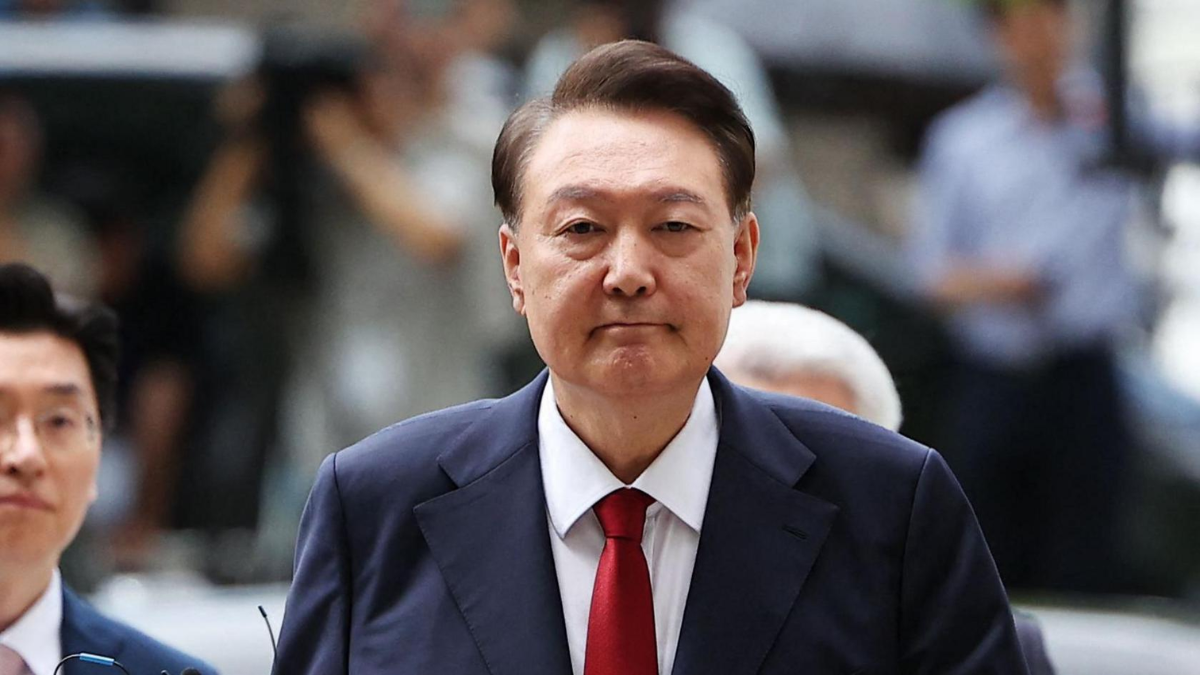


South Korean prosecutors have demanded the death penalty for former president Yoon Suk Yeol over his failed attempt to impose martial law in December 2024. The demand was made during an insurrection trial at the Seoul Central District Court, marking the first time in nearly 30 years that a former South Korean head of state has faced such charges. The court is scheduled to deliver its verdict on 19 February.
Prosecutors described the case as a grave attack on the constitutional order. They stated that Yoon Suk Yeol’s actions seriously endangered the state and violated the freedom and safety of the people. Under South Korean law, leading an insurrection carries only three possible punishments: death, life imprisonment with labour, or life imprisonment without labour.
Martial Law Declaration and Military Deployment
The case centers on events from the night of 3 December 2024, when then-president Yoon Suk Yeol declared martial law. Prosecutors say the move was unconstitutional and deliberately planned. That night, troops were sent to the National Assembly, and soldiers were allegedly ordered to stop lawmakers from voting to cancel the declaration.
Despite military cordons, 190 lawmakers managed to enter the assembly chamber. They passed an emergency resolution that legally voided the martial law order. The crisis ended after about six hours, forcing Yoon Suk Yeol to withdraw the declaration.
€14 million penalty sparks clash between Italy and Cloudflare over piracy enforcement
Prosecutors told the court that Yoon Suk Yeol knew his actions were illegal. As a former prosecutor general, they argued he was fully aware of constitutional limits. They accused him of trying to block democratic processes by using the military against elected representatives.
The prosecution also demanded life imprisonment with labour for former defence minister Kim Yong-hyun, stating that he acted closely with Yoon Suk Yeol throughout the planning and execution of the martial law attempt.
Alleged Planning and Human Rights Violations
According to prosecutors, preparations for martial law began before October 2023. They alleged that Yoon Suk Yeol aimed to secure long-term power by placing loyal military officials in key roles. Evidence presented included notebooks and mobile phone memos.
These documents allegedly outlined extreme measures, such as detaining and torturing election officials to force false confessions and cutting electricity and water to major media outlets. Prosecutors also criticized senior officials who failed to warn the public, saying their silence allowed the plan to proceed.
U.S. prosecutors drop core ‘narco cartel’ narrative in stunning Venezuela indictment shift
Another key factor highlighted by prosecutors was Yoon Suk Yeol’s lack of remorse. They said he never properly apologized and instead blamed political opponents while encouraging supporters. After his arrest, some supporters stormed a courthouse, leading to violent protests.
Impeachment, Arrests, and Ongoing Legal Cases
Following the martial law incident, the National Assembly impeached Yoon Suk Yeol on 14 December 2024. In April 2025, the Constitutional Court upheld the impeachment and removed him from office. A snap election later brought Lee Jae Myung to power.
Yoon Suk Yeol was first arrested in January 2025, becoming the first sitting South Korean president to be detained. He was briefly released in March but re-arrested in July and has remained in custody since.
The insurrection case is part of a broader legal campaign. Three special prosecutor investigations involving Yoon Suk Yeol, his wife Kim Keon Hee, and an alleged cover-up of a marine’s death have led to more than 120 indictments. Yoon faces eight criminal trials, including charges of abuse of power, election law violations, obstructing arrest, and ordering drone incursions into North Korean airspace to provoke a crisis.
Kim Keon Hee is also facing charges related to stock manipulation and bribery, with prosecutors seeking 15 years in prison. South Korea has not executed anyone since 1997 and is considered a de facto abolitionist state, despite the death penalty remaining in law.