

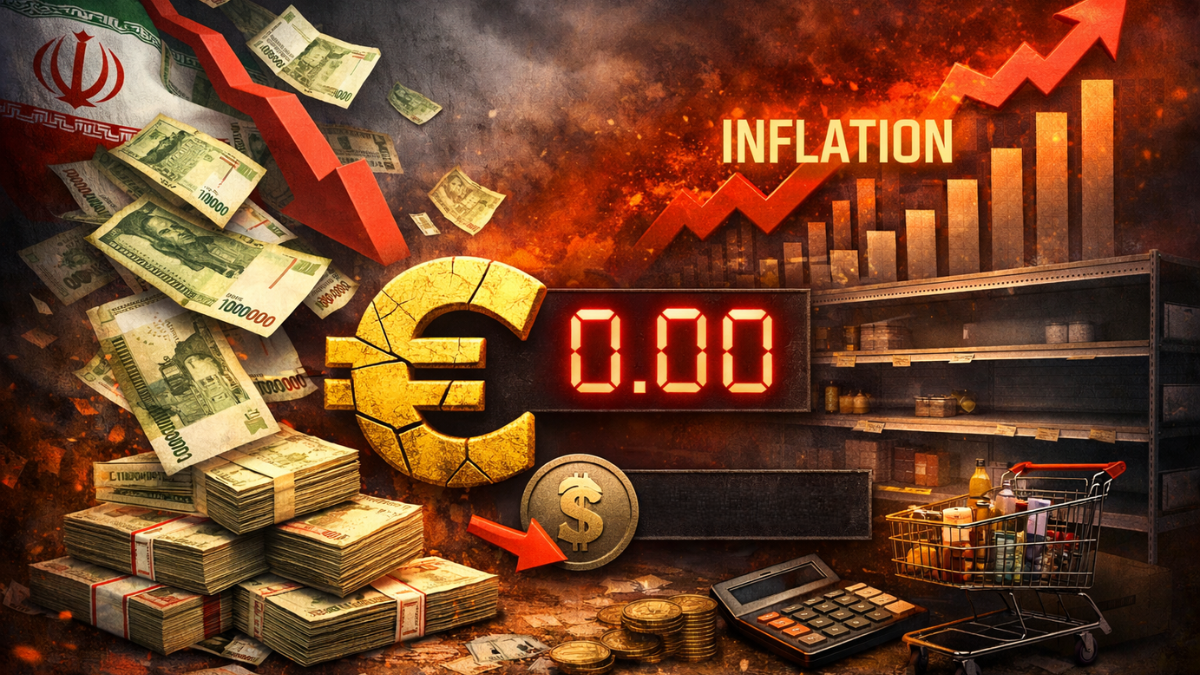


Iran is facing one of its most severe economic crises in recent history. The country’s currency, the rial, has lost massive value, dropping so sharply that it is effectively worth nothing against the euro. Alongside this, inflation is soaring, and protests are spreading across the nation as people struggle to meet basic needs.
Iran’s Rial Hits Record Lows
The Iranian rial has experienced a dramatic collapse in value. Reports indicate that it now stands at 1.47 million rials per U.S. dollar. Against the Indian rupee, the rial is valued at only 0.000091 paise, while against the U.S. dollar it has fallen to 0.0000010 cents. Most strikingly, the rial cannot be exchanged in European countries, effectively making its value 0.00 against the euro.
While this does not mean the rial has literally disappeared, the currency has lost almost all of its international purchasing power. Citizens inside Iran are facing skyrocketing prices, while foreign trade becomes nearly impossible.
To try to manage the situation, Iran’s parliament approved a plan in October 2025 to remove four zeros from the rial. This plan will take two years of preparation and a three-year transition period, during which old and new currency notes will be used together. Analysts say this is a temporary step to make the currency easier to handle on paper, but it does not fix the deep economic problems Iran is facing.
Trump redraws trade lines: Iran ties now trigger automatic 25% U.S. tariffs worldwide
Main Drivers of the Currency Crisis
Several major factors have caused the rial’s collapse. Sanctions from the United States and international bodies, especially those restricting access to dollars from oil exports, have severely weakened Iran’s currency. Hyperinflation is also hitting citizens hard, with consumer prices rising 42.5% in December 2025. This has made it almost impossible for ordinary people to save money, and many are now turning to foreign currencies, gold, or essential goods as safer options.
Economic growth is another issue. Iran’s GDP shrank by 1.7% in 2025, and this weak growth limits government revenue. Without enough money, authorities struggle to stabilize prices or maintain public services.
Government policy changes have also worsened the situation. Recent reforms required importers to buy foreign currency at open-market rates, creating a sudden spike in demand for dollars. Political unrest has added further pressure. Ongoing protests against the government and economic mismanagement have raised risks for businesses and investors, accelerating the currency’s depreciation.
U.S. officials have been monitoring the situation closely. Former President Donald Trump had previously threatened sanctions and tariffs on Iran’s trade partners if the country continued using force against protesters, increasing international economic pressure.
Iran shocks world by selling ballistic missiles and warships for crypto, bypassing sanctions
Protests Spread as Citizens Struggle
The economic collapse has triggered widespread protests across Iran. Reports show more than 600 protests have occurred across all 31 provinces. At least 646 people have died, and over 10,700 people have been detained during these demonstrations.
The protests began on December 28, 2025, initially led by traders and business owners. They demanded action against rising inflation, the falling rial, and the growing difficulty of conducting business. As unrest spreads, ordinary citizens are marching against high food prices, shrinking incomes, and the collapse of the national currency.
With trust in the rial declining, some Iranians are now exploring alternatives like Bitcoin and other cryptocurrencies. These digital currencies are not controlled by domestic banks and are seen as a potential way to protect wealth from inflation. However, volatility, legal restrictions, and technological challenges make widespread adoption difficult.
The situation highlights the scale of Iran’s current crisis. Citizens are struggling to afford necessities, the rial’s value has collapsed internationally, and protests are spreading across the nation. The economic strain, combined with political tension, is creating a daily challenge for millions of Iranians.