

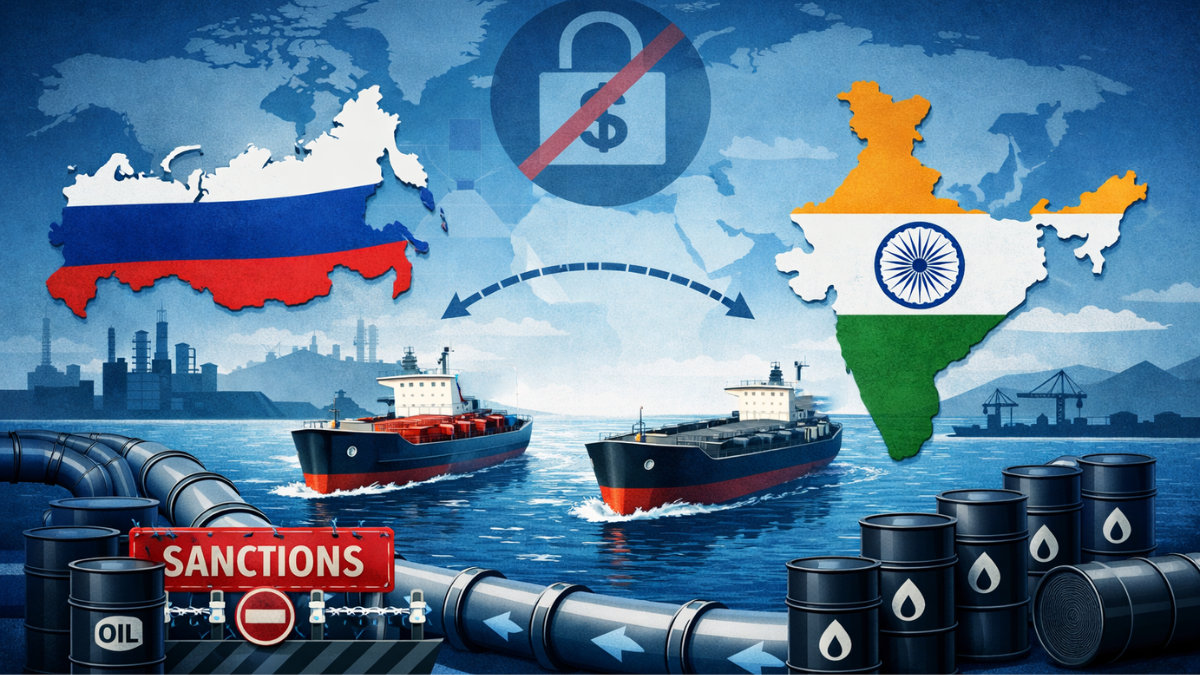


India has become the world’s second-largest buyer of Russian crude oil since the war in Ukraine began. Russian oil is now heavily discounted, making it much cheaper than oil from countries in the Middle East. For a country that imports nearly 90% of its oil, this price difference is hard to ignore.
The United States has repeatedly pressured India to stop buying Russian oil. In August, President Donald Trump imposed a 25% tariff on Indian imports in response to India’s ongoing purchases of Russian crude. India, however, refused to back down. The government said that buying oil is a sovereign issue and that its energy policies would not be dictated by other countries.
In recent months, President Trump increased the pressure even further. The US threatened to impose 500% tariffs on Indian goods and withdraw India from several global initiatives if it continued buying Russian oil. Despite these threats, India’s oil imports from Russia remain significant, showing the country’s determination to secure affordable energy for its growing economy.
Sanctions Affect Russian Oil Exports but India Still Relies on Them
At the end of November, new US sanctions targeted Rosneft and Lukoil, Russia’s two largest oil companies that supply most of the crude exported to India. These sanctions were intended to disrupt the flow of Russian oil to India and other countries.
Russian-flagged tanker carrying Venezuelan oil seized by U.S. after refusal to allow boarding
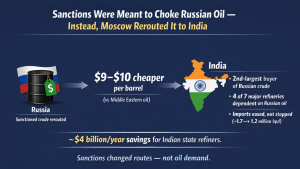
The sanctions had an initial impact. India’s imports of Russian oil fell from an average of 1.7 million barrels per day to about 1.2 million barrels per day in December, roughly a one-third decline. Despite this drop, India’s largest refineries continue to rely heavily on Russian oil. Four out of seven major Indian refineries are still primarily running on crude from Russia.
Even with these sanctions, many analysts say that India’s dependence on cheap Russian crude is unlikely to end soon. The discounts on Russian oil have become even larger, making it significantly cheaper than alternatives from Saudi Arabia, Iraq, or other Middle Eastern countries. For companies that continue buying Russian crude, the savings can reach billions of dollars per year.
Some private companies, however, have acted differently. Reliance Industries, India’s biggest private oil company and previously the largest buyer of Russian oil, stopped importing Russian crude into its Jamnagar refinery in November. This move aligns with US sanctions and European Union rules, which prevent Russian-origin oil processed in a third country from being exported to EU markets.
500% tariffs loom as U.S. targets countries still buying Russian oil and uranium
Russia Works Around Sanctions to Keep Oil Flowing
To maintain exports to India, Russia is already finding ways to bypass the latest US sanctions. New Russian companies have emerged to act as middlemen between the sanctioned giants and refineries in India. As long as oil comes from companies other than Rosneft or Lukoil, it is not subject to the US sanctions.
These new exporters are beginning to dominate Russia’s oil sales, indicating that the supply chain is being reorganized to continue shipments to India. The Russian government, led by President Vladimir Putin, has assured that oil deliveries to India will remain uninterrupted, despite international pressure.
The discounts make Russian oil highly attractive to Indian refineries. Even after the sanctions, the difference in price is roughly $9 to $10 per barrel cheaper than oil from Saudi Arabia or Iraq, creating a substantial cost advantage. Analysts note that for state-owned refineries, buying Russian crude is considered a risk worth taking, given the potential savings of nearly $4 billion per year.
While Reliance looks for alternatives, including Venezuelan oil, most Indian refineries continue to rely on Russia. Talks are reportedly ongoing to obtain Venezuelan oil in a way that complies with international rules, offering some legal alternatives for private companies concerned about sanctions.