

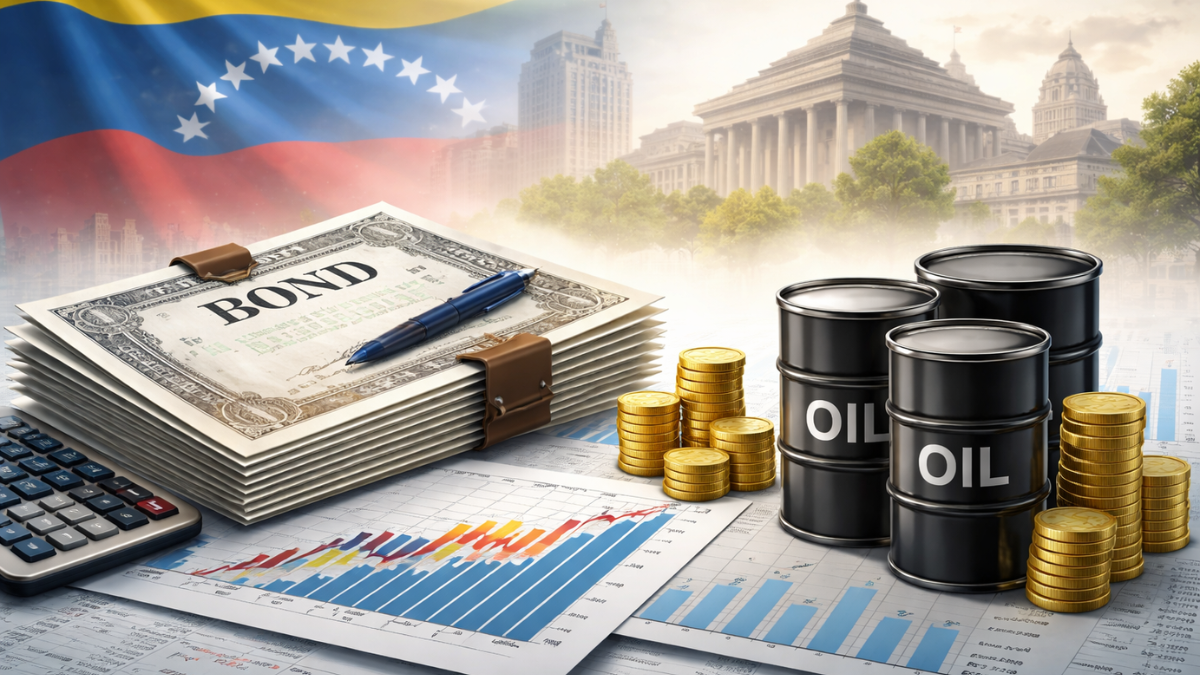


Venezuela’s prolonged debt crisis has again drawn attention after a key group of bondholders said it is ready to begin debt restructuring talks with the country. The group stressed that negotiations can only start once authorisation is granted by the United States. The announcement comes as Venezuela’s defaulted government bonds rose sharply in value this week, following events involving President Nicolas Maduro that fuelled hopes a restructuring process could finally move forward.
The group, known as the Venezuela Creditor Committee (VCC), said it stands ready to initiate a negotiated debt restructuring as soon as it is legally allowed. At present, U.S. sanctions prevent engagement with the Venezuelan government unless a specific licence or waiver is issued by U.S. authorities.
Bondholders Waiting for U.S. Authorisation
The Venezuela Creditor Committee includes major investment firms such as GMO, Greylock Capital, Fidelity, T. Rowe Price, Mangart Capital, and Morgan Stanley Investment Management. In a statement, the group said it is prepared to start talks once approval is granted.
Debt restructuring involves renegotiating the terms of existing debt, often by changing repayment schedules or conditions. For Venezuela, this would mark a significant step after years of default and limited access to global financial markets.
Telegram faces fallout from Russia sanctions as $500 million in bonds remain frozen
Despite the bondholders’ readiness, U.S. sanctions remain the key barrier. These rules prohibit U.S.-based investors and firms from negotiating directly with Venezuela’s government unless they receive permission from the U.S. Treasury and its sanctions enforcement body, the Office of Foreign Assets Control (OFAC).
The creditor committee said restoring Venezuela’s access to international private capital would be critical for the country’s social and economic recovery. It also highlighted the importance of funding for the oil sector, which has been heavily affected by years of financial pressure and sanctions.
Scale of Venezuela’s Debt
Venezuela and its state oil company, PDVSA, have defaulted on bonds with a combined face value of about $60 billion. These defaults followed years of missed payments and left bondholders unable to recover their investments.
When other obligations are included, the total debt picture is far larger. Analysts estimate Venezuela’s total external debt at between $150 billion and $170 billion. This amount includes additional PDVSA liabilities, bilateral loans, arbitration awards, accrued interest, and court judgments. The final figure depends on how interest and legal claims are calculated.
The size and complexity of this debt make Venezuela’s situation one of the largest and most difficult sovereign debt cases globally. Any restructuring would involve multiple creditor groups and legal processes across different countries.
The creditor group has emphasised that without renewed access to international capital, Venezuela’s economic recovery will remain challenging. The oil industry, once central to the economy, continues to struggle amid financial and operational constraints.
Years of Delays and Sanctions
Attempts to move toward a debt restructuring have been slow and inconsistent over the past decade. Progress has often stalled as U.S. administrations have alternated between easing and tightening sanctions on Venezuela.
China property crisis deepens as Vanke narrowly avoids bond default, shaking investor confidence
Sources familiar with the matter said the Venezuela Creditor Committee applied for a licence to engage with the Venezuelan government in late 2024, during the administration of Joe Biden, the predecessor of Donald Trump. The sources added that key members of the group met with officials from the U.S. Treasury and OFAC during the IMF and World Bank meetings in Washington last October.
According to the sources, advisers to the creditor group have remained in contact with OFAC since that meeting. It is unclear whether any further discussions with U.S. authorities have taken place following the recent seizure of President Maduro.
OFAC did not immediately comment on the status of the licence request. The VCC’s legal adviser, Orrick, also declined to provide further comment.
Separately, sources said Barclays organised an investor meeting in Washington in October that included Venezuelan opposition leader Maria Corina Machado. She spoke by video link from an undisclosed location about her plans for Venezuela, including economic and debt issues. The meeting took place days after she was awarded the Nobel Peace Prize. Barclays declined to comment.