

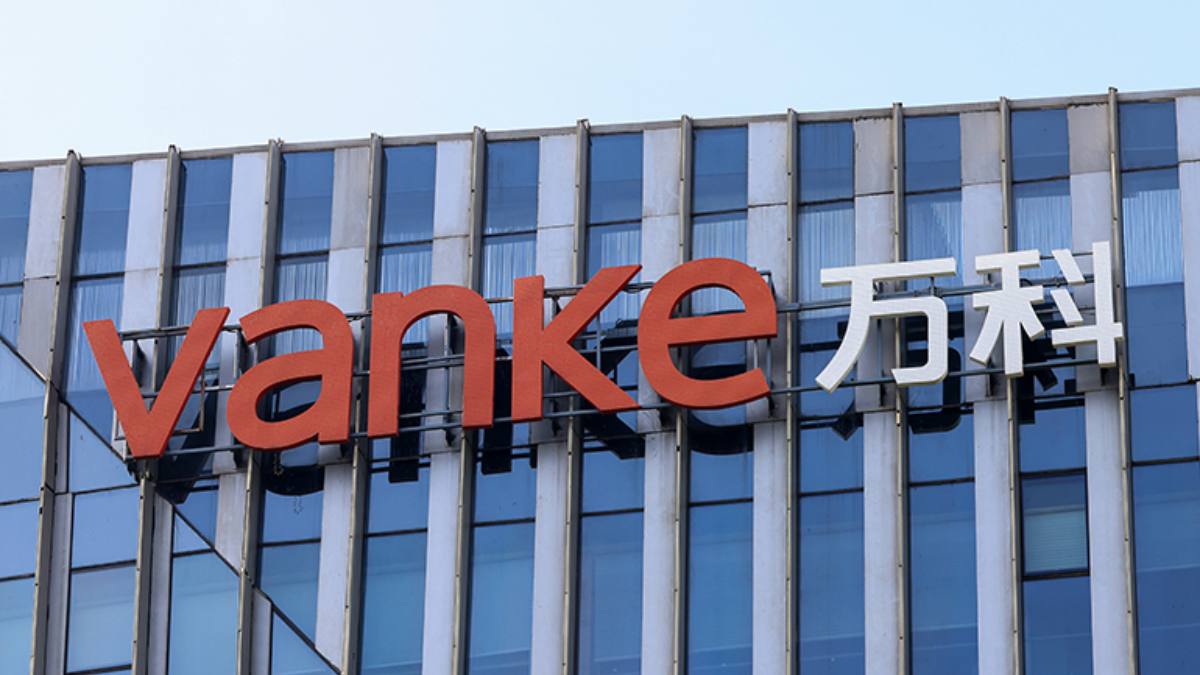


China Vanke, once the country’s largest homebuilder by sales, has narrowly avoided a major financial crisis, raising alarm about the state of China’s struggling property sector. The developer almost defaulted on a 2 billion yuan ($284 million) bond last week, a clear sign that the industry’s slow recovery is still fragile.
The company is also seeking to delay repayment of another 3.7 billion yuan ($530 million) of onshore debt due on December 28. Bondholders agreed to extend the deadline to February, but concerns remain that Vanke could face serious liquidity problems.
Despite government efforts to revive the housing market, developers like Vanke continue to struggle. Weak investment and falling home prices have shaken investor confidence, while many homeowners are left with properties worth less than what they paid. Once a major driver of economic growth, China’s property market now weighs heavily on the economy.
Vanke’s Financial Struggles
Vanke’s financial situation is tense. About a third of the company is owned by Shenzhen Metro, a state-owned railway group, but this support has not been enough to cover its mounting debts. Revenue dropped 27% compared with the same period last year in the July-September quarter. Prices of several onshore bonds plunged, leading to their suspension from trading.
China Warns of AI Addiction as It Unveils Draft Rules for Human-Like Systems
The developer owes more than $50 billion. While this is far less than the over $300 billion debt of China Evergrande, the company that shocked the property market with its 2021 default, Vanke’s situation still poses risks. Analysts say the company may be testing the limits of state support for property developers.
Vanke was founded in the 1980s in Shenzhen and became one of China’s most prominent property companies. Its current financial struggles show how even large, partially state-owned developers are vulnerable in today’s market.
Continuing Problems in China’s Property Market
China’s property sector has been in a slump for more than four years. The downturn has varied across cities, but overall, home prices have fallen by 20% or more since their 2021 peak.
New home sales dropped 11.2% in value during the first 11 months of 2025 compared with the previous year. Property investment also fell nearly 16%, causing layoffs and reducing consumer spending. Millions of homeowners face the reality of properties worth less than what they initially paid.
The slowdown has affected the broader economy, weakening confidence and slowing domestic demand. Even with repeated pledges from regulators to stabilize the market, recovery has been slow, showing how deeply the property sector’s problems have spread.
Israel acts against Chinese aluminium dumping as global trade tensions rise
State Support May Not Be Enough
Vanke has received support from Shenzhen Metro Group, which has provided more than 29 billion yuan ($4 billion) in shareholder loans this year to help cover debt repayments. However, this assistance is not enough to meet all of the company’s obligations.
By the end of September 2025, Vanke reported 60 billion yuan ($8 billion) in cash, compared with about 151 billion yuan ($21 billion) in short-term debt. Credit rating agencies have downgraded Vanke due to its debt situation, describing its bond extensions as a form of distressed debt restructuring similar to a default.
Vanke faces more than 9.4 billion yuan in bonds maturing in the next six months and hundreds of millions of dollars in repayments in 2026. A default would not only affect Vanke but could also impact the broader property market, making it harder for other developers to get financing.
Vanke employs more than 120,000 people, highlighting the scale of its operations and the potential economic impact of its financial troubles. The company’s struggles underline the fragility of the property industry, which continues to face weak investment, falling prices, and declining consumer confidence despite government support.