

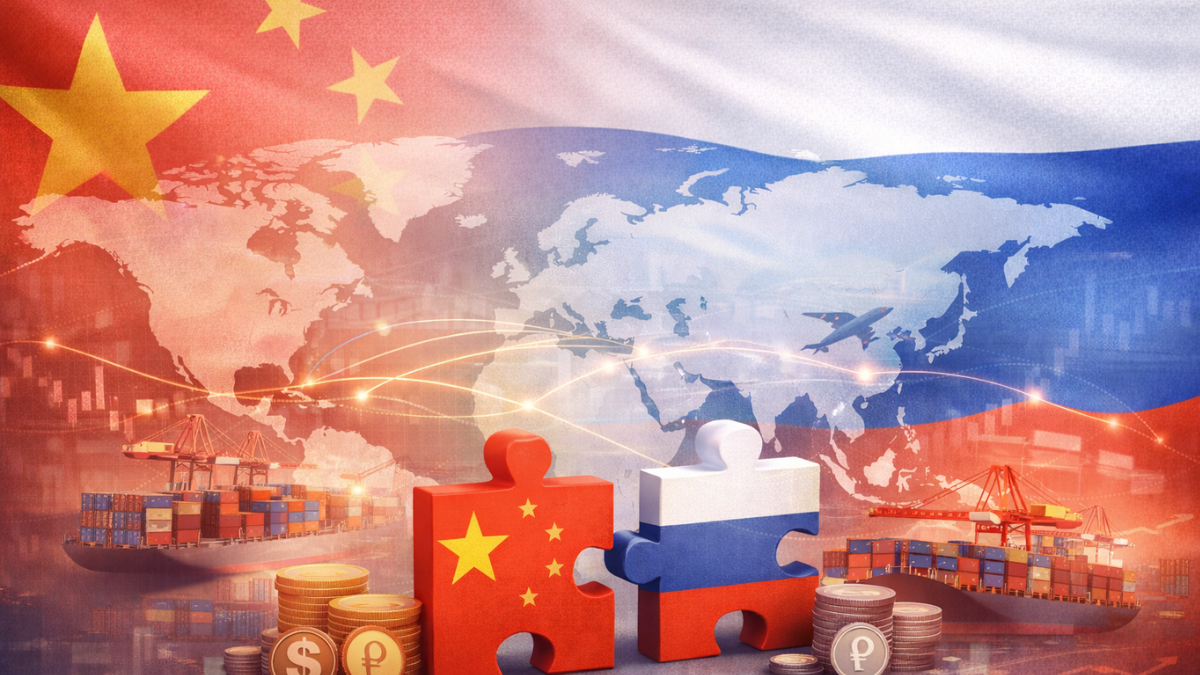


China and Russia have reaffirmed that their relationship remains strong and stable despite ongoing Western sanctions and political pressure. Speaking at a forum held at Renmin University of China in Beijing, Russia’s ambassador to China, Igor Morgulov, said ties between the two countries have reached their “highest level in history” in terms of depth and mutual trust. He stressed that sanctions have not weakened cooperation but instead encouraged closer dialogue and coordination.
According to Morgulov, China and Russia have continued to expand cooperation in what he described as an extremely complex international environment. He said both countries have responded to external pressure by improving communication, strengthening trust, and building mechanisms to protect their shared interests.
Trade, Sanctions, and Economic Coordination
A key focus of the discussion was economic cooperation. Morgulov said that almost all trade between China and Russia is now conducted in local currencies rather than the US dollar. This shift helps both sides reduce exposure to Western financial systems and limits the impact of sanctions.
He added that China and Russia have created reliable bilateral settlement mechanisms and efficient communication channels. These steps are aimed at stabilising global production and logistics chains, which have faced disruption in recent years. The two economies were described as complementary, with wide and multidimensional space for cooperation.
Tariffs of 21.9% to 42.7% target EU dairy products as China cites damage to domestic producers
Morgulov also said that Western efforts to restrict technological development and distort fair competition have pushed China and Russia closer together. He presented the partnership as a practical response to sanctions, export controls, and other external constraints.
China has faced criticism from Western countries for not condemning Russia’s invasion of Ukraine. Beijing has also been accused of supplying drone components and so-called dual-use technologies to Russia. China has repeatedly denied these accusations. Despite the denials, some Chinese companies and individuals have been sanctioned. China maintains that its cooperation with Russia follows international rules.
Political Trust, History, and Leadership Ties
Morgulov said the strength of China–Russia relations is also driven by close political coordination and high levels of trust. He attributed part of the momentum to regular head-of-state diplomacy between Chinese President Xi Jinping and Russian President Vladimir Putin. These frequent contacts have helped guide the relationship and maintain stability.
He also highlighted joint activities marking anniversaries linked to the end of World War II. As wartime allies, China and Russia share what they describe as a consistent understanding of the war’s history. Morgulov said both countries firmly oppose attempts to distort historical facts, undermine the role of the victors, or glorify Nazism.
Concerns grow over paid anti-China content appearing as public opinion in Japan
Chinese Foreign Minister Wang Yi recently echoed similar views during talks in Moscow with Sergei Shoigu, Russia’s top security official. Wang said China and Russia had reached a high degree of strategic consensus on several international issues. He also noted that next year marks 30 years since the establishment of the China–Russia strategic partnership and 25 years since the signing of the Treaty of Good-Neighbourliness and Friendly Cooperation.
Regional Security: Japan and Taiwan
Regional security issues were also discussed at the forum. Morgulov said Russia has repeatedly urged Japan to halt what he described as remilitarisation and to return to the pacifist principles set out in its constitution.
His remarks followed diplomatic friction between China and Japan after Japanese Prime Minister Sanae Takaichi suggested that an attack on Taiwan could pose a survival-threatening situation for Japan, potentially allowing military intervention. China strongly objected to these comments.
Beijing considers Taiwan part of China and has never ruled out the use of force to reunify the island with the mainland. Japan does not recognise Taiwan as an independent state but opposes any attempt to take it by force.
Wang Yi said China and Russia share a high level of strategic understanding on issues related to Japan. He called for both sides to consolidate strategic trust, deepen cooperation, and jointly respond to emerging challenges, with the aim of safeguarding global fairness and stability.