

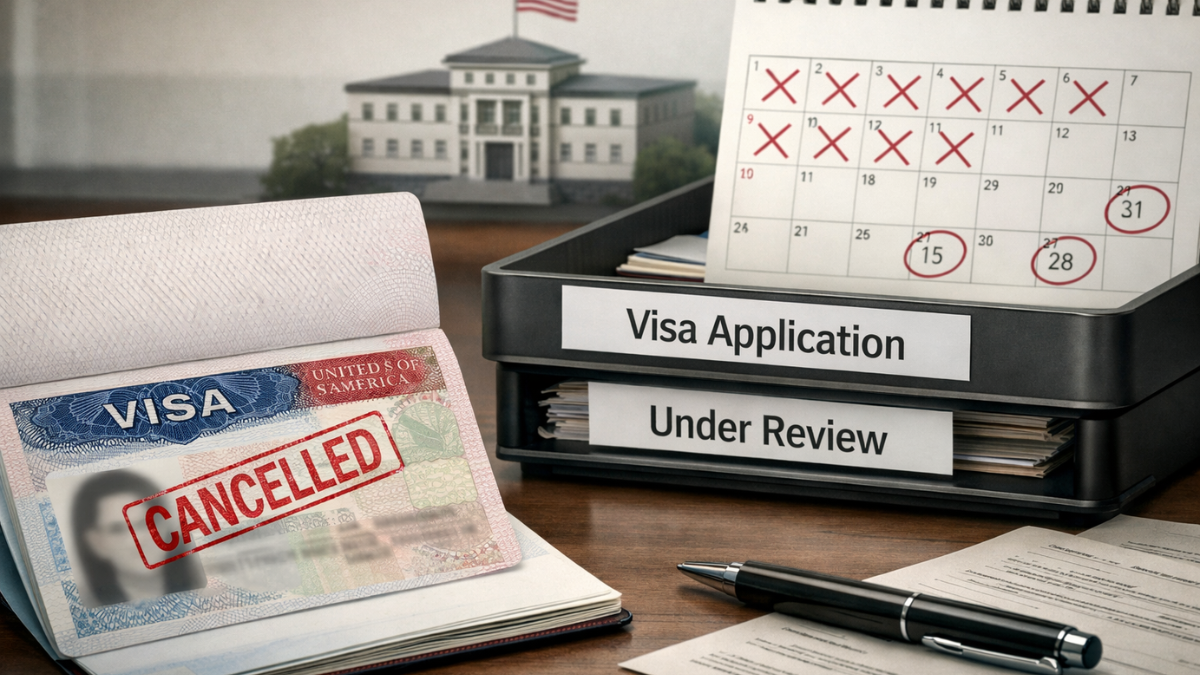


Thousands of H-1B visa holders are facing sudden hardship after traveling to India to renew their U.S. work visas. What was expected to be a short and routine process has turned into an unexpected crisis. Many workers are now stranded in India after U.S. consular offices abruptly canceled their visa renewal appointments and moved them months into the future.
Most of the affected workers are skilled professionals working legally in the United States, mainly in technology, engineering, and healthcare roles. Many have lived in the U.S. for years and traveled during December because it aligns with the holiday season and planned work breaks.
Visa Interviews Canceled With Little Notice
Between December 15 and December 26, U.S. consulates in India canceled hundreds, and possibly thousands, of H-1B visa renewal appointments. Immigration lawyers said workers received cancellation emails only days before their scheduled interviews.
Emily Neumann, a partner at the Houston-based law firm Reddy Neumann Brown PC, said at least 100 of her clients are currently stuck in India. Veena Vijay Ananth, an immigration lawyer practicing in India, and Charles Kuck, an immigration attorney in Atlanta, said they are handling dozens of similar cases.
President Trump pauses diversity visa program following deadly university shootings
Emails seen by The Washington Post indicate that the U.S. State Department informed visa applicants that the delays were linked to newly introduced social media screening measures implemented during the Trump administration. Officials said consulates reduced daily appointments to ensure applicants do not pose risks to U.S. national security or public safety.
A State Department spokesperson explained that embassies are now prioritizing deep vetting over faster processing. The department emphasized that every visa decision is treated as a security matter and that visas are considered a privilege.
Most canceled appointments were rescheduled between March and June. In one case, a worker was given a new appointment date in 2027. Lawyers said there is little guidance on how affected workers should manage the delays.
Families and Employers Left in Uncertainty
The cancellations have disrupted family life and employment for many H-1B workers. Most are in their 30s and 40s and have families, homes, and long-term jobs in the United States. Some traveled with their children and are now unsure whether to keep them out of school in India or send them back to the U.S. alone. Others are separated from spouses and children who stayed behind.
Veena Vijay Ananth said many clients are devastated and described the situation as one of the worst she has seen in over 20 years of handling H-1B cases.
Europe says no — Indian travellers lose ₹136 crore to Schengen visa rejections
One engineer from the Detroit suburbs, who spoke anonymously, said he traveled to India for a wedding and had visa appointments scheduled for December 17 and December 23. On December 8, he received emails canceling his appointments and rescheduling them for July 2. His visa expired, leaving him unable to return to the U.S., where his wife and 5-year-old son live. After his employer submitted urgent project documents, he secured an expedited appointment, though such approvals are rare.
Many stranded workers are now on unpaid leave and relying on savings. Online platforms such as Blind and Facebook groups focused on H-1B issues are filled with posts from workers seeking advice and support.
Policy Changes Behind the Disruptions
India accounts for about 71 percent of all H-1B visa holders, according to a 2025 report from U.S. Citizenship and Immigration Services (USCIS). Amazon, Meta, and Microsoft are among the largest sponsors of H-1B workers.
Earlier this year, the State Department ended remote and third-country visa renewals, forcing H-1B holders and H-4 dependents to return to their home countries. On September 19, President Donald Trump signed a proclamation imposing a $100,000 fee on new H-1B applications. On December 3, expanded screening and vetting rules were announced, including reviews of applicants’ online activity.
Charles Kuck said while the government points to security and operational limits, political pressure against the H-1B program, particularly affecting Indian nationals, appears to be a major factor. Emily Neumann warned that if workers remain outside the U.S. after their visas expire, employers may have to restart the visa process and pay the new fee, which most companies are unwilling to do.