
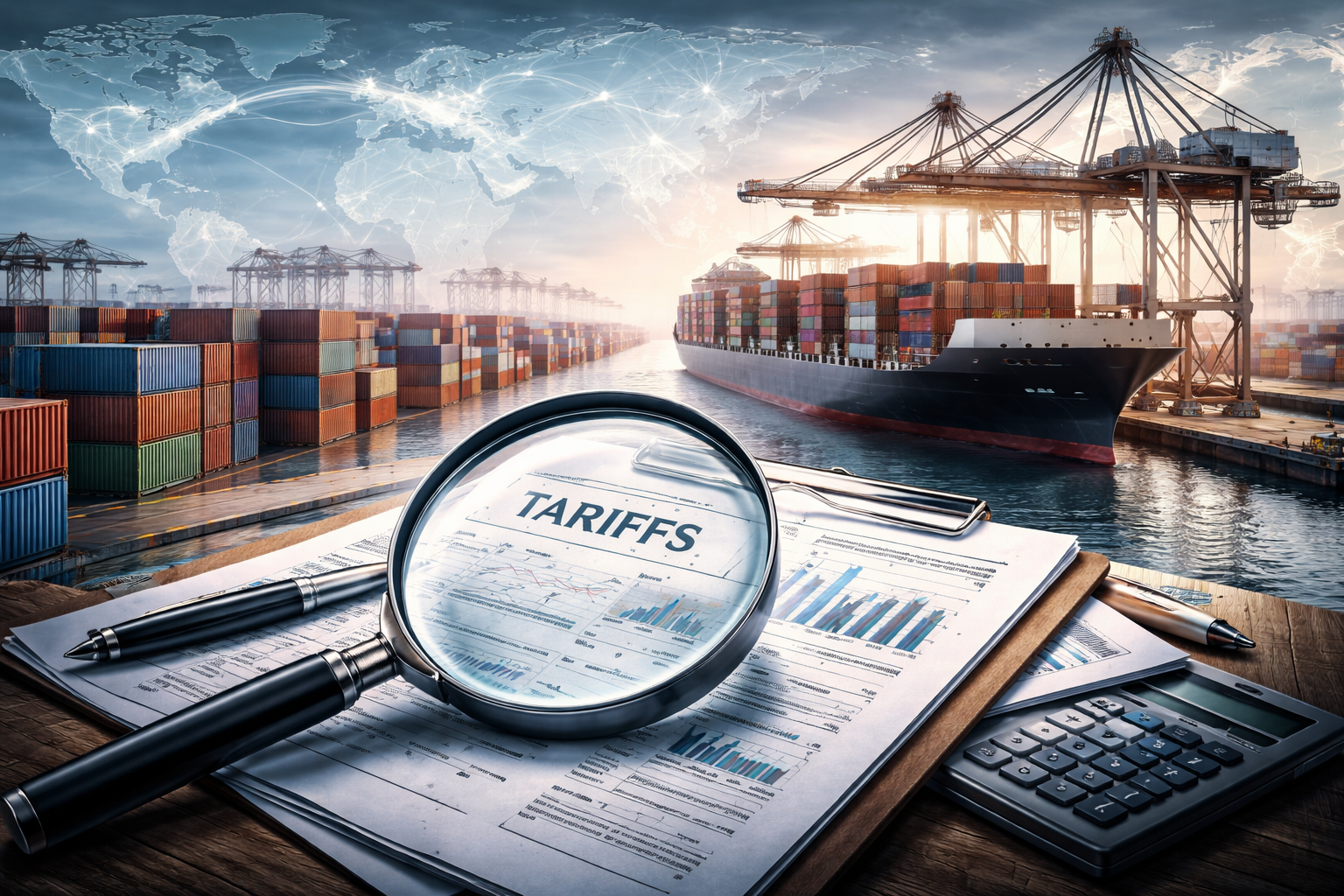


The United States has launched a new investigation into several of its largest trading partners, including China, the European Union, and India. The move follows a recent court ruling that struck down an important part of the tariff policy introduced earlier by the US government.
The investigation was announced on Wednesday by Jamieson Greer. It is being conducted under Section 301 of the Trade Act of 1974, a law that allows the United States to examine whether foreign countries are engaging in unfair trade practices.
If the investigation finds evidence of unfair trade behavior, the United States may impose tariffs on imports from those countries. Tariffs are taxes on goods entering the country, and they can make imported products more expensive.
Several major economies are included in the probe. These include Japan, South Korea, and Mexico. Other countries being investigated include Vietnam, Thailand, Malaysia, Cambodia, Singapore, Indonesia, Bangladesh, Switzerland, and Norway.
However, Canada, which is the second-largest trading partner of the United States, was not mentioned as a target in the probe.
The investigation comes at a time when trade policies and tariffs are once again becoming a major issue in global economic discussions.
Lenovo challenges Trump-era tariffs in US trade court and seeks repayment with interest
Court Ruling Pushes US to Seek New Trade Action
The decision to launch the probe follows a ruling last month by the Supreme Court of the United States. The court ruled that tariffs imposed on many countries around the world in April of the previous year were unlawful.
Those tariffs were part of a broader trade policy introduced by Donald Trump. After the court struck down a key part of that policy, the administration began looking for other legal ways to maintain pressure on trading partners.
Soon after the ruling, Donald Trump announced a new global tariff of 10 percent. The decision was presented as a response to the court’s judgment. At first, officials suggested that the tariff rate could be increased to 15 percent. However, when the policy was implemented, the rate applied remained at 10 percent.
Since then, officials have continued to say that the tariff could eventually rise to 15 percent.
Because earlier tariffs were challenged and ruled unlawful, the Section 301 investigation offers another legal path for the United States to impose new trade measures if needed.
Officials hope to complete the investigation before temporary tariffs introduced in late February expire in July.
Vietnam moves to reduce fuel tariffs to stabilize domestic prices during Iran war
Wide Range of Countries Examined for Trade Practices
The investigation focuses on whether certain countries are exporting goods to the United States in ways that harm American industries. One concern raised by officials is the issue of excess production capacity.
Excess capacity occurs when industries produce more goods than their domestic markets can use. When this happens, companies may export the extra products to other countries at very low prices.
According to Jamieson Greer, such practices can weaken domestic manufacturing in the United States. If imported goods are sold at very low prices, local companies may find it difficult to compete.
The probe will examine whether some countries are exporting large amounts of surplus goods to the United States in ways that harm American industries.
Major economies such as China, India, Japan, and South Korea are among those being examined because of their strong export sectors and significant trade relationships with the United States.
The probe also comes just before high-level meetings between officials from the United States and China scheduled to take place in Paris this weekend.
These talks are expected to address trade issues and economic relations between the two countries. They are also seen as preparation for a possible meeting later this month in Beijing between Donald Trump and Xi Jinping.