

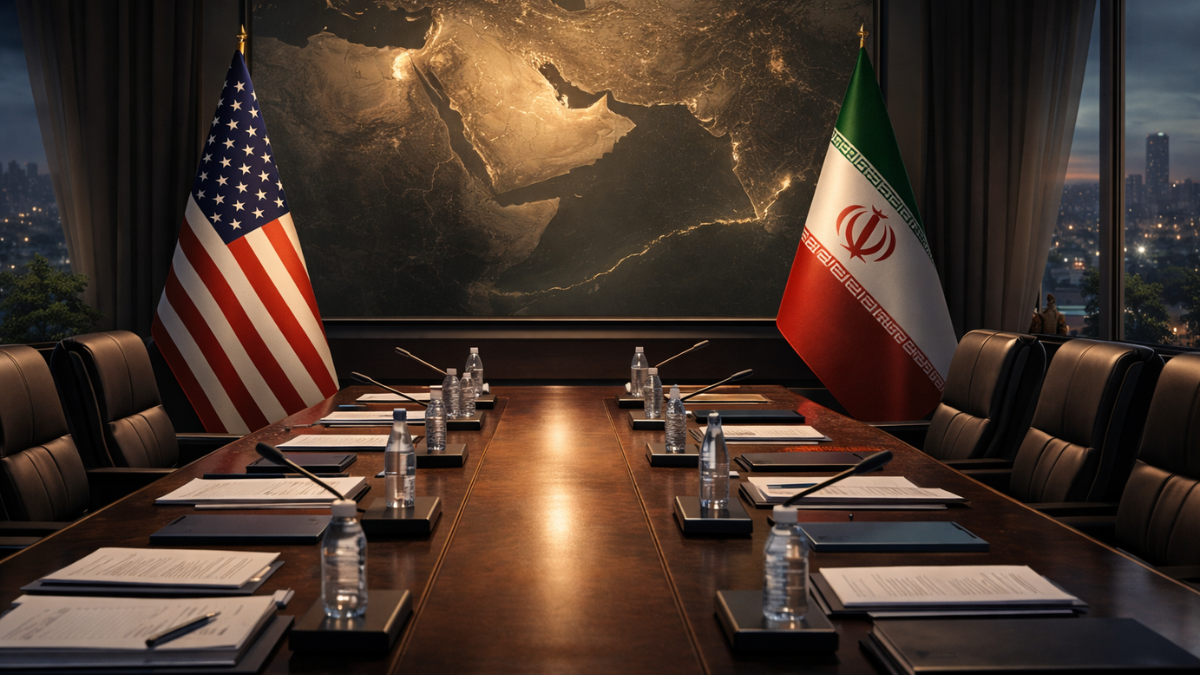


Senior officials from the United States and Iran have arrived in Pakistan’s capital for crucial peace talks aimed at ending a six-week-long conflict between the two nations. These discussions are among the most important direct engagements between the two sides in decades.
The United States delegation includes JD Vance, along with envoys Steve Witkoff and Jared Kushner, under the leadership of Donald Trump.
On the Iranian side, the delegation is led by Mohammad Baqer Qalibaf and Abbas Araqchi, supported by a large team of technical experts.
The city has been placed under strict security. Thousands of paramilitary personnel and army troops have been deployed. According to Talal Chaudhry, a multi-layer security system based on coordination and monitoring has been set up to ensure smooth proceedings.
Advance teams from both countries had already arrived earlier. Around 70 members from Iran and about 100 from the United States were present to prepare for the talks. Despite these preparations, uncertainty remains as both sides have been instructed to either reach a deal or walk away.
Disagreements Over Lebanon and Sanctions
A major issue is the ongoing conflict in Lebanon. Iranian officials, including Mohammad Baqer Qalibaf, have said talks cannot begin unless a ceasefire is implemented there. However, the United States and its allies have maintained that the Lebanon conflict is separate.
Fighting in Lebanon has continued. Israeli strikes and retaliatory rocket attacks have been reported. Lebanese President Joseph Aoun said one strike on a government building killed members of state security forces.
Separate discussions are also expected between Yechiel Leiter and Nada Hamadeh Moawad. However, there are conflicting views on whether these talks will focus on a ceasefire or broader peace negotiations.
Iran is also demanding relief from long-standing economic sanctions that have affected its economy for years. It has stated that earlier commitments included unblocking assets, but these steps have not yet been completed.
In addition, Iran is seeking recognition of its authority over a major global shipping route. It wants to control access and collect transit fees, which could significantly shift regional power. Iran has also demanded compensation for damage caused during the war.
Strong statements have been issued by Mojtaba Khamenei, who has emphasized accountability. This comes after the death of Ali Khamenei earlier in the conflict.
Ceasefire Holds but Tensions Continue
A temporary ceasefire was announced earlier in the week, pausing direct military actions such as airstrikes. However, tensions remain high and several key issues are unresolved.
Statements from Donald Trump have reflected a strong position, suggesting that Iran has limited leverage. At the same time, JD Vance has expressed cautious optimism but warned that pressure tactics would not be accepted.
One major concern is the continued disruption of the Strait of Hormuz, a key global oil route. Iran has allowed its own ships to pass while restricting others. This has caused one of the biggest disruptions to global energy supplies.
The impact has led to rising costs and economic pressure worldwide. Even if the route is reopened, the effects are expected to last for months.
The conflict has also shown that Iran still holds significant military capabilities. It continues to possess missiles, drones, and enriched uranium near weapons-grade levels. Despite the war, its leadership remains in control without signs of organised opposition.
The talks are ongoing without a fixed deadline. Both sides remain firm in their positions, and the outcome remains uncertain as negotiations continue under tight conditions.