

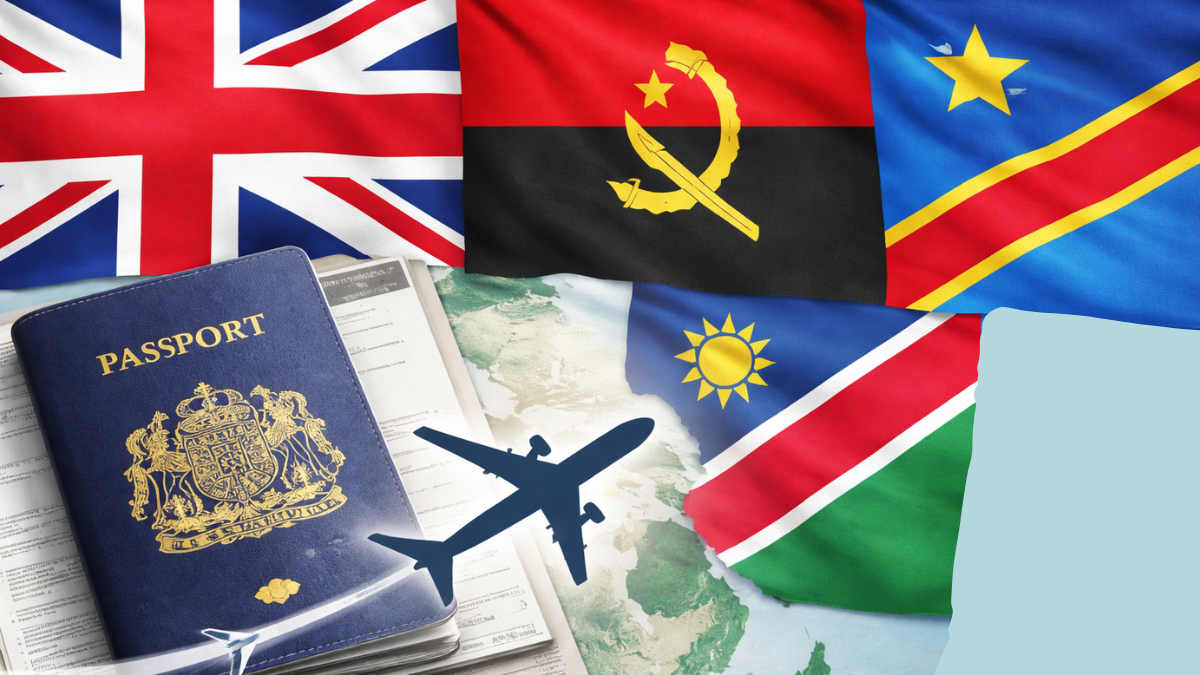


The United Kingdom has reached agreements with three African countries to take back their citizens who are living in the UK illegally or who have committed crimes. The decision followed a warning from the UK Home Secretary, Shabana Mahmood, that visa restrictions would be imposed if cooperation did not improve.
The countries involved are Angola, Namibia, and the Democratic Republic of Congo (DRC). The UK government had raised concerns that these countries were delaying or blocking the return of their citizens. After the warning, all three countries agreed to cooperate with the UK on migrant returns.
The government says the agreements will allow it to remove people who have no legal right to remain in the UK and deport foreign offenders who pose risks to public safety.
Visa Penalty Threat Used to Secure Cooperation
The UK government had been struggling to return migrants to Angola, Namibia, and the DRC. According to the Home Office, return processes were being deliberately slowed. In some cases, paperwork was not processed. In others, migrants were required to sign their own travel documents, which allowed them to refuse return.
These practices were described as unacceptable and obstructive. The Home Office said they prevented the removal of people who should not remain in the UK.
In response, the government warned that visa penalties would be imposed on countries that failed to cooperate. These penalties included restricting or suspending visas for people from those countries.
U.S. visa crackdown ignites diplomatic retaliation as nations move to ban American travelers
While setting out changes to the UK asylum system in November, Shabana Mahmood said that countries refusing to take back their citizens would face consequences. She made it clear that visa access depends on cooperation with return policies.
About a month after the warning, Angola and Namibia agreed to improve cooperation. The Democratic Republic of Congo later reached a similar agreement.
Over 3,000 People Now Eligible for Removal
Following the agreements, the UK government confirmed that illegal migrants and foreign offenders can now be returned to Angola, Namibia, and the DRC.
Shabana Mahmood said that illegal migrants and dangerous criminals would now be removed and deported to their home countries. She added that the government would take firm action to maintain order and control at the UK’s borders.
Officials estimate that more than 3,000 people from the three countries could now be eligible for removal or deportation. Many of these individuals had previously been unable to leave the UK due to blocked or delayed return processes.
The Home Office said the agreements resolve long-standing issues that had prevented effective enforcement of immigration rules. It stated that cooperation is essential for a fair and working immigration system.
Abramovich Assembles Legal Team to Contest UK Order on £2.5 Billion Under Sanctions
Wider Warning to Other Countries on Returns
The UK government has indicated that this approach may be used again. Shabana Mahmood has said that countries which refuse to cooperate on migrant returns cannot expect a normal visa relationship with the UK.
Officials have identified several other countries as being resistant to returns agreements. These include India, Pakistan, Nigeria, Bangladesh, Somalia, and Gabon.
The government has warned that visa sanctions could be considered if cooperation does not improve. One option mentioned is an emergency pause on visas for countries with high numbers of asylum claims.
The agreements with Angola, Namibia, and the Democratic Republic of Congo show how visa pressure was used to secure cooperation after earlier efforts failed.
The government says its focus remains on removing people who are in the UK illegally and deporting foreign criminals. It has stressed that immigration rules must be respected and enforced.
The facts remain unchanged. Three African countries agreed to accept returned migrants after facing visa penalty threats. As a result, thousands of people may now be removed under the new cooperation agreements.