


South Korea has announced a set of temporary steps to protect its economy as global shipping routes face serious disruptions. The problem is linked to tensions affecting the Strait of Hormuz, a key passage used for transporting oil and raw materials from the Middle East.
Due to the ongoing conflict in the region, many ships are being forced to take longer routes. This has caused a sharp rise in shipping costs. Freight rates for oil tankers have increased dramatically, making imports into South Korea more expensive and slower.
These disruptions have raised concerns about shortages of important materials. Many industries in South Korea depend heavily on supplies from the Middle East. This includes energy resources and raw materials used in manufacturing.
To address these challenges, the government has introduced a deregulatory package. The aim is to reduce pressure on businesses without increasing government spending. The plan focuses on making processes faster and more flexible.
South Korea Cuts Tariff Burden and Speeds Up Imports
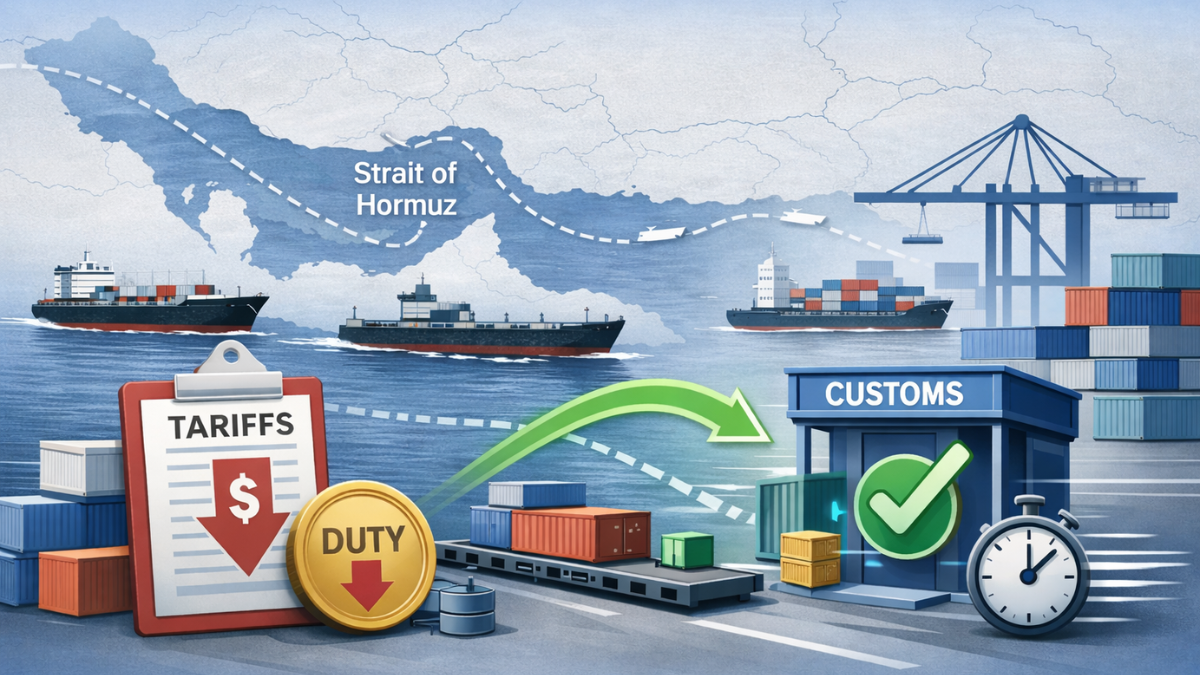
One of the key steps announced by South Korea is the exemption of extra shipping costs from import tariffs. Normally, tariffs are calculated based on the total cost of goods, including shipping. But now, any additional costs caused by rerouted shipping will not be included.
This change will help importers avoid paying higher taxes due to factors beyond their control. The measure will be applied retroactively. This means companies that have already faced increased shipping costs will also benefit.
Strait of Hormuz crisis brings over 40 countries into UK-led sanctions talks
During a briefing, Lee Hyoung-il explained that South Korea will remove the burden of extra shipping costs from import duty calculations. South Korea is preparing to revise customs rules, and these updates are expected to take effect soon.
Another important step is the introduction of pre-arrival customs clearance. This will apply to key imports such as crude oil and naphtha. These materials are essential for many industries.
With pre-arrival clearance, goods can be processed before they physically arrive in the country. This allows them to be used immediately in manufacturing once they reach ports. It helps reduce delays and keeps production running smoothly.
In addition, rules for importing certain chemical substances are being relaxed. Companies facing supply risks can now submit testing plans instead of full hazard test data. This significantly shortens the approval process, which usually takes more than three months.
South Korea Relaxes Rules to Support Industries
South Korea is also making changes to packaging and labeling rules. Due to supply shortages, manufacturers in South Korea are struggling to find standard packaging materials.
To solve this, authorities will allow important product information to be added using stickers instead of being printed directly on packaging. This makes it easier for companies to switch to alternative materials quickly.
Ships asked to pay in yuan or crypto for transit through the Strait of Hormuz
Another area affected by the supply disruption is household waste disposal. There has been panic buying of trash bags due to fears of shortages.
To manage this situation, the government will speed up quality inspections for garbage bags. The inspection period will be reduced from ten days to just one day. A better distribution system will also be introduced to ensure supplies are shared efficiently among regions.
These measures are designed to keep essential goods available and prevent further disruptions in daily life.
South Korea relies heavily on imported naphtha, which is a key material used to produce basic petrochemicals. These petrochemicals are used in making plastics, packaging, synthetic fibers, and rubber products.
Around 45 percent of South Korea’s naphtha supply is imported, and about 77 percent comes from the Middle East. This makes the current situation especially serious for industries that depend on steady supplies.
To stay on top of the situation, authorities have started daily monitoring of key supply chains and price-sensitive items. Different departments are working closely together and sharing updates quickly.
In a separate meeting, Koo Yun-cheol urged ministries to strengthen efforts to manage economic risks linked to the Middle East conflict. Officials are coordinating closely to ensure that any disruption is handled swiftly and efficiently.