
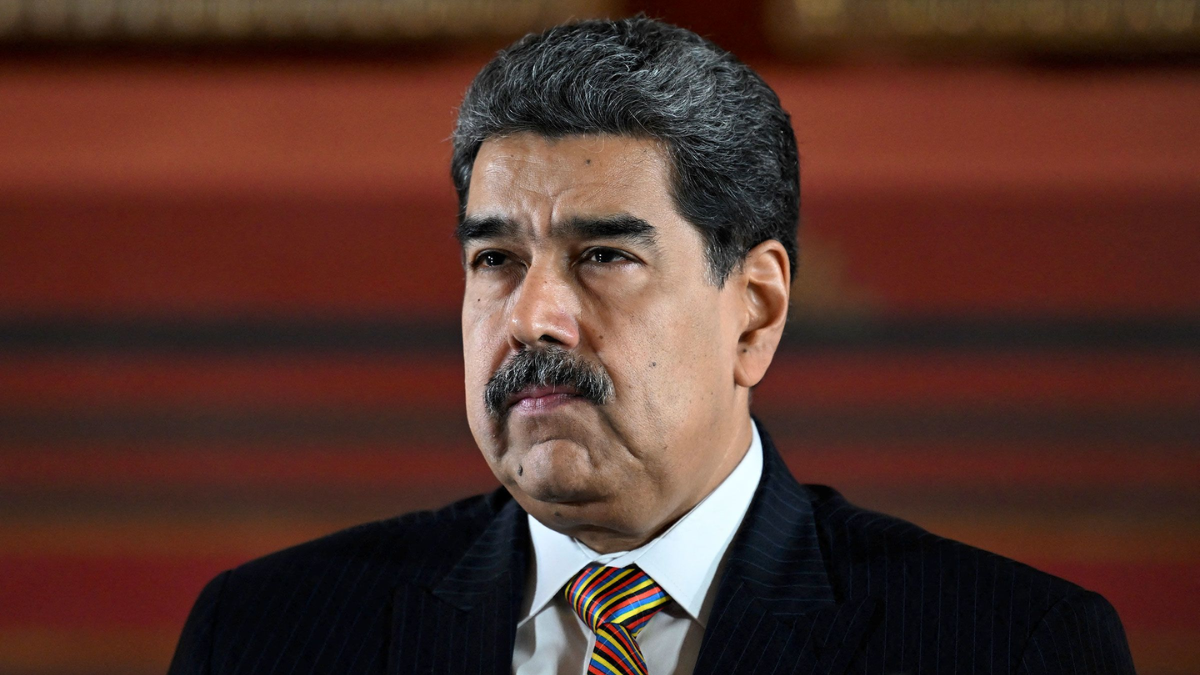


The United States has taken a bold step by imposing new sanctions on family members and close associates of Venezuelan President Nicolás Maduro. This action is part of a growing effort by Washington to pressure the Venezuelan government and its leadership. The U.S. Treasury Department announced the sanctions on Friday, targeting seven people linked to Maduro and his wife, Cilia Flores.
According to the Treasury, these individuals are connected to networks that help sustain the Venezuelan government. U.S. officials accused them of supporting Maduro’s “rogue narcostate,” which is alleged to flood the region with illegal drugs. Treasury Secretary Scott Bessent said that these sanctions are intended to block the operations of those who enable corruption and drug trafficking within Venezuela.
The U.S. says the measures are aimed at preventing Venezuela from continuing to send deadly drugs to American communities. Officials highlighted that the individuals targeted are part of the inner circle of Maduro and Cilia Flores, helping the government maintain its control and financial operations.
The Venezuelan government has not issued an immediate response to the new sanctions. In the past, officials in Venezuela have strongly denied any involvement in criminal activities. They also claim that the United States is attempting to remove Maduro from power in order to control the country’s vast oil resources.
Iran’s $2 Billion Venezuela Gamble at Risk as US Moves to Choke Oil Exports
Targeted Sanctions and Legal Measures
The sanctions announced on Friday specifically target relatives of Carlos Erik Malpica Flores, a nephew of Cilia Flores. Malpica Flores was already sanctioned last week by the U.S. for his involvement in a corruption plot at the state oil company, PDVSA. The Treasury now includes his mother, father, sister, wife, and daughter under the sanctions, expanding the reach of the U.S. measures against Maduro’s inner circle.
At the same time, the U.S. Treasury extended a general license protecting Citgo Petroleum, a Venezuela-owned refiner based in Houston, from creditors until February 3. This extension is shorter than the previous one in June, which lasted six months. The license temporarily bans transactions involving a Venezuela-issued bond backed by Citgo equity, helping ensure that the company continues operating despite the sanctions and ongoing legal proceedings.
Citgo Petroleum is a key Venezuelan asset in the United States. A U.S. judge recently approved the sale of shares in Citgo’s parent company, PDV Holding, to an affiliate of Elliott Investment Management. This sale is part of a court-organized auction to repay up to 15 creditors for Venezuela-linked debt defaults and expropriations. The Treasury’s temporary license ensures that Citgo’s operations and financial transactions are protected during the completion of this process.
Trump orders maritime blockade focused on sanctioned Venezuelan oil tankers
US Military and Economic Pressure
The sanctions come amid broader U.S. pressure on Venezuela. In recent months, the Trump administration has carried out a significant military buildup in the southern Caribbean. U.S. forces have also conducted strikes against vessels suspected of carrying illegal drugs in the region.
In addition, U.S. authorities have seized sanctioned oil tankers off the Venezuelan coast and declared a blockade on tankers entering or leaving the country under sanctions. President Donald Trump has repeatedly stated that strikes on land in Venezuela could be carried out, further signaling increased pressure on Maduro’s government.
The combination of sanctions, legal actions, and military activity is aimed at targeting the networks and individuals supporting Maduro and his government. U.S. officials say these measures focus on corruption, drug trafficking, and other activities that threaten regional peace and stability.
By acting against both individuals linked to Maduro and Venezuela-owned assets like Citgo, the United States is reinforcing its efforts to limit the Venezuelan government’s influence while maintaining control over critical financial and energy resources abroad.