

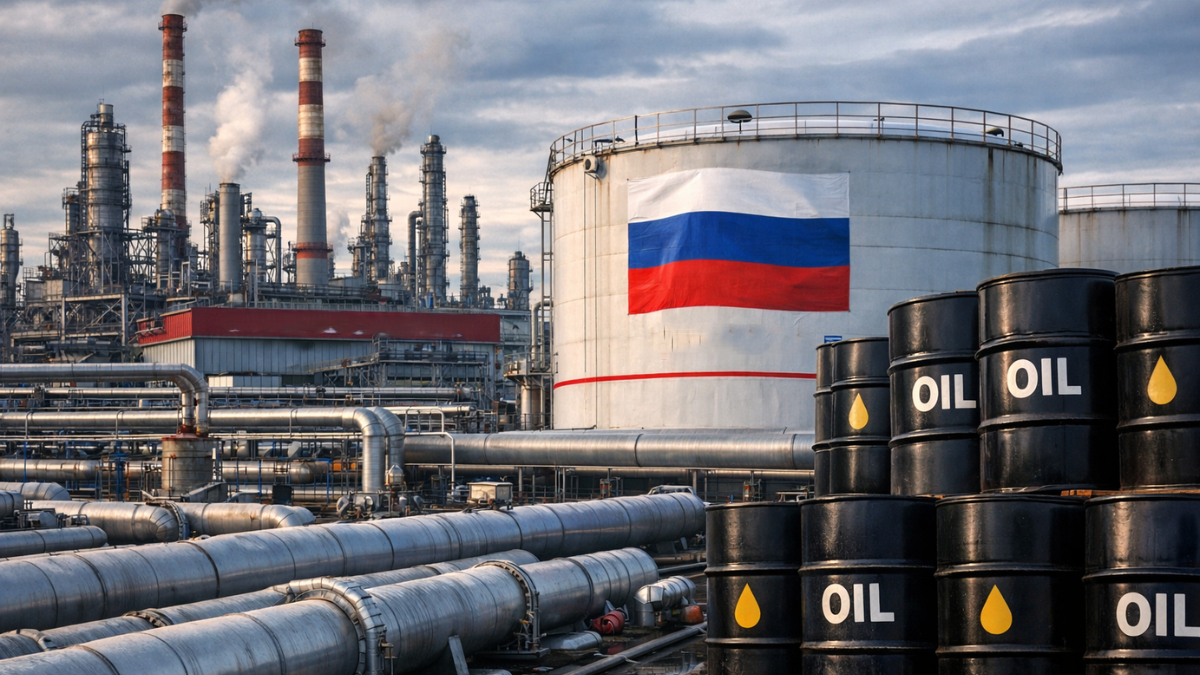


Russia is under growing pressure in the global oil market, forced to sell crude oil to India at extremely low prices. Some shipments have recently gone for as little as $22 to $25 per barrel. The sharp fall is driven by stronger US sanctions under President Donald Trump, which have made buyers cautious. To avoid unsold cargoes, Russia is offering unprecedented discounts, marking one of the steepest declines in oil prices in its recent history.
Oil exports are a major source of revenue for Russia. When prices fall this low, government income and the financial health of energy companies are affected. The situation has worsened as sanctions have tightened and some buyers have started refusing shipments. Experts point out that outside the COVID-19 pandemic period, Russia last sold oil at similar levels in 2003.
Russia’s Oil Discounts Hit Historic Lows
Russia has sharply increased the discounts on its Urals crude oil sold to India. In several cases, the discount compared to global oil prices exceeded $25 per barrel. For some individual cargoes, discounts approached $40 per barrel. These are prices not seen in more than two decades.
Official data shows the average export price of Urals crude fell to $39 per barrel in December 2025, the lowest since the pandemic period. In January, prices dropped further to $34–$36 per barrel in mid-month and recovered slightly to $36–$38 per barrel by the end of the month.
Damaged Russian “shadow fleet” tanker limps into Istanbul after drone strike at Black Sea port
The steep discounts are not voluntary but necessary. Russian exporters are struggling to find buyers willing to purchase oil under the risk of sanctions. India has become one of the largest buyers after European countries stopped importing Russian crude. However, even Indian refiners have begun rejecting certain shipments. This has forced Russia to offer even deeper discounts to keep its oil moving.
Sanctions Pressure and Buyer Hesitation
Sanctions are the main reason behind the falling prices. The United States has increased restrictions on countries and companies trading Russian oil. These measures make transportation, insurance, and payments more complicated. Even buyers who are not directly targeted face risks, prompting some Indian refiners to refuse cargoes.
With fewer buyers willing to take the risk, Russia has limited options. To avoid unsold volumes piling up and storage issues worsening, sellers have cut prices aggressively. Some analysts warn that if sanctions tighten further, Russia may have to rely more on pipelines. While pipelines provide a stable transport route, they limit export destinations and reduce flexibility in finding buyers.
These conditions have weakened Russia’s position in the global oil market. Buyers now have more leverage, knowing Russia must sell quickly. This imbalance is driving prices down to levels comparable to those seen in the early 2000s.
Russia leverages ruble-backed stablecoin A7A5 to move over $100 billion beyond Western sanctions
Falling Production and Refinery Damage Add to Pressure
Russia’s oil production declined to 512 million tons in 2025, the lowest since 2009, when production was 494 million tons. Even during the 2020 COVID-19 period, production was slightly higher at 512.7 million tons. Lower production combined with discounted prices reduces revenue from exports, adding strain to Russia’s budget, which relies heavily on oil income.
Ukrainian drone strikes on refineries and fuel infrastructure, especially in western regions, have reduced refining capacity. Fewer refineries mean less storage space and less ability to process crude into fuel. This forces Russia to export quickly, often at very low prices, to prevent bottlenecks in domestic storage.
Major oil producers, have asked the government for support due to the sharp fall in prices and discounts nearing 50% below global benchmarks. The combination of sanctions, buyer caution, declining production, and damaged infrastructure has pushed Russia into a difficult position. To sell its crude, the country has had to accept historically low prices, highlighting one of the most challenging periods for its oil industry in decades.