

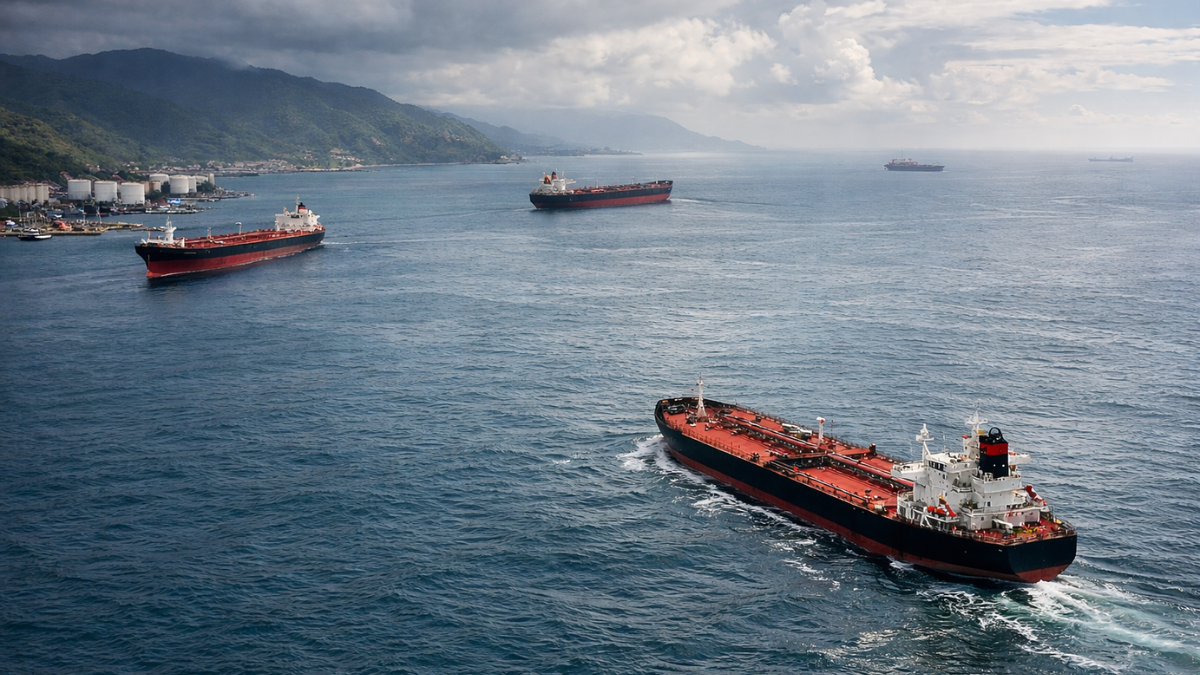


A tense situation is unfolding off the coast of Venezuela as oil tankers under U.S. sanctions appear to be fleeing the country’s waters. These ships are reportedly trying to bypass a strict American naval blockade aimed at stopping Venezuela’s energy exports. Satellite tracking and shipping analysis show that at least 16 tankers, docked in Venezuelan ports for weeks, suddenly disappeared by Saturday, raising concerns over potential violations of international sanctions.
The U.S. blockade, announced by then-President Donald Trump on December 16, is described as a “complete quarantine” targeting sanctioned oil shipments. Secretary of State Marco Rubio called it one of the largest modern efforts to cut revenue to the Venezuelan government. The departures came shortly after the reported capture of President Nicolás Maduro, increasing tension in the region and complicating control over the country’s oil exports.
Tankers Use Deception to Evade Detection
Some of the tankers are reportedly using advanced deception to avoid tracking. Four ships were tracked sailing east about 30 miles from the Venezuelan coast while spoofing their names and locations, a technique that makes it appear as if they are elsewhere in the world. Others simply turned off their tracking signals, making them nearly invisible to monitoring systems.
New US sanctions hit Chinese companies and oil tankers tied to Venezuela
The remaining 12 tankers have not been located in new satellite imagery and are not broadcasting signals, leaving their positions and intentions unclear. Reports indicate that these ships left without authorization from interim President Delcy Rodríguez and may be acting in defiance of the new leadership. Some ships were contracted by sanctioned traders Alex Saab and Ramón Carretero, who have been previously targeted by U.S. sanctions due to their links with the Maduro family.
At least three tankers were seen leaving Venezuelan waters in the same direction simultaneously, suggesting coordination. Shipping experts, including Samir Madani, note that sending multiple vessels together can overwhelm naval patrols and increase the likelihood that some ships escape interception.
U.S. Blockade and Ghost Fleet Tactics
The U.S. has already confronted several tankers:
- The Skipper was stopped and seized while heading to China.
- The Centuries was boarded but not seized.
- The Bella 1, later renamed Marinera, is still being pursued by U.S. forces.
The blockade targets only sanctioned vessels carrying sanctioned oil, while shipments involving approved companies like Chevron are exempt. Venezuela faces growing pressure to move its crude as storage facilities near capacity. If production is halted, it could damage oil reservoirs and equipment, creating strong motivation for tankers to attempt risky departures.
US increases enforcement of Venezuelan oil restrictions through military support
Many of these ships are part of the so-called “ghost fleet,” a network of vessels using deception to transport restricted oil. Common tactics include repainting hulls with fake names or using the identities of decommissioned ships. Some recent examples include:
- The Aquila II pretending to be Cape Balder in the Baltic Sea.
- The Bertha as Ekta, claiming to be off the coast of Nigeria.
- The Veronica III as DS Vector, also showing a fake location near Nigeria.
- The Vesna, using the name Priya, was spotted hundreds of miles out in the Atlantic near Granada, traveling faster as it did not carry crude.
Experts, including former U.S. Treasury sanctions officer David Tannenbaum, note that tankers face a difficult choice: remain in port and risk future U.S. boardings, or flee while there is still a chance to escape. Many appear to have chosen the latter, using a mix of technology and coordination to challenge enforcement at sea.
These events highlight the complexity and tension surrounding modern sanctions enforcement. With naval patrols, satellite monitoring, and deceptive shipping tactics, the struggle over Venezuelan oil is unfolding in real time on the open seas, creating one of the most closely watched maritime operations in recent history.