

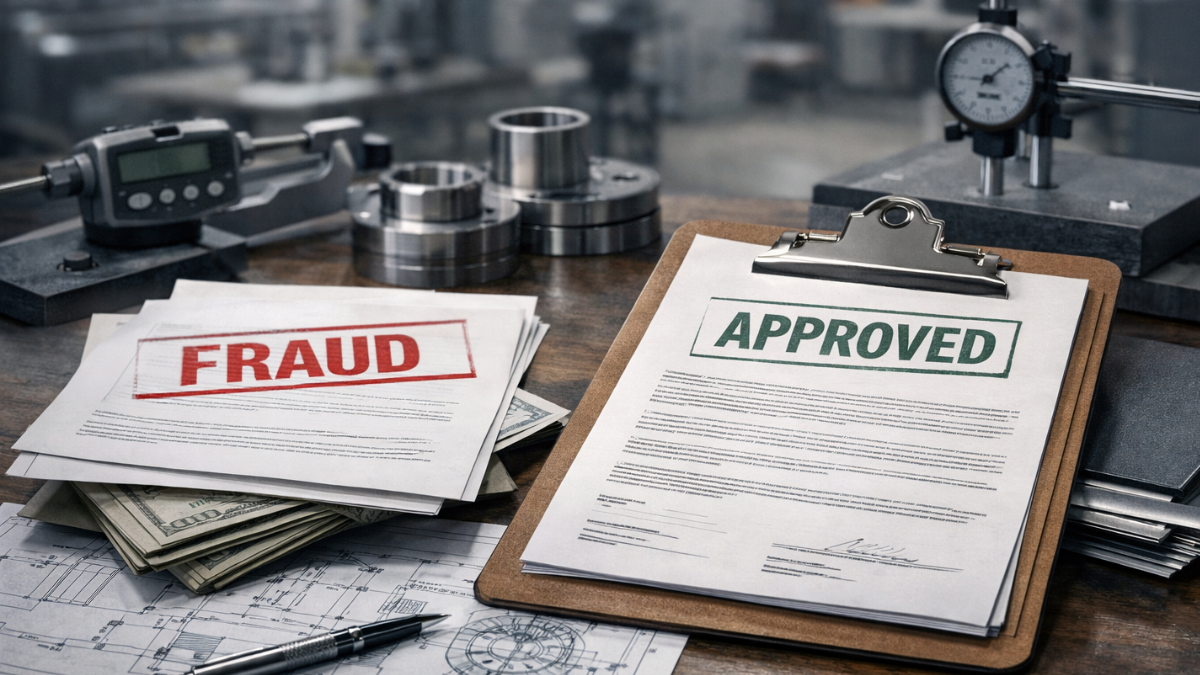


A Kansas man, Michael Clinesmith, has been sentenced to 29 months in federal prison after being convicted in a massive kickback scheme tied to nuclear weapons manufacturing work. The case involves contracts connected to the National Nuclear Security Administration and work performed at the Kansas City National Security Campus (KCNSC).
According to court documents and evidence presented at trial, Clinesmith worked for many years at a major engineering firm assigned to the KCNSC. His role was highly specialized. He was responsible for designing and procuring gages. These gages are precision tools used to measure components of nuclear weapons. They help ensure that critical parts meet strict specifications.
The contracts for these tools were part of projects supporting the nation’s nuclear weapons manufacturing efforts.
Over a period of approximately 15 years, Clinesmith secretly accepted more than $1.2 million in kickbacks. The money came from Richard Mueller, the owner of a subcontracting company that received subcontract work from Clinesmith’s employer.
The scheme remained hidden for more than a decade.
How the Kickback Scheme Worked
The fraud centered on subcontract awards. Clinesmith had authority to influence which companies received contracts for manufacturing the specialized gages.
Court records show that he worked closely with Mueller. In exchange for steering contracts to Mueller’s company, Clinesmith received large payments.
Former Corsa Coal executive Charles Hunter Hobson found guilty in $140 million Egypt bribery case
Mueller paid Clinesmith over $1 million for secretly performing some or all of the subcontracted work. At the same time, Clinesmith used his position to make sure the subcontractor’s company won bids.
The process followed a clear pattern.
First, Clinesmith told Mueller how much money he wanted to be paid for performing work under the gage subcontracts. Mueller then included those amounts in bids submitted to the engineering firm.
Next, Clinesmith approved those bids. He informed his employer that the bids were fair and reasonable. He did not disclose that part of the contract money would be secretly funneled back to him.
Clinesmith also shared insider information. This included internal budget details for the gage subcontracts. Mueller used that confidential information to gain an advantage when submitting bids.
Because of this arrangement, the subcontractor continued receiving awards. Meanwhile, Clinesmith collected payments behind the scenes.
In total, prosecutors said Clinesmith accepted more than $1.2 million in kickbacks during the 15-year period.
Vermont man charged in money laundering scheme tied to human smuggling
Conviction and Federal Investigation
In October 2025, Clinesmith was convicted by a federal jury. The charges included one count of conspiracy to commit wire fraud and honest services wire fraud. He was also convicted on four additional counts of wire fraud and honest services wire fraud.
Wire fraud involves using electronic communications, such as emails or electronic payments, as part of a fraudulent scheme. Honest services wire fraud refers to schemes in which a person violates their duty to provide honest services to their employer or the public, often through bribes or kickbacks.
The investigation was carried out by the Department of Energy Office of Inspector General.
In a statement, A. Tysen Duva of the Justice Department’s Criminal Division said the defendant exchanged his integrity and his employer’s trust for kickbacks from a dishonest contractor. He stated that the sentence reaffirms the Criminal Division’s commitment to rooting out fraud and corruption related to federal government procurement and protecting United States taxpayers.
Lewe Sessions, Assistant Inspector General for Investigations at the Department of Energy, said the office is committed to ensuring the integrity of departmental contracts and programs. He noted that allegations of fraud and kickbacks are taken seriously and aggressively investigated to protect Department of Energy programs.
The case was prosecuted by Trial Attorneys Andrew Jaco and Shy Jackson of the Criminal Division’s Fraud Section.
After the October 2025 conviction, Clinesmith was sentenced to 29 months in federal prison.
The sentence brings accountability in a case involving long-term contract manipulation, hidden payments, and misuse of authority within a federal nuclear weapons manufacturing program.