
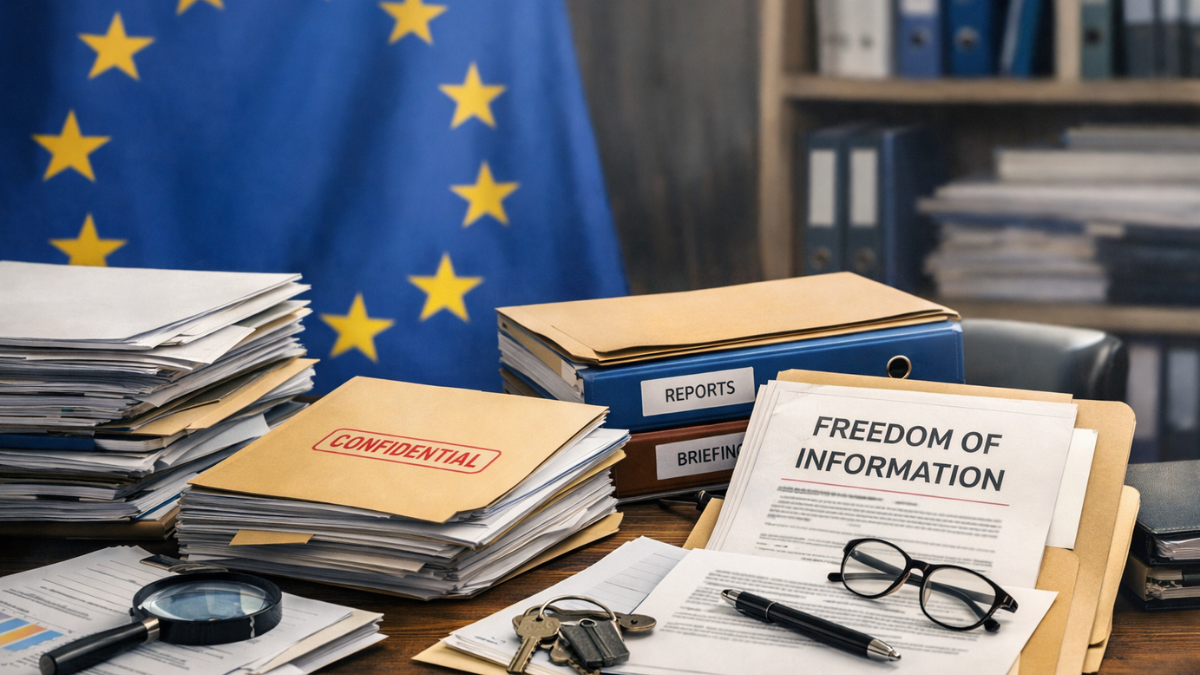


Government officials in Ireland expressed serious concerns in 1995 that plans to introduce a Freedom of Information (FOI) law could make vital European sources stop sharing information. At the time, the Irish administration relied heavily on details from inside the European Union to prepare for important policy decisions.
The files reveal that officials feared that the introduction of FOI legislation, which eventually came into effect in 1997, could hurt Ireland’s ability to gather sensitive information. The concern was that documents created in Ireland, if made public under the new law, could discourage European contacts from sharing internal information.
Officials noted that internal documents from the European Commission and the European Council were key sources of information. These documents helped Ireland understand upcoming proposals and plan its negotiating positions. Losing access to this information, they warned, would make it harder for the country to influence decisions within the EU.
A 1995 internal government memo showed that officials aimed to make sure the Irish administration could continue collecting information efficiently on how policies were being developed within European Union institutions.
Dependence on Internal EU Documents
The files revealed that Irish officials used two main channels to get information: the European Council and its working groups, and the European Commission. The Commission provided internal documents and other communications that gave Ireland advance warning of proposals. This allowed officials to react and shape positions before decisions were finalized.
China Warns of AI Addiction as It Unveils Draft Rules for Human-Like Systems
Officials were concerned that if internal documents became available to the public through the FOI law, European sources would stop sharing information. One official warned that if these documents, or national records based on them, were made public, European sources would likely stop sharing information, which would be very disadvantageous for Ireland.
Officials pointed out that they relied heavily on access to internal Commission documentation when preparing Ireland’s negotiating positions on specific topics. They explained that this information was essential because a Commission proposal is very hard to change once it has been officially made. Unanimity among member states is required, which makes early input critical for shaping outcomes favorable to Ireland.
The concern was that without early access to information, Ireland would lose influence in European decision-making. The officials described the loss of influence as “perceptible” and warned that it would seriously hamper Ireland’s ability to ensure that Commission proposals came out in a form satisfactory to the country.
The Impact of Freedom of Information (FOI)
Ireland’s FOI law was designed to give people the right to request records from government departments and public bodies. The law allows requests to be refused for certain reasons, such as protecting personal data, commercial secrets, or legally privileged information.
Despite these safeguards, officials in 1995 were worried that the law could inadvertently discourage European institutions from sharing their internal documents with Irish officials. They believed this could seriously hamper Ireland’s ability to anticipate EU proposals and negotiate effectively.
The files show that officials valued these contacts highly. They described their reliance on “the flow of information from within the Commission either through the Cabinet or direct from contacts in the services.” This information helped the government prepare for policy discussions and influence outcomes at the European level.
The 1995 documents reveal a clear tension between government transparency and diplomatic effectiveness. While FOI legislation was intended to make government more open to the public, officials worried that it could unintentionally reduce Ireland’s ability to operate effectively within the European Union.
In summary, the introduction of Freedom of Information law in Ireland prompted serious concerns among officials about losing access to critical European documents. They feared that if Irish internal documents were made public, European sources would stop sharing sensitive information, weakening Ireland’s influence in key EU negotiations.