

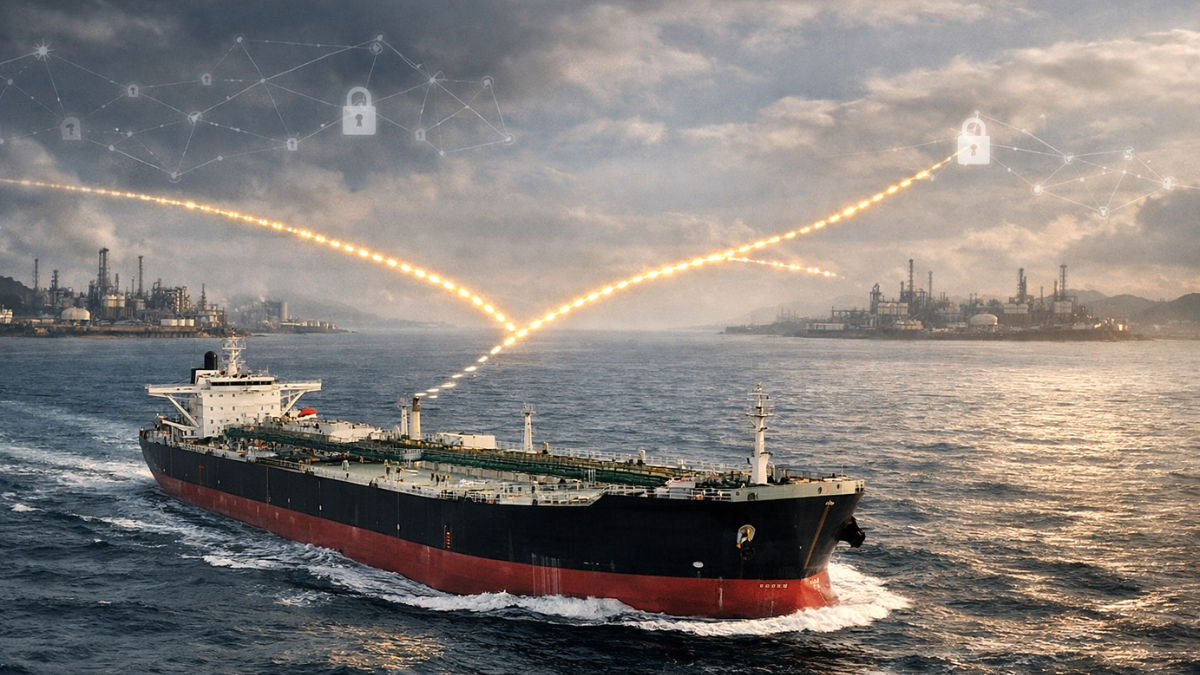


A US-sanctioned oil tanker named Ping Shun has changed its course while carrying Iranian crude oil across international waters. The vessel is an Aframax tanker built in 2002 and was placed under US sanctions in 2025.
The ship was transporting around 600,000 barrels of crude oil loaded from Kharg Island in Iran on or around March 4. At the start of its journey, the tanker showed Vadinar in Gujarat, India as its destination. Vadinar is an important refining location operated by Nayara Energy, which is backed by Rosneft.
If the cargo had reached Vadinar, it would have marked a significant development, as it would have been the first Iranian crude shipment to India since 2019 after a long gap in trade.
During the voyage, maritime tracking signals changed. The ship’s Automatic Identification System (AIS) began indicating Dongying in China instead of Vadinar. AIS is used by vessels to broadcast location and destination details, but these signals can be updated while sailing and may not always reflect the final delivery point.
Maritime tracking data from Kpler, a commodity analytics and ship monitoring platform, also showed the updated destination, confirming that the vessel was signalling China while still at sea.
The Malaysia loophole: How China disguises sanctioned Iranian oil through ship to ship transfers
Sanctions and Payment Barriers Behind Iranian Oil Trade Disruption
The rerouting of the Ping Shun is strongly linked to ongoing payment challenges in Iranian crude oil trade. Iran continues to face restrictions that prevent normal international financial transactions.
A major issue is Iran’s exclusion from SWIFT (Society for Worldwide Interbank Financial Telecommunication), the global system used by banks to securely exchange payment instructions. This restriction began after European Union sanctions in 2012 and was further tightened when the United States reimposed sanctions in 2018.
Because of these limitations, receiving payments for oil exports has become extremely difficult. In earlier arrangements, some transactions were handled through alternative channels, including euro-based payments via a Turkish bank, but such options are no longer consistently available.
Due to increasing financial risk, sellers of Iranian crude have tightened trade terms. Earlier credit windows of 30 to 60 days are being replaced with demands for upfront or near-term payments, creating uncertainty in deals that involve cargo already in transit.
The Ping Shun shipment was also connected to a temporary 30-day US waiver that allowed certain purchases of Iranian oil already at sea. This waiver window was set to expire on April 19, adding further pressure on transaction timelines and payment arrangements.
Suspicious oil and stock trades before Iran post raise corruption concerns
India’s Oil Trade History and Shifting Global Iranian Crude Flows
India was once a major importer of Iranian crude oil. The country valued Iranian grades such as Iran Light and Iran Heavy because they matched refinery requirements and offered competitive pricing.
At its peak, Iranian crude accounted for around 11.5% of India’s total oil imports. In 2018, India imported approximately 518,000 barrels per day of Iranian oil. However, between January and May 2019, imports fell sharply to about 268,000 barrels per day due to limited sanctions waivers. After May 2019, imports stopped completely.
Since then, India has replaced Iranian supplies with crude from other regions, including the Middle East and the United States.
The current cargo aboard Ping Shun was part of a broader pool of Iranian oil stored at sea. Estimates suggest about 95 million barrels of Iranian crude are currently on vessels, with around 51 million barrels considered suitable for Indian refineries, while the remaining volumes are more aligned with buyers in China and Southeast Asia.
The shift in destination from Vadinar in India to Dongying in China reflects how Iranian crude flows are being shaped by financial restrictions, sanctions pressure, and the availability of workable payment channels in global oil trade.